Château De Chenonceau: A Tour Through the History and Highlights

Château de Chenonceau is one of the most popular French châteaux for tourists, ranking second only behind Versailles in terms of number of visitors. With its elegant architecture, historical intrigue and gorgeous gardens, it is easy to see why it’s so popular.
Michelle and I visited Château de Chenonceau in September 2019 as part of a larger trip through France. We visited two other châteaux in the Loire Valley, but Chenonceau was easily our favorite.
If you’re considering a trip to the Loire region, make sure to keep reading to find out what you can expect from a visit to this grand French château.
Updated December 2024
Disclaimer: This post may contain affiliate links. If you make a purchase through one of these links, I will earn a small commission. This occurs at no added cost to you.
Summary of Château de Chenonceau
| Hours: | Hours vary depending on the time of year. Generally, 9:00 a.m. to 5:30 p.m. |
| Length of Visit: | 2 – 3 hours |
| Cost: | €17 for general admission €22 with audio guide |
| Highlights: | Walking up to the château, the gardens, Grand Gallery, chapel, Medici Gallery, Diane de Poitiers’ bedroom |
A Brief History of Château de Chenonceau
Also known as the Ladies’ Château, Château de Chenonceau, like seemingly every other French château, has seen its fair share of owners during its 500+ year life. Here are some of the main highlights of its history to help inform your tour of this grand palace.
The Origins of Château de Chenonceau
The first château on this site was constructed by Jean Marques in the 13th century. In 1412, this building was burned to the ground by the French government for Marques’ seditious actions. Marques, then, simply rebuilt it.
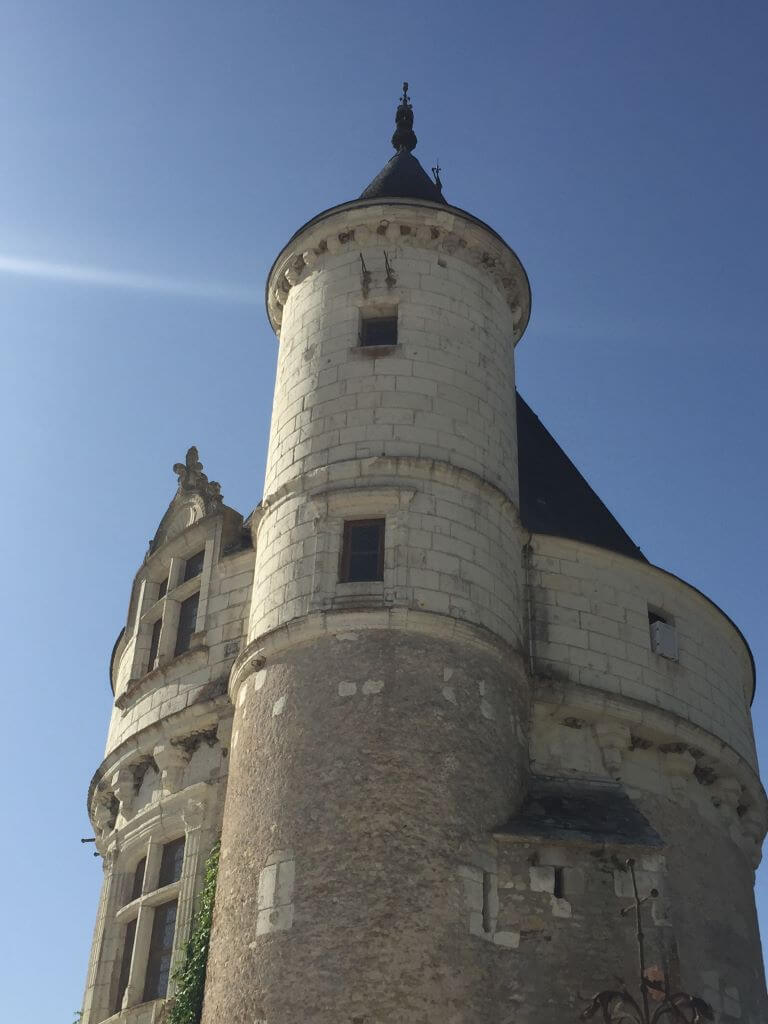
Jean’s son, Pierre Marques, would inherit the rebuilt château and his father’s debts. These led Pierre to sell the château to Thomas Bohier in 1513. Bohier would have the château demolished with the exception of the medieval keep (seen to your right as you walk towards the château) and had a new château built.
However, he was away for much of its construction, so his wife Katherine Briçonnet, the first important female in Château de Chenonceau’s history, supervised much of the work. Katherine would build the main square-shaped castle that we see today.
Enter Diane de Poitiers
As seems to be so often the case, unpaid debts led to King Frances I seizing the château and bringing it into the royal estate. When Frances died in 1547, the château passed to his son Henri II. Instead of offering Château de Chenonceau to his wife Catherine de Medici, Henri offered it to his mistress Diane de Poitiers.
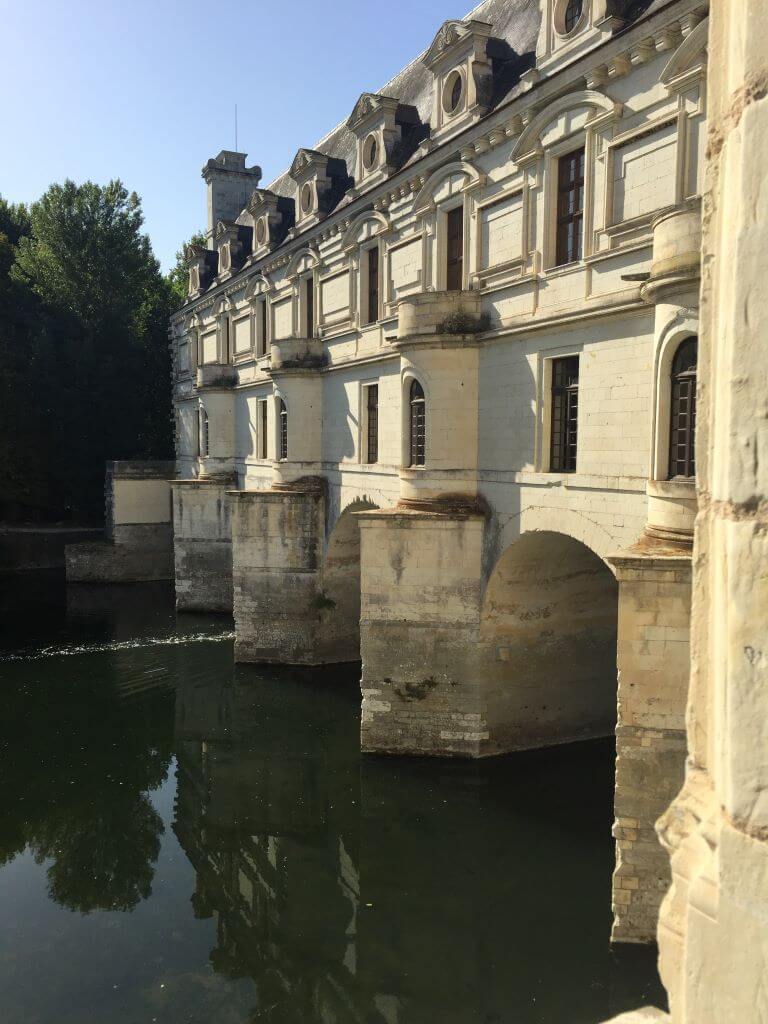
De Poitiers was vital to the future of Château de Chenonceau for two reasons. First, by passing into her hands, it was technically no longer considered part of the royal estate as of 1555. Second, de Poitiers oversaw construction of the famous bridge spanning the château to the other side of the Cher River. She also had formal gardens as well as fruit and vegetable gardens established around the property.
Catherine de Medici and Château de Chenonceau
When King Henri II died in 1559, Catherine de Medici wasted no time making her move on de Poitiers and her château. Catherine forced an exchange with de Poitiers whereby Catherine would gain Château de Chenonceau and de Poitiers the lesser Domaine Chaumont-sur-Loire.
Catherine would rule France as regent from Chenonceau. She would also further embellish the château by adding the galleries on top of de Poitiers’ bridge, having her own formal garden established opposite from de Poitiers’, and various other enhancements.
Between her rule as regent and these developments, Catherine made Château de Chenonceau the place to be in France during her time there.
Château de Chenonceau During the French Revolution
Over the next 150 years, Château de Chenonceau exchanged hands twice before eventually being purchased by Claude Dupin in 1733.
His wife Louise Dupin was the next important woman to enter the château’s story. She would establish Chenonceau as an important salon of Enlightenment thought. Various Enlightenment thinkers including Voltaire, Rousseau and Montesquieu would come to the château during her time there.
During the French Revolution, Louise would save the château from the Revolutionary Guard by convincing them it was vital to transport and commerce as it was the only bridge across the Cher River.
Château de Chenonceau during World Wars I and II
The next important time in the château’s history came in 1913 when it was purchased by Henry Menier. Château de Chenonceau was soon thereafter converted into a military hospital for the wounded of World War I from 1914 to 1918. Hospital staff treated over 2,250 wounded soldiers in the château during the war.
Château de Chenonceau would unfortunately see more action during World War II. After Nazi Germany took control of northern France, the country was split into a northern occupied zone and a southern free zone. Château de Chenonceau sat on the border between the two parts of France.
Despite the Cher River being patrolled by Nazi soldiers, the Menier family courageously helped those wanting to flee Nazi-controlled France for freedom.
If you’re interested in more stories of bravery during World War II, head over to The Lens of Jen to read about Raymonde Sergent’s efforts to rescue people from Nazi-controlled Saint-Martin-le-Beau to the other side of River Cher and freedom!
Château de Chenonceau’s Highlights
Château de Chenonceau has plenty of things to see during your visit. Below are just some of the highlights.
Walking up to Château de Chenonceau
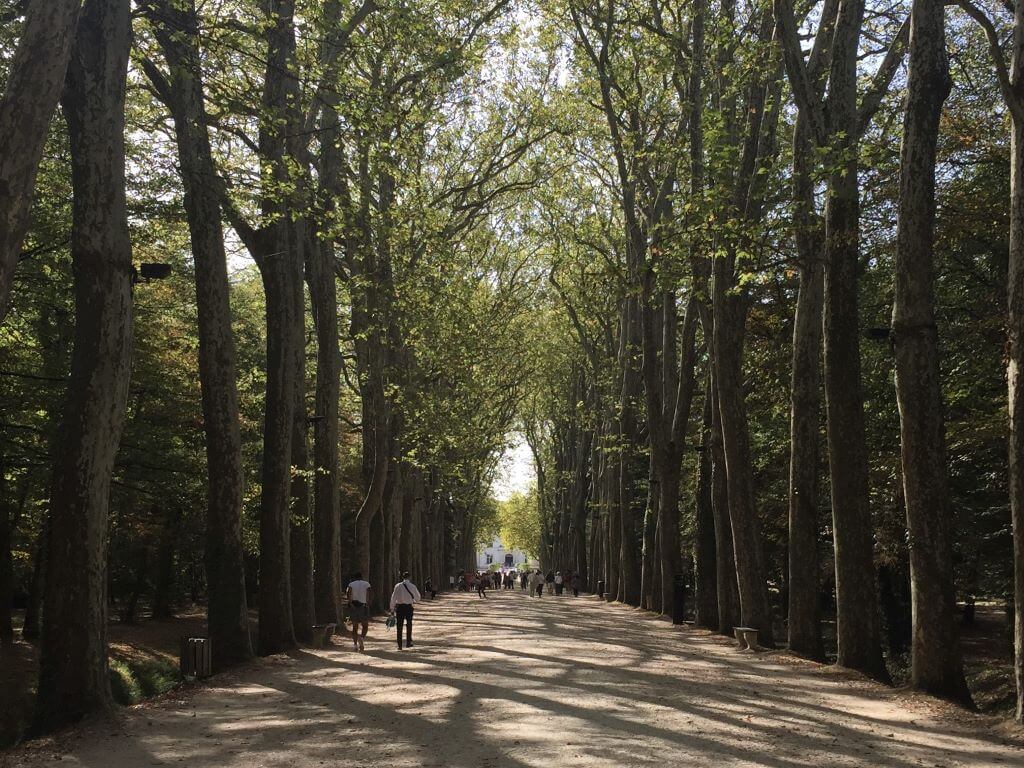
The tree-lined pathway up to Château de Chenonceau is a great introduction to your visit. By itself it’s very pretty, but it also does a good job at building anticipation for the château.
It takes about five minutes to get from one end to the other. The château starts as just a white dot off in the distance, but as you approach, the building slowly comes into view.
Between the perfectly placed trees on either side of you and the elegant château appearing ahead of you, it is a magical scene.

Château de Chenonceau’s Chapel
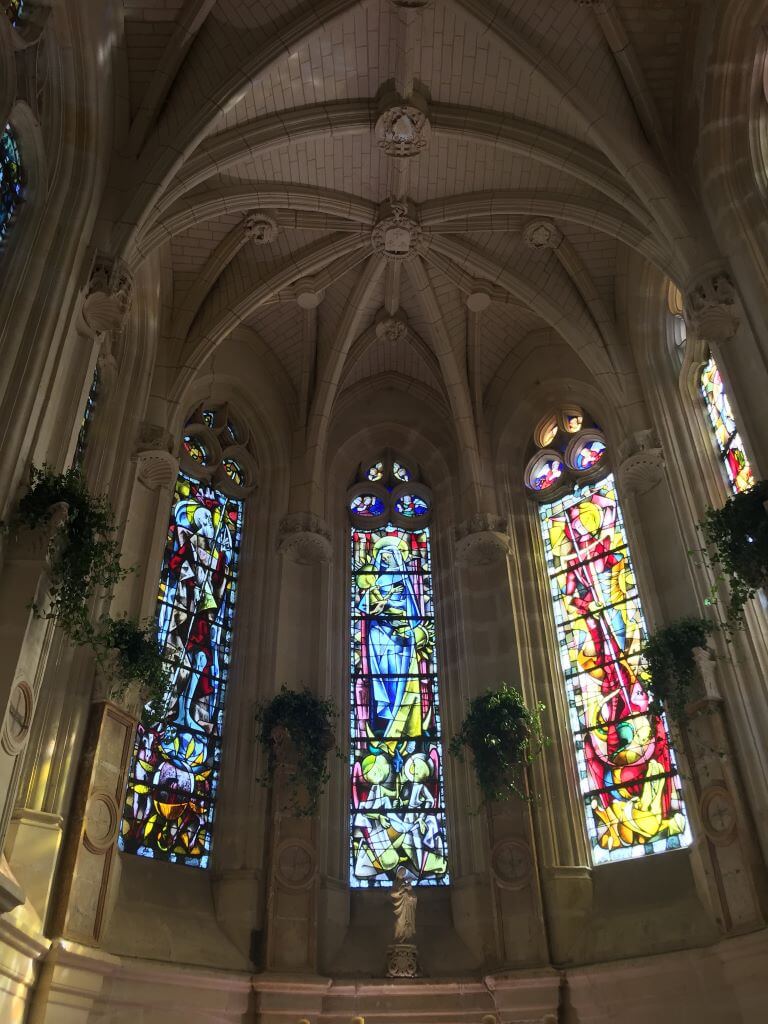
Of the three châteaux chapels we visited during our time in the Loire Valley, Chenonceau’s is the most impressive (a common theme with Château de Chenonceau). Everything about the chapel is remarkable. Interestingly, the stained-glass windows are actually from 1954 after bombs destroyed the originals during World War II.
Another interesting fact comes from the French Revolution. When rioters showed up to ransack religious monuments, Madame Dupin had the chapel filled with firewood. The rioters saw only wood and left the chapel untouched.
The chapel also has a connection with English history. Mary, Queen of Scots resided here after her marriage to Kind Frances II. Her guards left two inscriptions on the wall of the chapel: “Man’s anger does not accomplish God’s justice” and “Do not let yourself be won over by Evil.” Things like this give these places a human feel, reminding us that real people actually walked through these halls.
Diane de Poitiers’ Bedroom
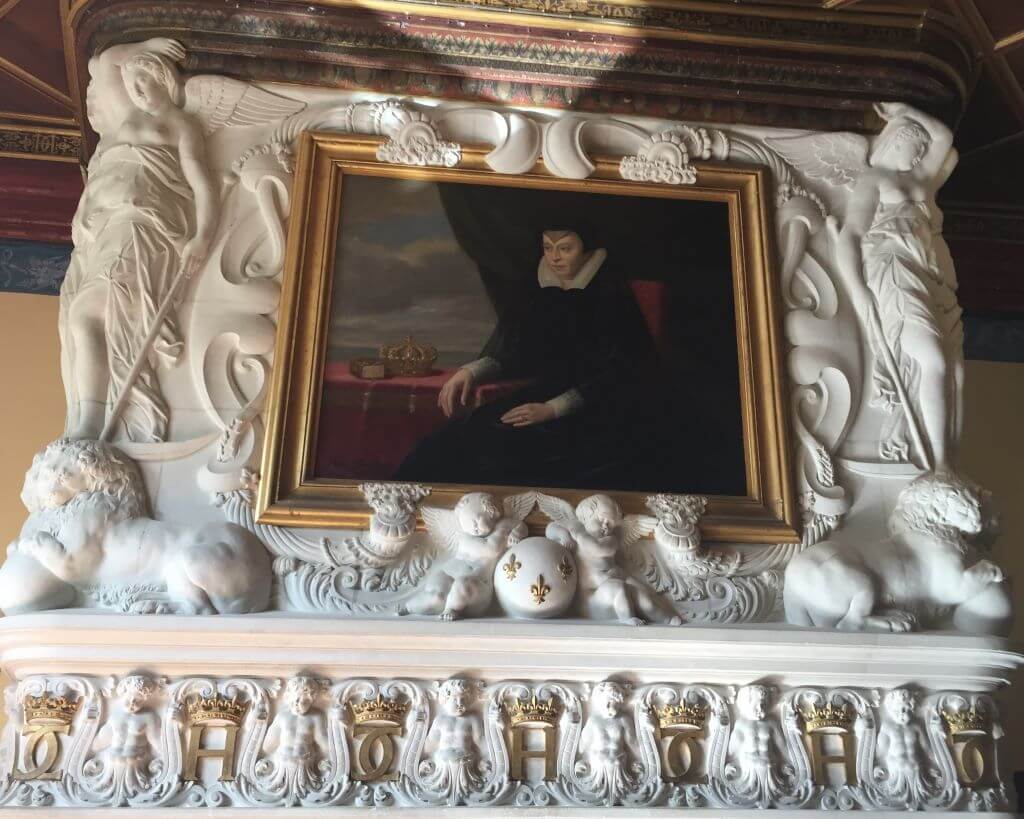
This is the room where King Henri II’s mistress, Diane de Poitiers, slept at night. The two 16th-century Flemish tapestries are the highlights of the room.
These tapestries are impressive, but my favorite part of the room is the dour portrait of Catherine de Medici above the fireplace. It’s the ultimate in pettiness. A reminder to all the tourists throughout history that Catherine, not Diane, was queen, regent and owner of Château de Chenonceau after forcing Diane out.
The Grand Gallery
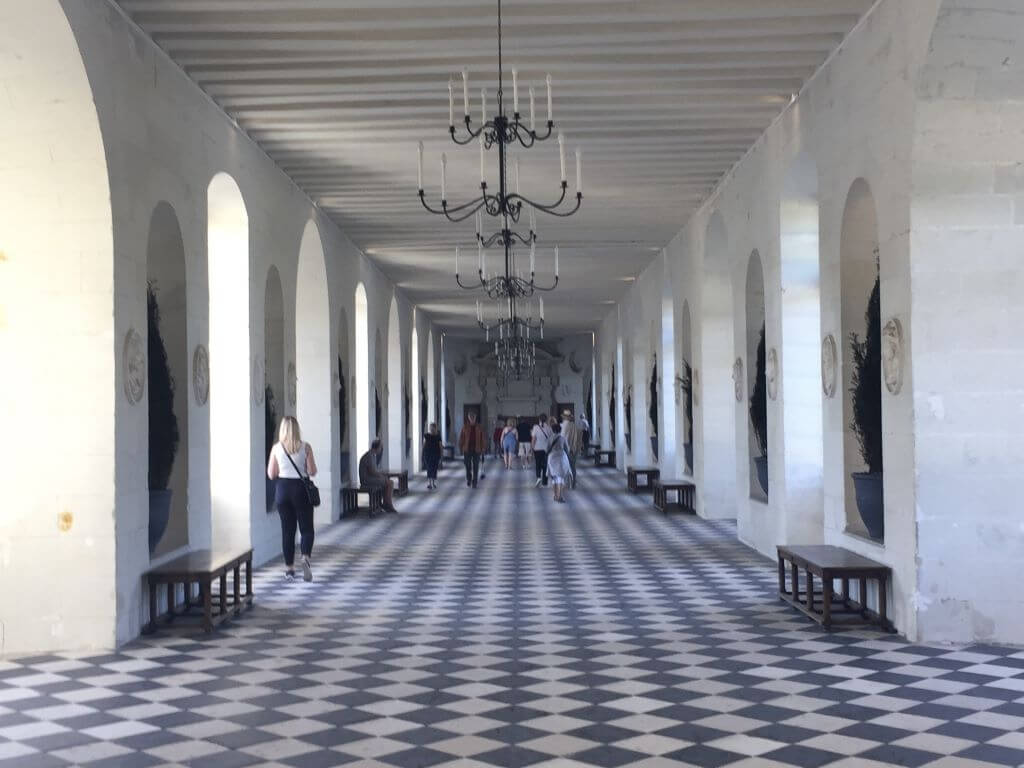
The Grand Gallery is probably the most memorable part of Château de Chenonceau. Catherine de Medici had this 200-foot-long gallery built in 1576 over de Poitiers’ existing bridge. Imagine the grand parties Catherine de Medici held here during her reign with the rest of the French aristocracy.
Notice the niches along either side of the Gallery. At one point, these were filled with statues. King Louis XIV liked the statues so much he had them moved to his palace at Versailles.
Louis XIV’s Drawing Room
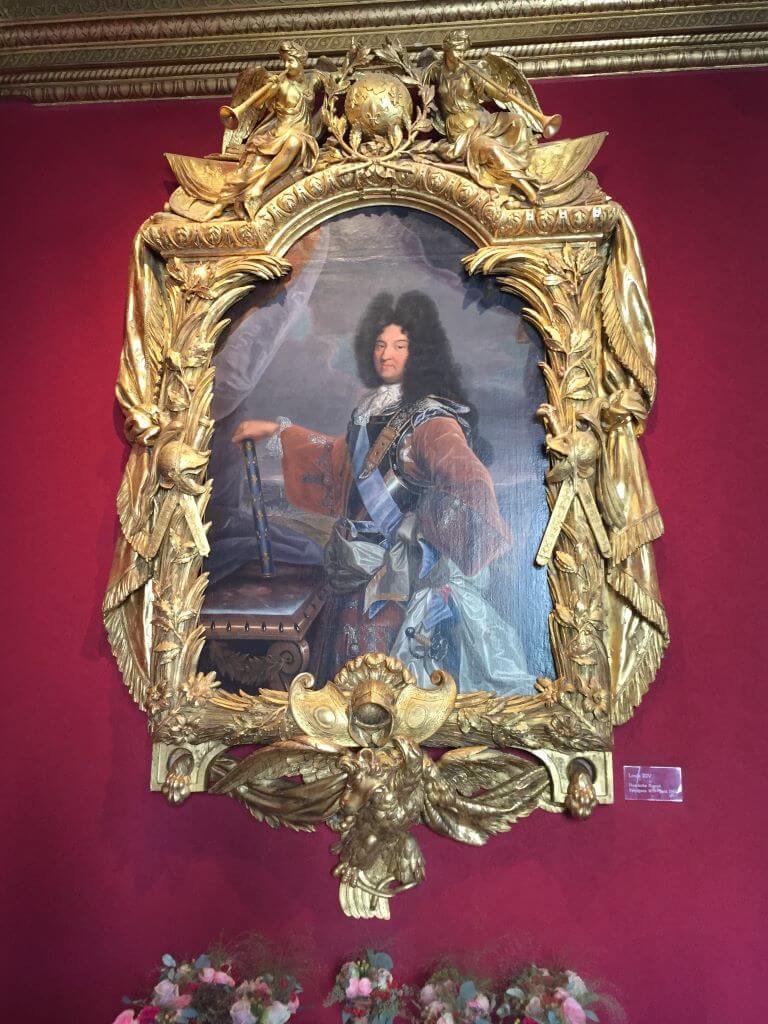
Louis XIV’s drawing room holds a regal portrait of the king and ornate furniture donated to the château in honor of a visit Louis had there in 1650. Take some time to admire the detail of the frame around Louis’ portrait.
The elaborate fireplace is the other feature of the room. I enjoy the two whimsical yet royal emblems decorating the mantel. On the left is a salamander, representing King Frances I, and on the right is a stoat, representing Queen Claude.

Medici Gallery
The Medici Gallery sits above the Grand Gallery. This gallery houses a miniature museum of sorts that showcases biographical information on the five important women of the château’s history, a timeline of the most significant events to happen here, and a cabinet of curiosities.
The Gardens of Château de Chenonceau
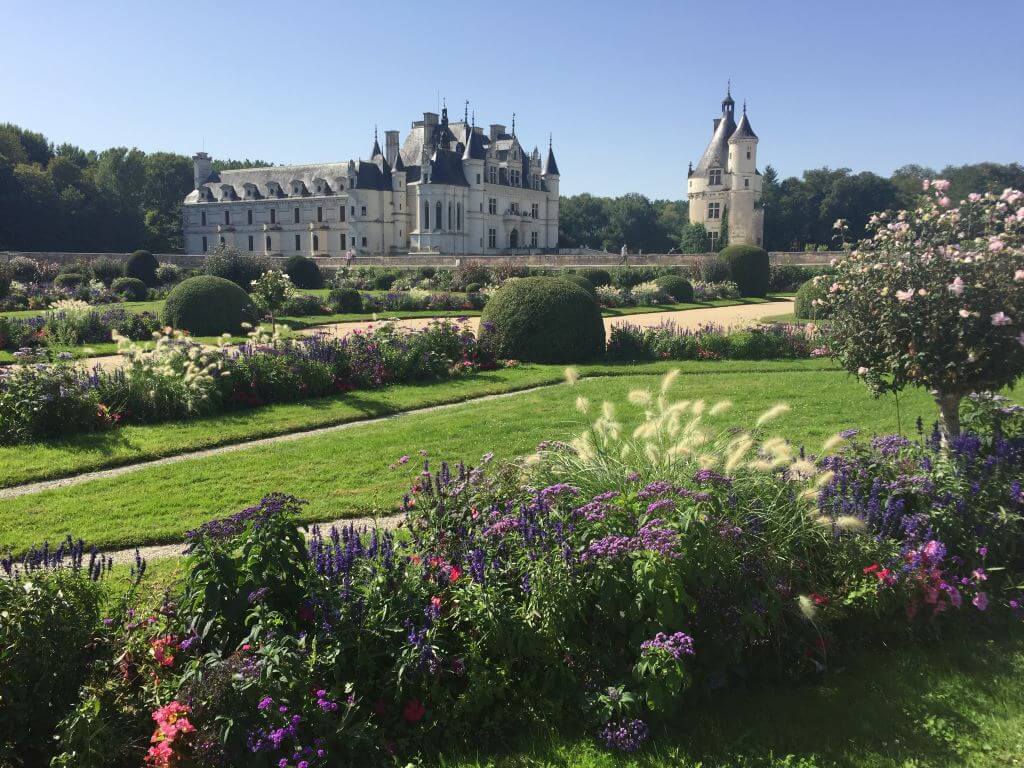
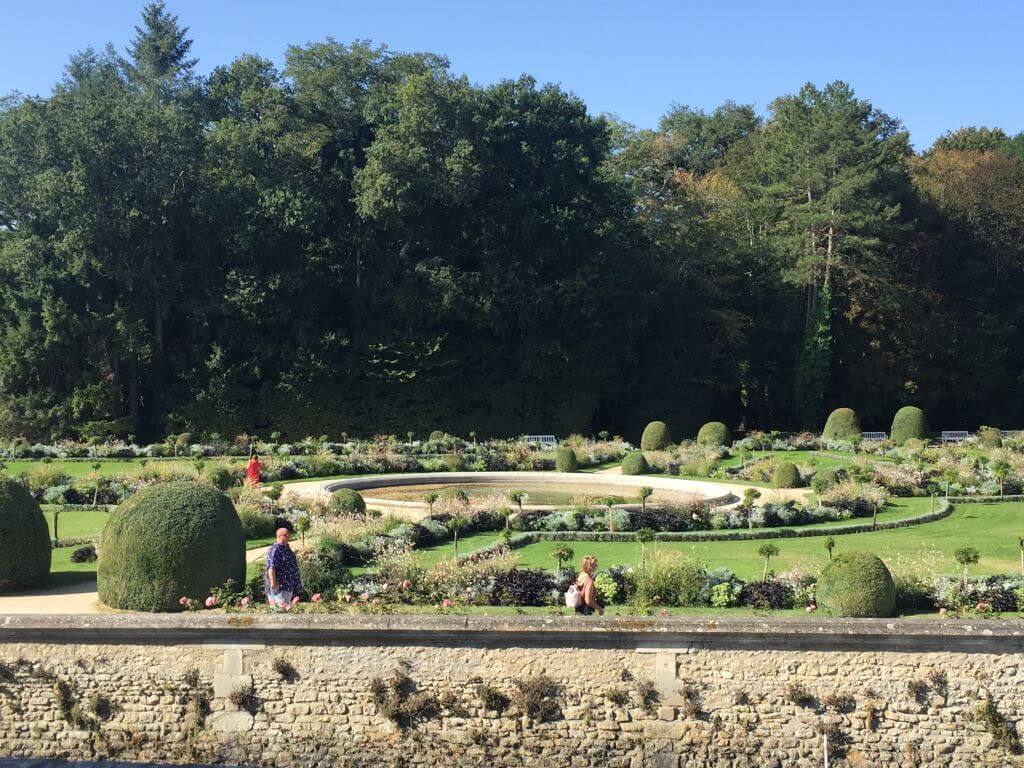
Château de Chenonceau has several different gardens to visit. There are two that easily stand above the rest: Diane’s garden to the left of the château and Catherine’s garden to the right.
Make sure to admire these gardens from the upstairs balcony in the palace if you can as this gives you a great opportunity to take them both in at the same time.
Diane’s garden is notable for its high-powered fountain in its center. This is impressive now, but imagine how it must have been to see something like this in the 16th century.
I also think Diane’s garden offers some of the best views of the château. Take your time to stroll along its paths to try and find the best angle for your photos.
When Catherine took over from Diane, she had her garden created to one up her predecessor. Catherine’s Garden is a smaller garden than Diane’s, yet its elegant in its simplicity.
Other Things to do at Château de Chenonceau
There are many other things to see and do at Château de Chenonceau besides everything I mentioned above. Here is a list of the other activities and things to see.
- A garden maze
- Wine tasting at the Domes Wine Cellar
- Not at the château itself but rent a kayak from the Canoe Company to see the château from the water
- The military hospital room
- A traditional farm with vegetable and flower gardens
- The queen’s apothecary
Eating at Château de Chenonceau
There are three dining options during your visit to Château de Chenonceau: a crêperie, a cafeteria and the L’Orangerie.
We had a small lunch at the self-serve cafeteria during our visit. I can’t remember what we had, but I do recall it being reasonably priced and better than I expected for cafeteria food. They have both indoor and outdoor seating available.
The L’Orangerie restaurant is a more formal dining option with prices to match the setting. We passed on this because we didn’t want to spend too much money and we had other places to be. The inside of the restaurant looked quite nice, though. It also has very good reviews online.
Should You Visit Château de Chenonceau?
Château de Chenonceau should without question be on your itinerary when visiting the Loire Valley. Further, if you only have a limited amount of time in the Loire Valley, Château de Chenonceau should be at the very top of your list of things to do.
I would even argue that if you’re only visiting Paris, you should consider a train to Chenonceaux to visit the château. It’s such a perfect example of French gardens and architecture that it’s worth the day tri depending on your interests and how much time you have available.
Where to Stay When Visiting Château de Chenonceau
Located just over 20 minutes northwest of Château de Chenonceau, Amboise is a great small town for visiting some of the Loire Valley’s châteaux. It’s conveniently located near several main roads to make access to châteaux easy. It also has its own fabulous château, Château d’Amboise, and several cafes to relax at after a day of touring the region.

Thank you for reading this post. Paul Passing Through is a labor of love to which I’ve dedicated a lot of free time. If you’d like to show your support for my blog, you can Buy Me a Coffee to help fund the future of Paul Passing Through. I appreciate any contributions!
More Posts About French Châteaux
Here are more guides I’ve written to help you if you’re planning to visit other French châteaux.
Resources to Book Your Trip to Château de Chenonceau
Whether you’re looking for tours, hotels or flights, here are some tools to help get you started planning your trip to France!
Look for activities and tours offered through GetYourGuide or Viator!
Search Flights
Still can’t find what you’re looking for? Check out my travel essentials pages for more of my recommendations.
Pin This Post!