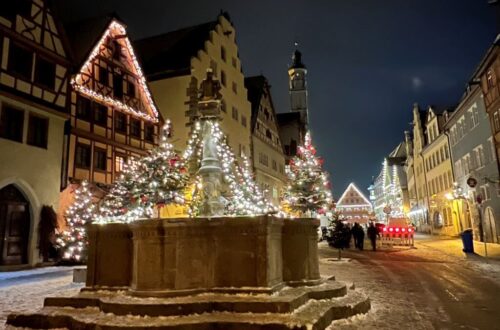
The Best Things to do in Nuremberg’s Old Town

Nuremberg’s Old Town is one of the most visited parts of Germany. It was one of the top cities in Europe during the Middle Ages and has remained an important city in Germany through modern times. As a result, it has become a popular spot for people interested in German history and culture because of its museums and stunning medieval architecture.
Nuremberg has a dark past, though. It was one of the Nazi parties most important cities and was where they held some of their biggest rallies. You can visit these sites to learn about how the Nazis came into power and their impact on Nuremberg.
Between its importance in the Middle Ages and its role in shaping the modern world, Nuremberg is definitely a German city you’ll want to add to your trip. Here are my top things to do while visiting Nuremberg’s Old Town!
Disclaimer: This post may contain affiliate links. If you make a purchase through one of these links, I will earn a small commission. This occurs at no added cost to you.
Nuremberg’s Imperial Past
During the Middle Ages, Nuremberg was one of the most significant cities of the Holy Roman Emperor due to its central location on important trade routes.
The city grew and eventually became one of the most common sites of the Imperial Diet. The diet was the deliberative body of the Holy Roman Empire, where management of the empire was discussed. Many of these meetings took place in the Imperial Castle. The castle was also where the emperor would reside whenever he was in Nuremberg. Owing to these two facts, Nuremberg would become something like a de facto capital of the Holy Roman Empire.
As a result of its economic and political importance, the arts and culture also flourished in Nuremberg. It wasn’t just the center of political life, but it was also the preeminent city of the German Renaissance.
Around the 16th century, Nuremberg gradually lost its importance due to a combination of shifting trade routes and several wars. Once a free imperial city, Nuremberg lost its independence and became a part of Bavaria in 1806.
Nuremberg in the Modern World
Nuremberg’s next major chapter in world affairs was also its darkest. The city was chosen by the rising Nazi party to be the site of several of its major rallies. It was here, in 1935, that the Nuremberg Laws were passed, which revoked German citizenship for all Jews and non-Aryan races. Nuremberg also was an important location for the production of military armaments for the Nazi’s war efforts.
Because of this and its economic importance to Germany, the city was targeted by the Allies for air raids in 1945. Important arts were stored underground while much of the Old Town’s infrastructure was destroyed.
Following the war, Nuremberg was chosen as the place where Nazi war criminals would be tried by an international tribunal. These trials were the first of its kind, as it was the first time individuals were tried by a group of international figures within a framework of international laws.
After World War II, the city was rebuilt to what we see now, and the former Nazi Rally Grounds in time became host to local sporting events and festivals.
Nuremberg’s Imperial Castle
| Hours | April – October 3rd Daily 9:00 – 6:00 October 4th – March Daily 10:00 – 4:00 |
| Length of Visit | Around an hour |
| Cost | €5.50 for castle and museum €7 for castle, museum, Deep Well and Simwell Tower |
| Highlights | Views of Nuremberg, Romanesque church, history of the Holy Roman Empire |
Our first stop in Nuremberg was the Imperial Castle. This castle was the residence of the Holy Roman Emperor when he was staying in Nuremberg. The first buildings in what would become the castle we see today were built in the 11th century.
The Imperial Castle consists of four different parts, depending on which ticket you purchase. We only visited the castle and museum, the two main parts of the whole complex. For a small additional fee, you can also include the Deep Well and a climb up Simwell Tower for views of Nuremberg. If you skip the tower, you can still get great views of Nuremberg from the castle’s courtyard behind the tower.
Upon entering the castle, the first area is just a large, empty room. The reason for this is that when the emperor would travel, all his furniture went with him. So, the castle has no original furniture to put on display. While this room has no furniture, its windows offer more panoramic views of Nuremberg.
From here, the next room is the castle’s Romanesque church which houses some interesting medieval religious art. Its design has three levels: the emperor would worship from the top level and then people of lesser importance on the bottom two floors. The church doesn’t have much to see, but I enjoyed the quiet and calmness of this room.
On the next floor after the church is an extensive museum with interactive exhibits describing the Holy Roman Empire. With all the various exhibits, you can find out anything you want to know about the history of this former world power. It’s a great introduction to this era of German history, especially since you’ll be seeing plenty more of it during your time in the country.
After the museum is a few sparsely decorated rooms and then a small museum with military armaments. The weapons exhibit has some interesting pieces, including a rather grim painting different ways to kill a person during war.


For more remarkable German castles, don’t miss Neuschwanstein and Hoheschwangau!
Germanic National Museum
| Hours | Tuesday, Thursday – Sunday 10:00 – 6:00 Wednesday 10:00 – 8:30 |
| Length of Visit | 2 – 3 hours (We were able to hit the highlights in just one hour, but I don’t recommend this) |
| Cost | €8 |
| Highlights | Paintings by Albrecht Dürer, the world’s oldest surviving globe, many different medieval objects |
The Germanic National Museum is the museum if you’re interested in German history. This museum is huge, both in terms of its physical size and the breadth of topics covered by its many exhibits. Before you visit, I recommend looking up a floor plan and coming up with a general plan of what you want to see.
Exhibits in the Germanic National Museum include every time period ranging from prehistoric times to the modern age. It also has more specific sections covering things like toys, musical instruments, hunting and more. With everything there is to see, we saw only a fraction of it all.
Our focus was on the objects from the Middle Ages and the Renaissance and Baroque art gallery. The Middle Ages exhibit didn’t have any singular highlights, but it did have lots of interesting objects showing what life was like during that era.
The art gallery was where we spent the bulk of our time. It had several originals from Albrecht Dürer, including his portrait of his mother and his painting of Charlemagne. In addition to the paintings by Dürer, this extensive art gallery has more works by other German, and some non-German, artists.
Also contained in this gallery is the world’s oldest globe. This globe is so old, in fact, that the Americas had only just been discovered at the time of its creation. As a result, the Americas aren’t on the globe – there’s just one big stretch of open ocean between Europe and Asia!

I can’t stress enough how large this museum is. We visited on our first night in Germany, and between its size and jet lag, we were pretty overwhelmed. Try to visit early in the day and set aside at least two hours to give yourself enough time to appreciate everything.
Toy Museum
| Hours | Tuesday – Thursday, Saturday – Sunday 10:00 – 6:00 Friday 10:00 – 5:00 |
| Length of Visit | 45 – 60 minutes |
| Cost | €6 |
| Highlights | Omaha train set, He-Man collection, early video games, decade-by-decade of history of how toys reflected society |
Nuremberg’s Toy Museum was an unexpected delight amid all the medieval buildings and history here. It does have a couple sections geared more towards kids, but it really is more of a museum for adults that kids can also enjoy.
The Toy Museum contains several different exhibits over three floors. Each room features its own category of toy. It has rooms dedicated to dolls (and this room is as terrifying as you might imagine), trains, military figurines, trains, etc. They’re not necessarily arranged in chronological order, but it’s great fun to look at the variety over the years.
My favorite room is more informational in nature while still having toys on display. It explains the history of toys over the 20th century and how the things we played with reflected what was happening in the world. The information was very interesting, especially as I got into the 80s and 90s exhibits since these were the toys I played with as a child.


The Toy Museum was one of my favorite things in Nuremberg. We visited shortly after doing the Nazi Rally Grounds. This sequence was a nice, lighthearted way to come back down from the heaviness of those grounds.
St Lawrence Church (Lorenzkirche)
| Hours | Monday – Saturday 9:00 – 5:30 Sunday 12:00 – 3:30 |
| Length of Visit | 15 – 30 minutes |
| Cost | Free but donations encouraged |
| Highlights | Grand interior, carved tabernacle, hanging Annunciation sculpture |
Of the three main churches in Nuremberg, St Lawrence was my favorite. Frauenkirche and St Sebald’s are impressive in that they are large, dark Gothic churches that can’t be found in America, but asides from that, neither had much to actually see in their interiors.
St Lawrence’s has the vast interior, but that’s where the similarities end. It’s brightly lit with multiple large stained-glass windows. This is a good thing because St Lawrence’s has two fantastic highlights worth seeing.
The first is the mostly stone-carved tabernacle that sits to the left of the altar. I say mostly stone because at the very top is a figure of Jesus carved in wood. Because Jesus is alive, the carver, Adam Kraft, used a living substance, wood, to create his likeness. You can see Adam Kraft on the bottom of the tabernacle supporting its weight on his shoulders.
Turning your eyes to the right, hanging over the altar is a sculpture of the Annunciation from 1517 by Veit Stoss. This striking artwork is very pleasing to admire as it has several things going on within the scene it is telling. The different colors and skilled craftsmanship are both stellar.


Nazi Rally Grounds and Documentation Center
| Hours | Daily 10:00 – 6:00 for the Documentation Center The grounds are open at all times as long as there isn’t an event |
| Length of Visit | 1.5 -3 hours Total time depends on if you take the long or short way around the lake |
| Cost | €6 for the Documentation Center The grounds, including Zeppelin Field, are free |
| Highlights | Zeppelin Field, exhibits on how the Nazis rose to power |
Just a short trip outside Nuremberg’s Old Town is the site of Adolf Hitler’s infamous Nazi Rally Grounds. What was once a location used by the Nazi party to stage rallies and create propaganda film to embolden their supporters – and terrify their enemies and those they deemed undesirable – is now a place for Germans and tourists alike to visit to learn about and experience firsthand this dark period in history.
This large historical park contains two main attractions: the Documentation Center and Zeppelin Field. Besides those two things, you can explore the rest of the Rally Grounds’ 4 square miles as you please.
If you’re in a hurry, you can visit Documentation Center and then take a short walk along the northern edge of the lake to Zeppelin Field.
With more time, walk along the length of the lake to see the Great Road. The Great Road was built to be 200-feet wide to allow for massive Nazi parades to be staged. After the war, it was used by the Allies as a landing strip for aircraft.
Going along the lake is a somewhat surreal experience. It’s a rather pleasant stroll that’s only marred by reminding yourself that you’re walking through one of the Nazi’s most important places in the country. The lake itself only exists because it was dug out to be the site of a massive sports stadium to be used by the Nazis.
It’s interesting to consider that the Nazi Rally Grounds is now currently used by the city of Nuremberg to host various festivals and sporting events. It’s hard to imagine such a hallowed area being used for pleasure, but at the same time, maybe it’s the perfect way to transform the grounds in a way that is antithetical to Hitler’s political agenda.
The Documentation Center
Inside the Grand Congress building is the Documentation Center museum. The documentation center contains various objects, information cards and videos detailing the Nazis rise to power in Germany.
It’s an objective history of this dark period that provides good detail on the political and cultural climate in Germany that allowed Hitler’s Nazis to become such a dominant force.
The museum also has a small section describing how Nuremberg currently uses the Nazi Rally Grounds. Within this part of the museum, you can find the different arguments for and against use of the grounds in their current form. It was interesting to see what led the city to adapting the rally grounds into what they are now.
When we visited in December 2022, the Documentation Center was undergoing significant renovations, but it did still have several interesting exhibits available for visitors. Even with only a few exhibits on display, it was well worth visiting if you’re here before the scheduled reopening in 2025.
Zeppelin Field
Seeing Zeppelin Field was the best part of the Nazi Rally Grounds. It’s a somber highlight where the past is palpable all around you.
From this field, Hitler held some of the Nazi’s biggest rallies, including ones filmed to be used in propaganda films. If you’ve seen footage of one of their rallies, odds are it was from the field stretched out in front of you.
The grandstand that dominates the field was where Hitler stood to give speeches. Topping the building behind the platform was a giant swastika that was symbolically blown up at the end of the war. Curious visitors can now stand on the podium in the very same spot as Hitler and try to fathom how so many people became enraptured and mesmerized by such an evil person.
There isn’t much else to see here besides the field and the grandstand, and yet, walking around the area packs more of an emotional punch than most other tourist attractions. It’s more so a place for reflection than anything else.

Explore Nuremberg’s Old Town on Foot
A walk through Nuremberg is like taking a step back to the Middle Ages as long as you know where to go and what you’re looking at. This list is by no means exhaustive, but it does have what I consider to be the highlights.
Starting with the chain bridge (Kettensteg) across the road from Weissgerbergasse, this bridge is the oldest iron bridge of its kind in Europe. It was built in 1824, so it’s not particularly old. However, it does offer some lovely views of Nuremberg.

After you see the chain bridge, cross the road to Weissgerbergasse. Weissgerbergasse is one of the more iconic roads in Nuremberg’s Old Town. It has a series of half-timbered buildings from the Middle Ages that are worth at least a quick visit to admire. As you continue up Weissgerbergasse, the street name changes, and you will eventually see St Sebald’s (Sebalduskirche) dominating a small square. This medieval Gothic church is impressive from the outside, but it’s not really worth visiting unless you have time to spare.

Turn right, and head towards the large city square, Hauptmarkt. This is Nuremberg’s main market square and has existed in this place since the 13th century. It hosts lively markets each Sunday and is the location of Nuremberg’s famous Christmas market. On either end of the square, you can see Frauenkirche or a beautiful fountain adorned with many historical figures.

Head south across the bridge for the next stop. Along the way, you’ll see Holy Ghost Hospital (Heilig-Geist-Spital) from the bridge, a gorgeous building spanning the river that once acted as a hospital.

The final stop is the Craftmen’s Courtyard (Handwerkerhof) at the end of Konigstrasse. Despite being built in the 1970s, this small space contains buildings built in the medieval German style that house artisans selling various goods.

Visiting Nuremberg at Christmas
Visiting Nuremberg at Christmas is one of the best times to visit due to its popular Christmas market.
Nuremberg’s Christmas Market, officially known as Christkindlesmarkt, is one of the largest, oldest and most famous markets in Germany. It dates back to the mid-16th century and currently holds around 180 different stalls. With all that experience, it’s no wonder two million people enjoy Nuremberg’s Christmas Market each year!
The market itself is adorable with all the wooden stalls and their red-and-white striped canopies. It also has a great location in the Hauptmarkt where it’s surrounded by the city’s medieval heritage, including Frauenkirche with its large doors framed on either side by elegantly lit Christmas trees.
Once you’re here at Nuremberg’s Christmas Market, it’s easy to get lost amid the gleeful chaos of all the merrymaking with a glühwein.
My only complaint about this market is that it can be a bit overwhelming due to its size and the number of visitors. Because Nuremberg was our first stop in Germany, we were battling through jet lag, which made this especially true for us. If you have a long flight, I recommend visiting one of the region’s smaller markets like Rothenburg’s first while you’re still getting acclimated to the time zone change.


I wrote all about the three Bavarian Christmas markets we visited in a separate post if you’re interested in learning more about them!
Other Things to do in Nuremberg’s Old Town
City Museum
Nuremberg’s City Museum sits in a Renaissance-era merchant’s house. It houses various collections that detail the city’s past, from its Holy Roman Empire days to post-World War II.
Albrecht Dürer Museum
This small museum is dedicated to one of Nuremberg’s most famous sons, Albrecht Dürer. The Albrecht Dürer House is where the famous artist was born and then lived for the last 20 years of his life. It contains exhibits that show how Dürer lived and worked. Unfortunately, none of the works on display are originals, but it could still be interesting if you want to see how what a day in the life of Albrecht Dürer was like.
World War II Art Bunker
The World War II Art Bunker is a guided tour through the tunnels and cellars underneath the castle that were used to safeguard precious art and artifacts during World War II. During the late phases of the war, the Allies began air raids over Nuremberg due to its economic and infrastructural importance. Learning from other cities that had experiences similar raids, the city moved its precious artworks into these cellars.
Visitors can tour the art bunker with guided tours to see the bunkers and learn more about the air raids and the various pieces of artwork that were stored here. Tours are mostly in German but do include an English audioguide.
Nuremberg Trials Courtroom
The Nuremberg Trials Courtroom is the original courtroom used by an international tribunal to try Nazi war criminals after World War II. This court was the first of its kind, and it set the model for future trials for crimes against humanity.
You can visit the courtroom as long there is no trial taking place. It also has an associated museum detailing the history of the trial’s proceedings. Like the Nazi Rally Grounds, this courtroom is located outside the Old Town, so it will require a bus or tram to visit.
Save on Tickets in Nuremberg
Nuremberg offers two ways to save money on tourist attractions.
The one we used was the Discount Day Pass. This ticket is offered at any of Nuremberg’s city-run museums, including the Documentation Center, the Nuremberg Trials Courtroom, the Albrecht Dürer House, the Toy Museum and the City Museum. When you buy a ticket at any of these museums, you can get free admission to any of the other museums for an additional fee of €3. This pass is valid for the rest of that day.
The other option is the Nuremberg Card. For €28, this pass gets you into a wide range of Nuremberg’s most popular attractions over a period of two days. The full list includes many of the same attractions as the Discount Day Pass. Make sure to check your itinerary to see which museums you plan on seeing. In our case, it cost less to purchase the day pass.
Where to Stay in Nuremberg’s Old Town
We stayed at Hotel Elch during our two days in Nuremberg. This hotel is an excellent option for sightseeing around Nuremberg’s Old Town.
It’s located within a short walk to several of Nuremberg’s historical sights while still being far enough away from any main pedestrian lanes to provide visitors a quiet stay. Further, Hotel Elch is convenient to a nearby public parking garage, which limits walking with luggage for those visiting with a car.
Besides Hotel Elch’s prime location, the hotel itself exceeded our expectations. We were greeted by a friendly clerk at the front desk who spoke good English and showed us a map to help us get oriented to Nuremberg’s Old Town. Additionally, the lobby has a fridge where you can purchase water, soda, beer or wine. There is also an attached restaurant where you can include breakfast for an additional €15.
Our room was great, as well. It was large, with a small entry room for our wet boots, a big bathroom and a bedroom. The bed was comfortable and very cozy after escaping the bitterly cold weather outside.
Food and Drinks in Nuremberg’s Old Town
Augustiner Zur Schranke
Augustiner Zur Schranke was our first meal in Nuremberg. This restaurant sits across from the Imperial Castle, so it’s convenient if you’re visiting there around lunchtime.
As its name suggests, it also serves beer from the Augustiner brewery, one of my favorite Bavarian brews. This was actually one of the reasons we chose this restaurant. The beer did not disappoint!
The inside is small and cozy with various beer-related decor along the walls. It’s relatively simple but still had enough to keep my mind interested. For my meal, I had to go with sausages since we had just landed in Germany. I had a platter with boiled, fried and smoked sausages and potato salad. These sausages were the perfect introduction to German cuisine.

Finyas Taverne
We happened upon Finyas Taverne while checking out Weissgerbergasse. This medieval-themed tavern takes up two stories in one of this road’s half-timbered houses.
The inside is dimly lit with animal pelts lines along the walls and waitstaff in rustic outfits. I normally stay away from themed places like this, but Finyas Taverne does a good job at maintaining an authentic feel without feeling kitschy.
We hadn’t planned ahead, so because we didn’t have reservations for food, we only stopped here for a couple beers at the bar. Our drinks were served in fun ceramic tankards that added to the atmosphere.
If you do stop at Finyas Taverne, make sure you have to cash on hand as they don’t accept credit cards.
Trödelstuben
Trödelstuben was one of our favorite restaurants during our two weeks in Bavaria and Austria. It’s a delightfully cozy restaurant with various German knickknacks adorning every conceivable space. The tables are so small that you need to squeeze through in some spots just to sit down. It sounds inconvenient, but it works perfectly for the space and atmosphere they are trying to create.
Between the decorations and the small size, it felt like we were having lunch in a Bavarian hobbit hole. While Trödelstuben nailed what I was looking for in terms of ambience, none of that would matter if the food wasn’t any good. Fortunately, the quality of the food was top notch, too.
I had my first of several pork knuckles in Germany, and Michelle had elk goulash. My journey into German pork knuckles started off strong as this turned out to be the best I had. It had an amazing crispy skin covering the most tender meat. I could have had a second one had my belly allowed it.
Reservations are recommended for Trödelstuben, especially if you have more than two people. We went up at just the right time and were able to get a table despite seeing several groups turned away just a little earlier. Trödelstuben is also a bit on the pricier side, but this splurge is definitely worth it.


Bergbrand
I found Bergbrand while I was doing my early morning walk around Nuremberg. It’s right down the street from Hotel Elch, so it’s convenient if you’re staying there. We ended up going back to Bergbrand two other times in our two days in Nuremberg because they had good, inexpensive coffee for Michelle and delicious pastries for me.
There also seemed to be a decent number of people sitting with their coffee working or reading. It could be a good spot if you are in Nuremberg for a longer stay and need somewhere to work.
Oberkrainer am Hauptmarkt
Our last meal in Nuremberg was at Oberkrainer am Hauptmarkt in an upstairs floor of one of the buildings across the market square from Frauenkirche. Unfortunately, after having lots of great food in Nuremberg, our last meal was a bit of a letdown. It was still good but definitely of lower quality than the other places we ate.
Oberkrainer am Hauptmarkt is also on the touristy side, which probably explains the average quality of the food. It was loud and a little hectic inside. The atmosphere wasn’t necessarily bad, but it just felt a bit off.
Our food can be explained similarly. It wasn’t bad, but it wasn’t great either. I had a pork roast with dumplings. The dumplings were very good, and the gravy was tasty. The pork itself was just okay, though. It was a little tough and seemed to be relying heavily on the gravy rather than the meat itself.
Overall, Oberkariner am Hauptmarkt can do in a pinch, but if you can find somewhere else, I would do that.

Frequently Asked Questions About Nuremberg
What is the best way to get around Nuremberg?
You can easily walk to almost every attraction in this guide. Nuremberg’s Old Town isn’t very big, so to get from one end to the other (or the Imperial Castle to the Germanic National Museum) would take about 15 to 20 minutes.
The only exception is the Nazi Rally Grounds. That requires either taking a car or tram. We took our car, but I recommend taking the tram. Between getting out of Nuremberg’s Old Town and dealing with traffic lights, our drive ended up taking slightly longer than the tram would have. Tram #9 will take you from Old Town to the Nazi Rally Grounds.
What is the weather like in Nuremberg?
Generally, the weather in Nuremberg ranges from cold winters to moderately warm summers. The winter months from December to February average around 30 degrees Fahrenheit while temperatures hover around the mid-60s from June to August.
The wettest months are from May to August when you can expect around 10 days of rain each month. The rest of the year trails off somewhat significantly, averaging between six to seven days of precipitation.
When is the best time to visit Nuremberg?
The two most crowded times of the year in Nuremberg are around Christmas for the market and during the summer months when the weather warms up. If you want to avoid crowds, try to visit during the autumn months, April or May.
However, seeing Nuremberg at Christmas is well worth dealing with the crowds that gather here for its famous market. You can still plan around the crowds a little to make your visit more manageable. To do so, avoid weekends and visit during the middle part of December, after the initial excitement has worn off and before the burst of activity before the big day.
More Posts for Planning Your Trip to Germany
Here are some of my other guides and itineraries to help you plan the perfect trip to Germany!
Thank you for reading this post. Paul Passing Through is a labor of love to which I’ve dedicated a lot of free time. If you’d like to show your support for my blog, you can Buy Me a Coffee to help fund the future of Paul Passing Through. I appreciate any contributions!
Resources to Book Your Trip to Nuremberg
Whether you’re looking for tours, hotels or flights, here are some tools to help get you started planning your trip to Nuremberg!
Look for activities and tours offered through GetYourGuide or Viator!
Search Flights
Still can’t find what you’re looking for? Check out my travel essentials pages for more of my recommendations.
Pin This Post!