
Siena, Italy: Wine, Religion and One of Italy’s Best Piazzas

More than any other city we visited, Siena, Italy looks and feels like what I imagined an Italian city to be. With its stuck-in-the-past atmosphere, burnt orange tones, winding lanes, delicious food, superb piazza, and surrounding countryside filled with wineries, it’s easy to see why Siena is one Italy’s most popular cities.
Siena has a handful of tourist attractions to see that I’ll detail below, but more than anything, the city invites you to slow down while you take in its charm. This article will go over those must-see sights while also giving you some recommendations for how to spend the rest of your time in Siena!
Disclaimer: This post may contain affiliate links. If you make a purchase through one of these links, I will earn a small commission. This occurs at no added cost to you.
Two Days in Siena, Italy at a Glance
- Day One
- Siena’s Duomo and Dome Climb
- Baptistery of San Giovanni
- The Duomo’s Crypt
- Duomo Museum
- Basilica San Domenico
- Sanctuary of St Catherine
- Day Two
- Tuscany Wine Tour
- Explore More of Siena
That may seem like a lot of things on that first day, but most of those attractions are pretty quick visits. You could actually plan for more tourist activities that day depending on how you’re feeling.
Exploring Siena’s Neighborhoods
Even though the first thing we did in Siena was tour the duomo complex, I’m leading with advising you to just wander about Siena aimlessly. Everything in the duomo is worth visiting and some of the other attractions sound interesting, yet the best part of Siena is the city itself and its contrade.
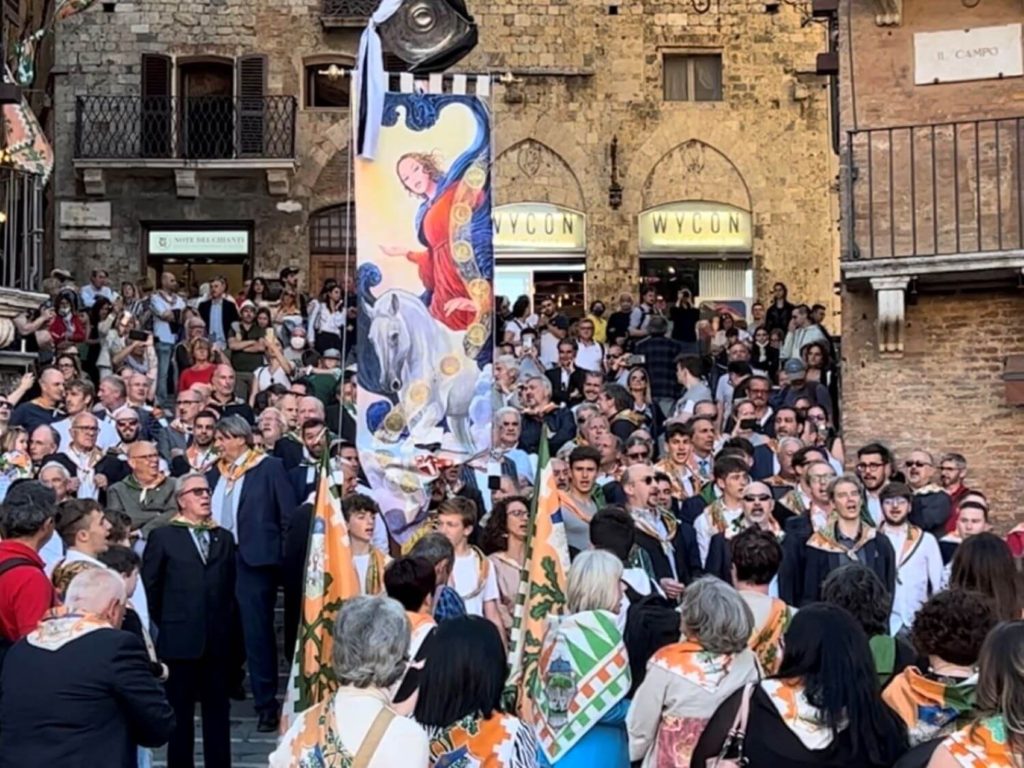
These contrade are essentially neighborhoods, and they’re one of the defining aspects of Siena. Siena is divided into 17 contrade, each with its own symbol and all of them in a centuries old competition to outdo one another. Perhaps the most well-known contrade competition is the biannual Palio, a horserace around Piazza del Campo. In addition to these races, they also hold various civic events to raise pride and support for their given contrada throughout the year.
If you’re lucky, you’ll encounter signs of the ways in which the contrade attempt to one up one another. These can include a wide range of things such as small civic museums, various ornamentations with the contrada’s symbols, parades and traditional flag throwers practicing their craft among other things.
We were fortunate enough to be in Siena to see a rally and flag throwing. Our first afternoon there, we saw people practicing with their flags, which was exciting to witness. The second day, though, a large group from another contrada came through Piazza del Campo chanting and dancing while waving their flags. It was quite the spectacle that made Siena come alive far more than any museum could.
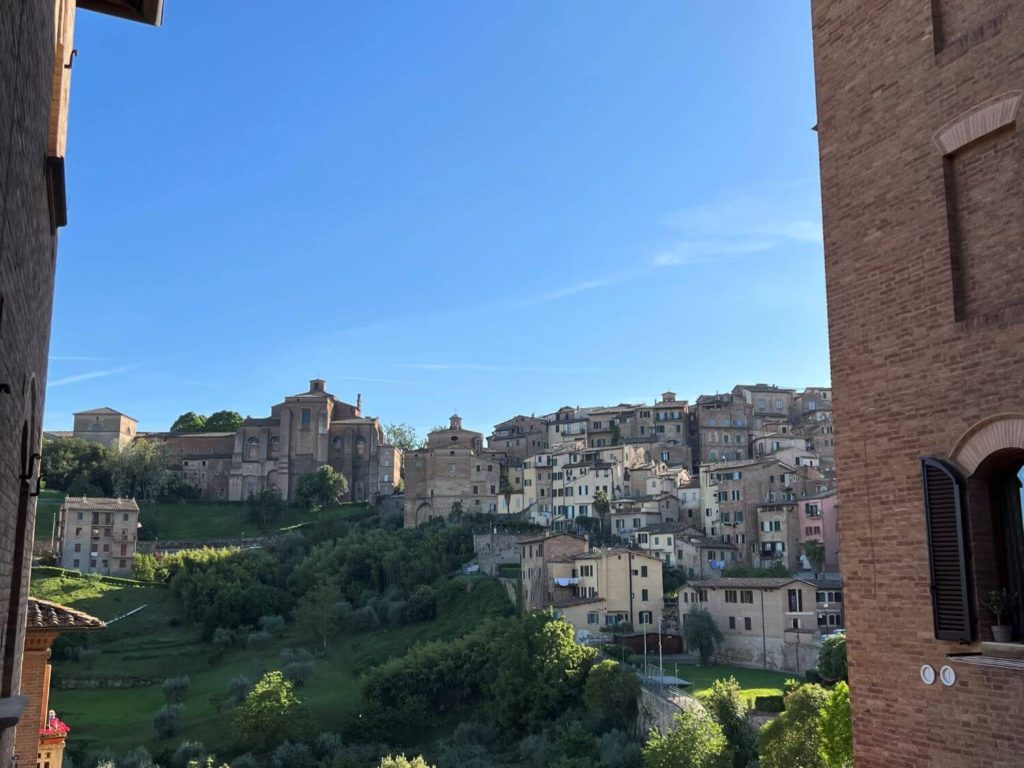


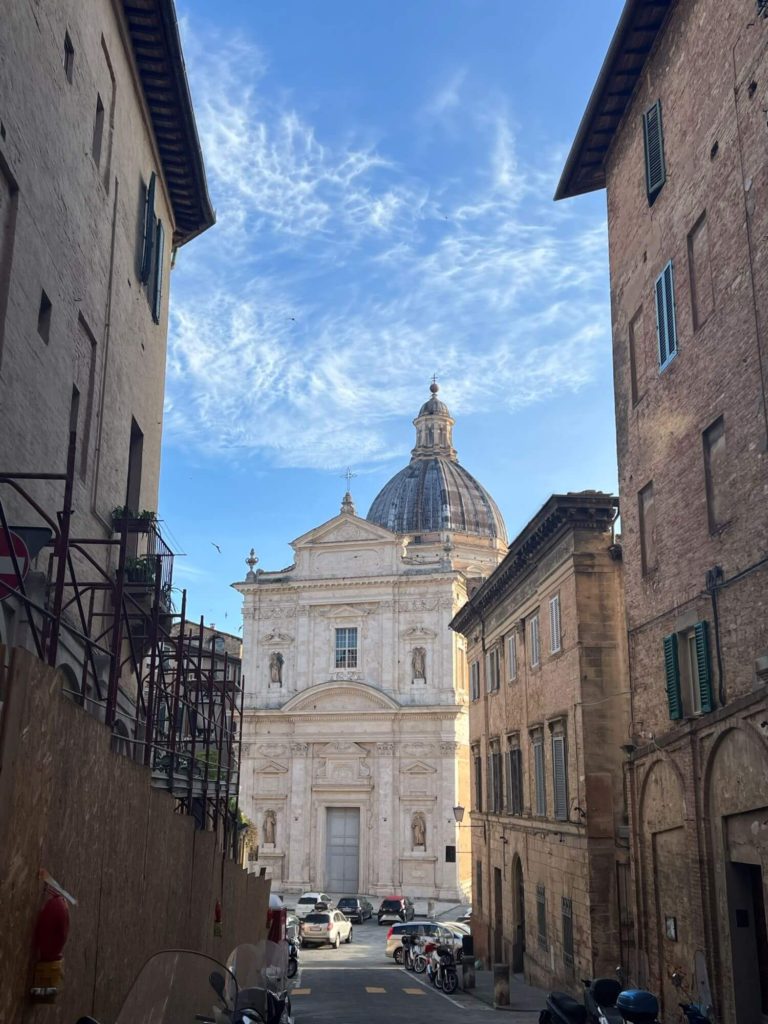

I had fun trying to discover as many of the contrade symbols as I could. Putting together a scavenger hunt of the 17 symbols could be a great way to entertain young kids.
Siena’s Duomo and Dome Climb
| Hours | November – March 10:30 to 5:30 April – October 10:00 to 7:00 |
| Length of Visit | 30 minutes for the dome climb 20 – 30 minutes to tour the duomo |
| Cost | €22 for Gate of Heaven Pass (entire complex with the tower climb) €15 for Opa Si Pass (entire complex without the tower climb) €8 for just the duomo |
| Highlights | Dome climb: views of the floor murals, rooftop views, close-up of the rose window Duomo: close-up views of the floor murals, Bernini statues, Piccolomini Library |
The Gate of Heaven
Of all the things detailed in this guide, the climb up the duomo’s dome, called the Gate of Heaven, is the only thing that requires timed reservations. So, immediately after parking, we quickly made our way to the duomo to await our tour.
Shortly after the reservation time, a guide came to take our group of about 20 people up to the duomo’s roof. The guide is there primarily to lead you around and answer questions. He did provide some information but nothing substantial.
The climb up the dome offers good views of the duomo’s interior, including great top-down views of the muraled floor and an eye-level look at Duccio’s rose window. There are good views of the Siena skyline, as well.


Touring the Duomo
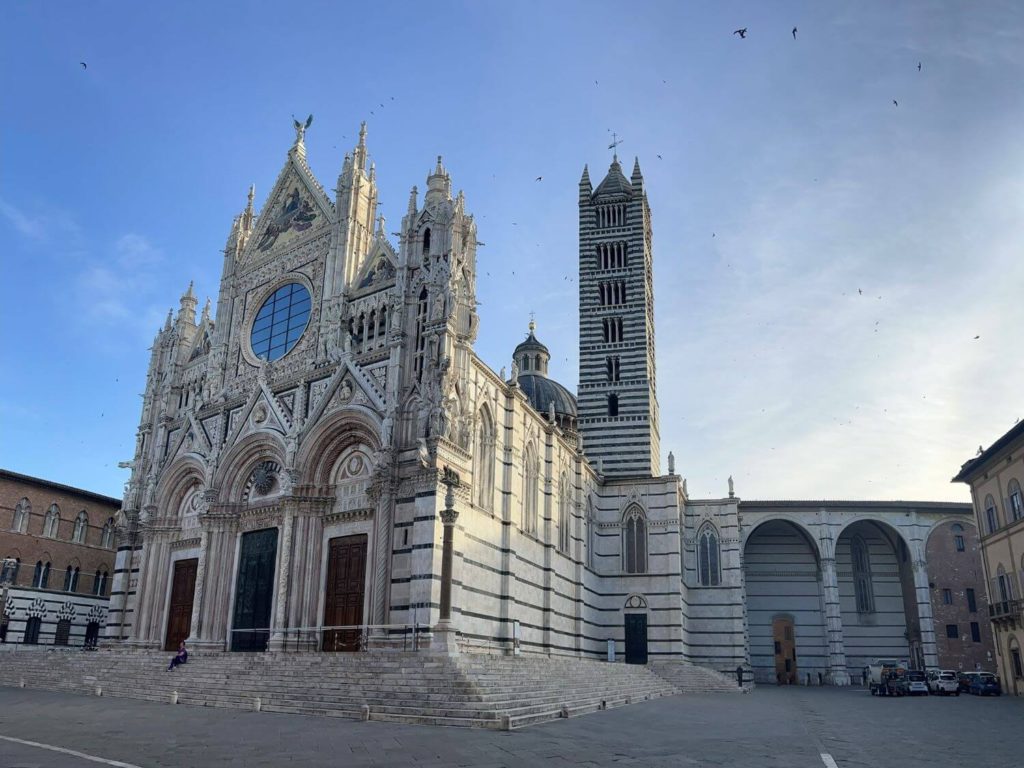
After seeing the duomo from the rooftop, walking around it from the ground really shows off how huge of a cathedral it is. The alternating striped marble of the columns and walls all work together to strike an imposing sight for visitors.
While admiring the walls, take time to observe the two gorgeous stained-glass windows at either end of the nave: the rose window over the altar and the Last Supper over the entrance.
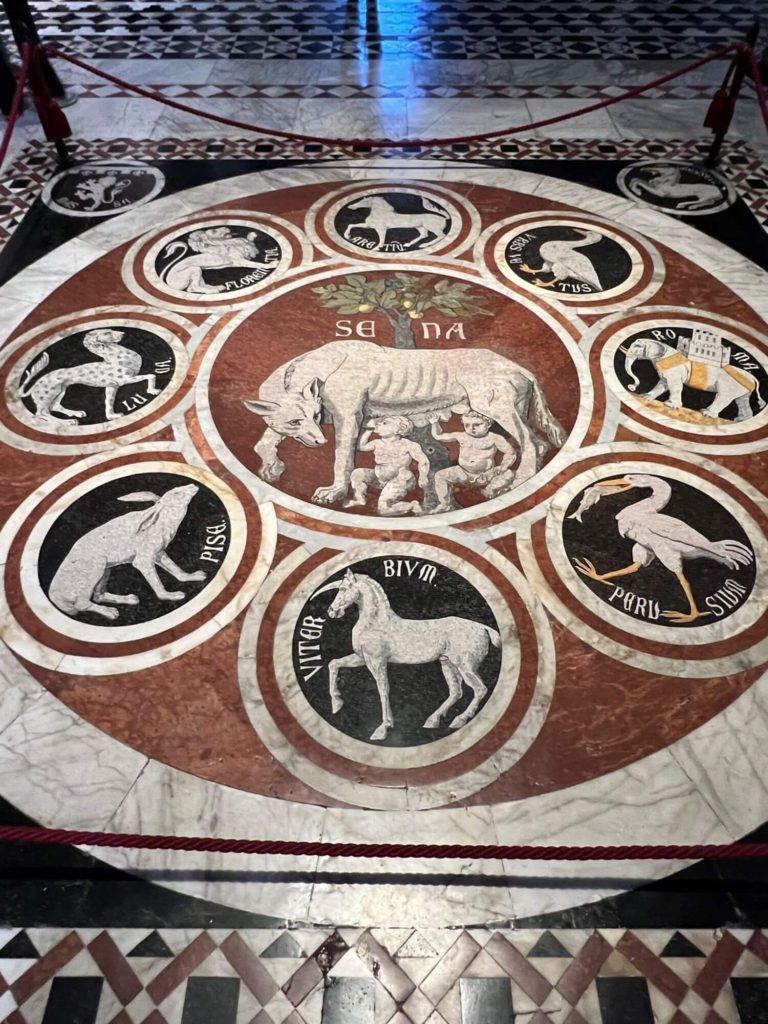
Once you get over the size of the duomo, the next thing your eyes are drawn to are the many ornate murals on the floor. The number and quality of the murals makes them unique compared to other churches you can visit in Italy. Many were uncovered during our visit in May, but they only uncover all of them during select times of the year. They typically uncover the murals during the summer months through mid-October.
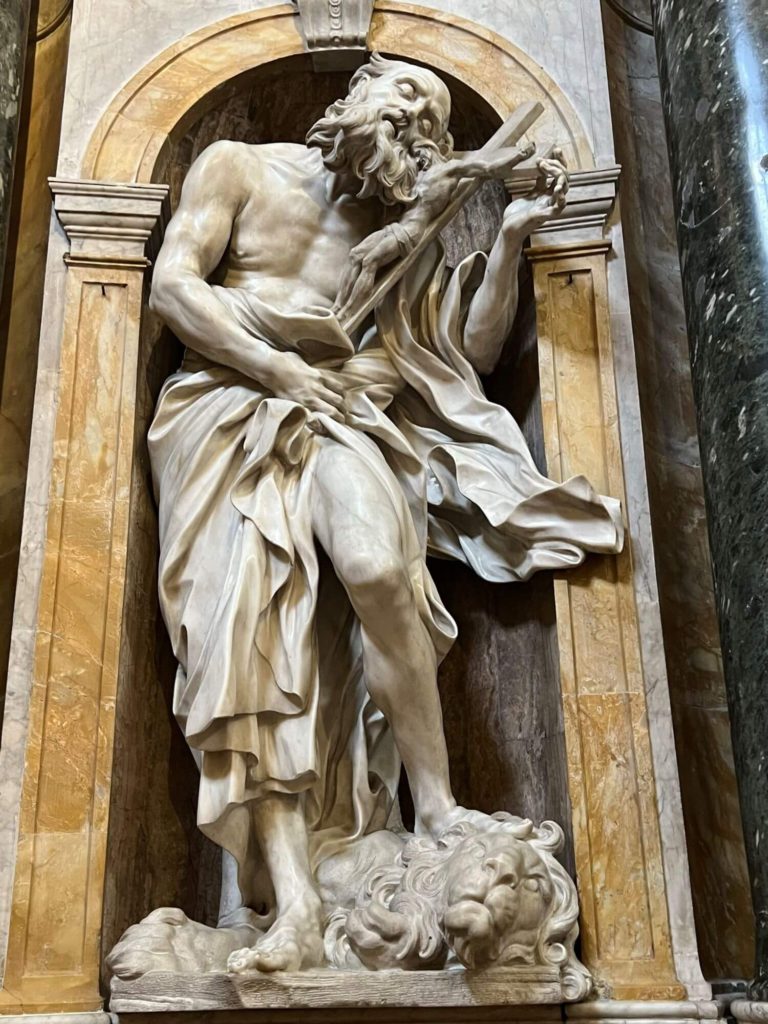
Siena’s Duomo also has several excellent sculptures from masters like Bernini, Donatello and Pisano.
Included in your ticket to Siena’s Duomo is the Piccolomini Library, a small room along the side of the nave. The library contains 10 frescoes by Pinturicchio from the 15th century. These frescoes display scenes from the life of Aeneas Piccolomini, Siena’s hometown pope who became Pius II. The frescoes are notable for their use of perspective and immaculate detail.

Baptistery of San Giovanni
| Hours | November – March 10:30 to 5:30 April – October 10:00 to 7:00 |
| Length of Visit | 5 – 10 minutes |
| Cost | €15 (included in Opa Si Pass) |
| Highlights | baptismal font |
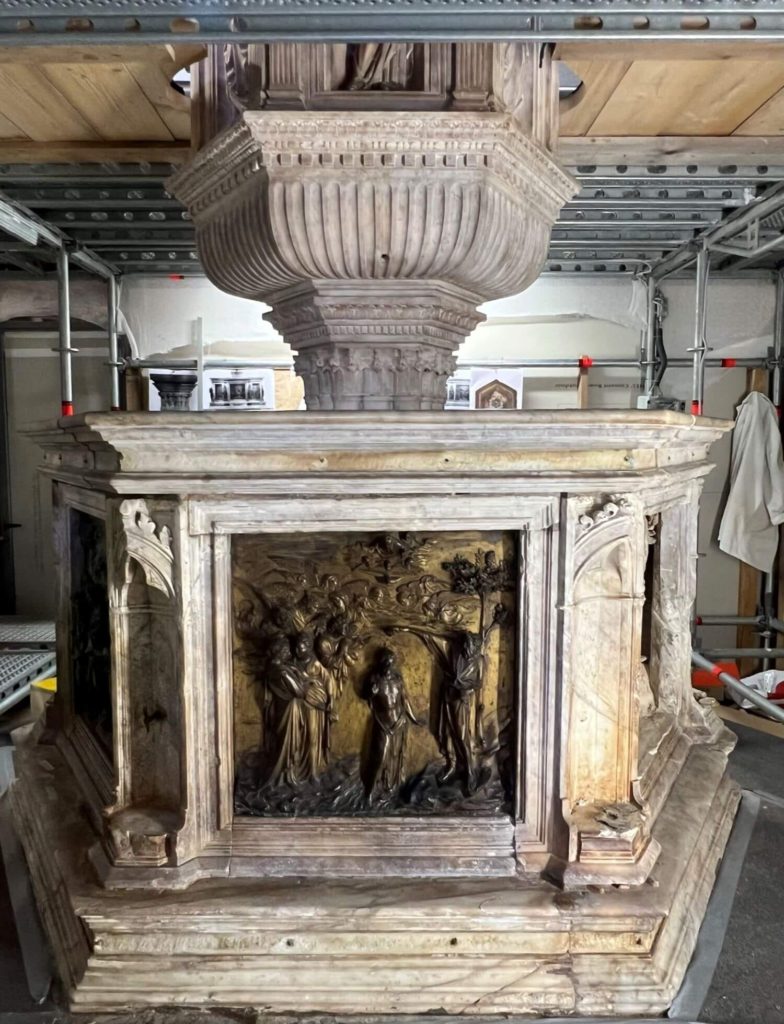
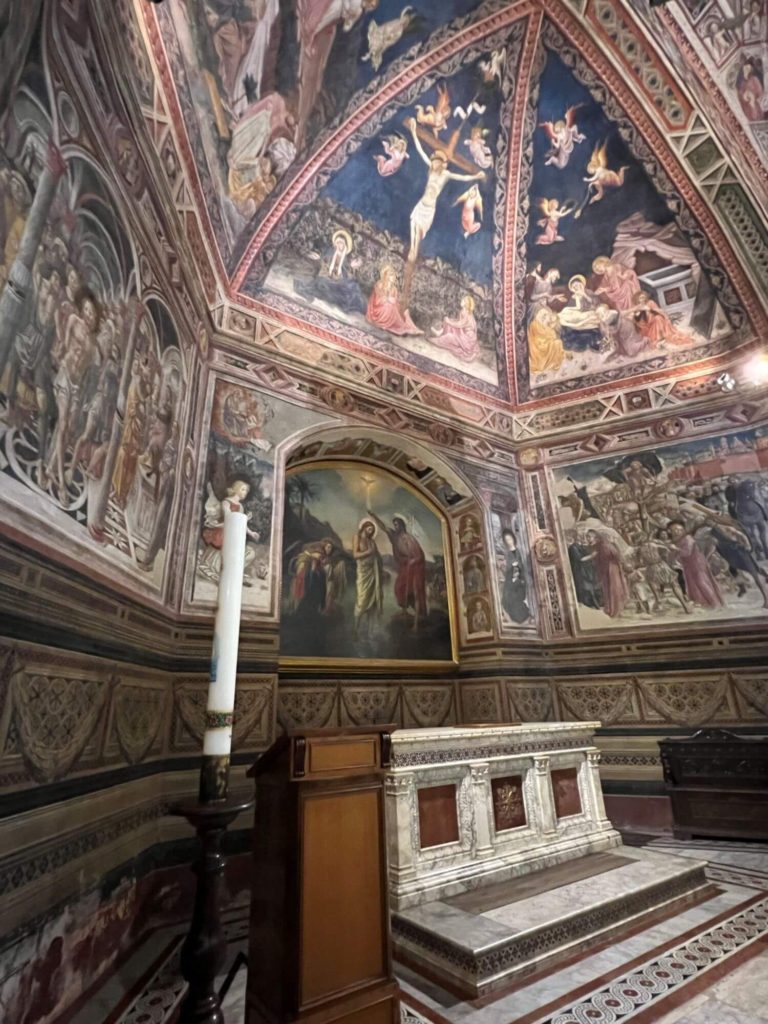
The Baptistery of San Giovanni is worth a quick walkthrough to see its centerpiece 15th century baptismal font. Walking around the font, you’re met with panels telling the story of St John’s life by a who’s who of Renaissance artists including Ghiberti and Donatello. Behind the font are large frescos depicting other important Christian scenes.
Unfortunately, when we visited in May 2022, the baptismal font was undergoing extensive renovations. The scaffolding and various other coverings made it hard to see much of anything. I can’t provide too much more detail beyond saying it is only a brief visit, so it should be worth a quick peek in if nothing else.
The Crypt
| Hours | November – March 10:30 to 5:30 April – October 10:00 to 7:00 |
| Length of Visit | 20 – 30 minutes |
| Cost | €15 (included in Opa Si Pass) |
| Highlights | evocative setting, 12th century frescos |
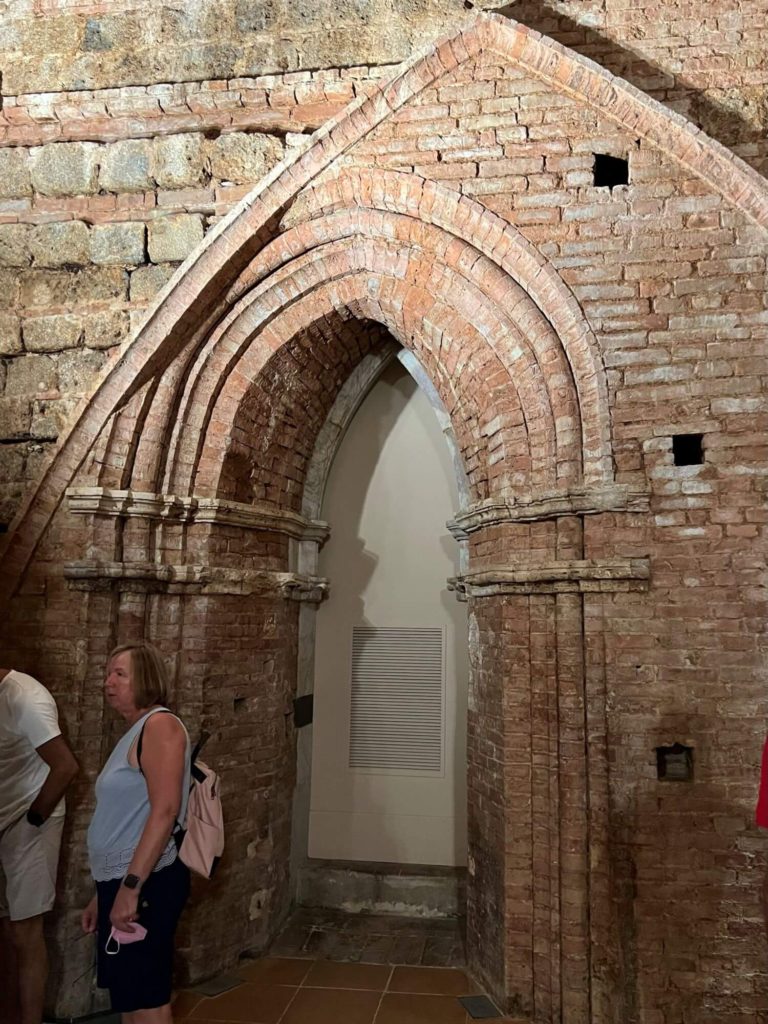
Dating back to the 12th century, the Crypt was discovered during excavations in 1999 and was quickly noted to be an important archeological discovery. The Crypt is what remains of an early Romanesque church that was filled in to create a foundation for the duomo we see today.
Walking around the Crypt, you can find several pre-Renaissance frescoes and original walls from the early church. More than anything, the Crypt offers visitors an evocative look at early Sienese art in a space that was untouched for centuries before its rediscovery.

We had a bit of a hard time finding the entrance to the Crypt. You can find it towards the top of the staircase leading up from Piazza San Giovanni.
The Duomo Museum
| Hours | November – March 10:30 to 5:30 April – October 9:30 to 7:30 |
| Length of Visit | 30 minutes |
| Cost | €15 (included in Opa Si Pass) |
| Highlights | rooftop views, Duccio’s rose window, Duccio’s Maestà, Donatello’s Madonna and Child |
The Duomo Museum contains artwork from the duomo that was placed here for preservation. It has a few masterpieces, an interesting gallery of statues and then a collection of other, less interesting objects.
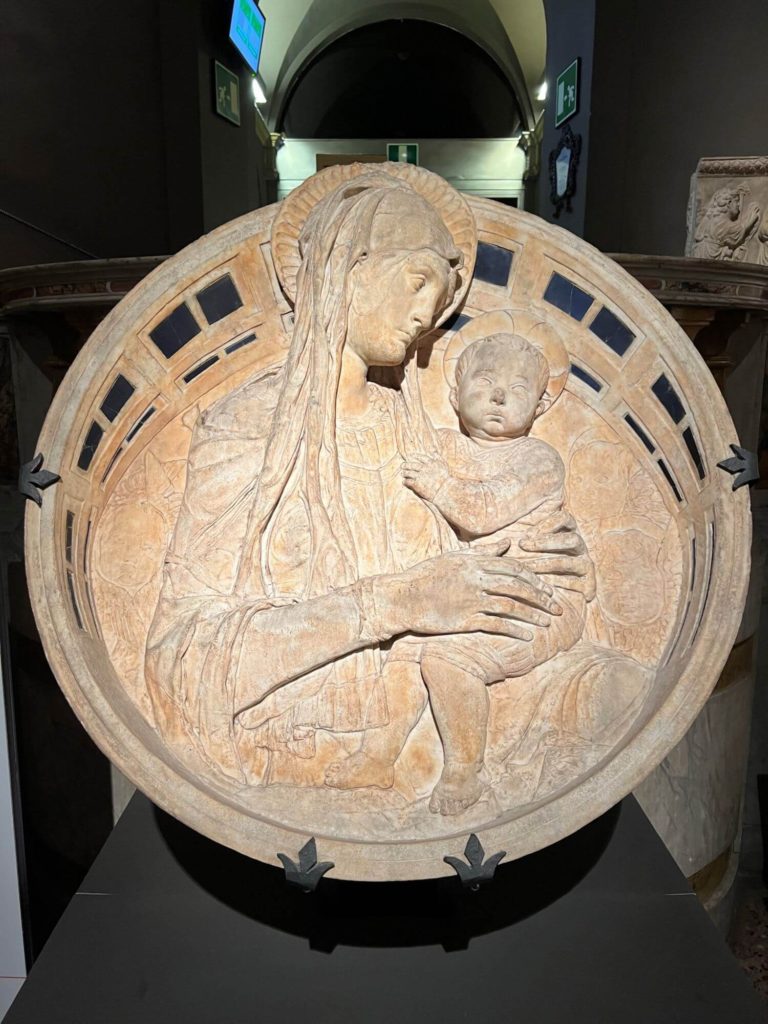
Most of the best bits of the museum are on display on the ground floor right when you enter. Here you can find Donatello’s somewhat forlorn Madonna and Child and, across the room, Duccio’s original rose window.
The rose window is the most impressive piece in the museum. Its nine panels tell different stories about the Virgin Mary. All the panels are finely detailed and colored with vivid hues that please the senses. It is understandably not quite as vibrant as the copy that sits in the duomo now, yet nevertheless, seeing it up close is a real treat.
Upstairs, you can view another of Duccio’s masterpieces, his Maestà. Apart from that, though, there wasn’t much else in the museum that caught my eye.

Panorama del Facciatone
You can also climb the Panorama del Facciatone from the museum. This viewpoint is the unfinished section of what was supposed to be the entrance to an even larger cathedral that was being constructed to outdo Florence’s Duomo. Unfortunately, a plague ended construction in the 14th century, and these walls were left as a testament to what could have been.
We attempted to do this climb. However, because the stairs and viewpoint are both narrow, they only allow so many people up at a time. We waited for about 10 minutes before giving up because we had other things we wanted to see.

As far as church museums go, Siena’s Duomo Museum was my least favorite. It had some objects worth seeing, and since it’s included in the ticket, it’s worth a visit. However, you may just want to see the highlights, get in line for the view and then leave if you’re starting to feel tired.
Basilica of San Domenico
| Hours | March – October 7:00 to 6:30 November – February 8:30 to 6:00 |
| Length of Visit | 15 – 20 minutes |
| Cost | Free |
| Highlights | peaceful and open interior, modern stained-glass behind altar |
After a short nap back at the hotel, I headed out alone to see a couple sights on my own. My first stop was the Basilica of San Domenico.
Truly, this church isn’t anything particularly special. And yet, I enjoyed my short visit here because of how starkly different it was from the ornate churches we had visited up to this point.
The basilica does have some historical frescoes and objects, but the main appeal for a visit is how empty and tranquil it is to visit. It also has some modern stained-glass windows worth seeing behind the altar.
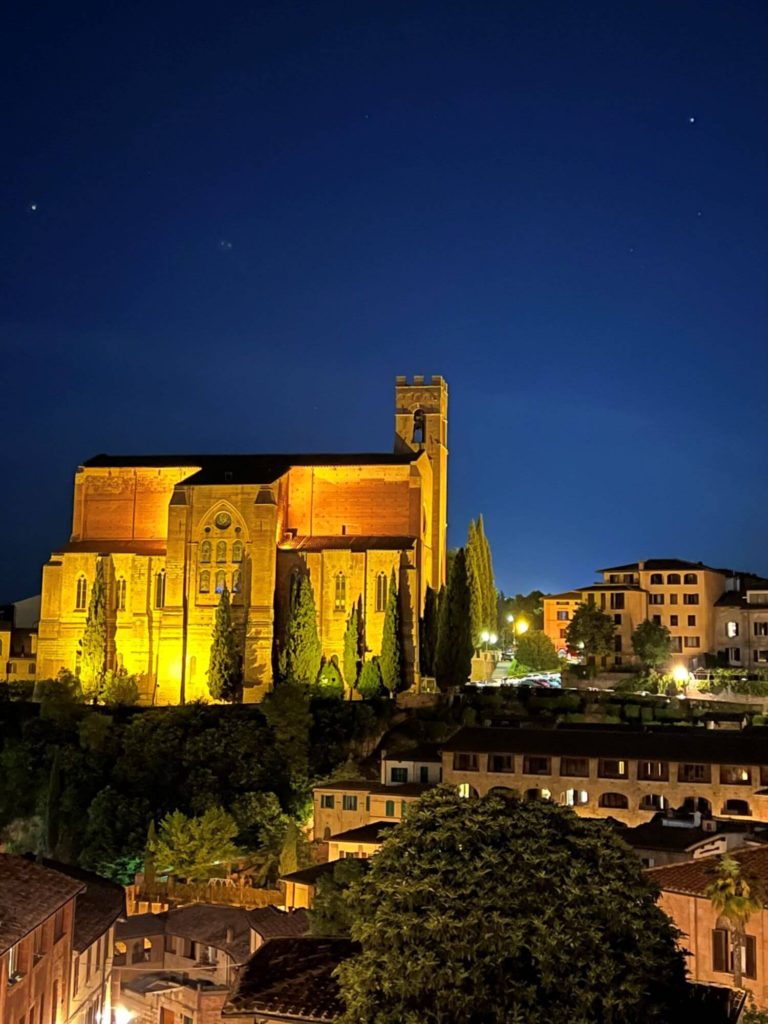
Pro Tip: Try not to visit at the same time as a school group. My visit was only peaceful for about five minutes before 30 pubescent children walked in.
Sanctuary of St Catherine
| Hours | Daily 9:00 to 5:30 |
| Length of Visit | 20 – 30 minutes |
| Cost | Free |
| Highlights | frescoes telling St Catherine’s story, peaceful courtyard |
The Sanctuary of St Catherine is another peaceful gem in the middle of Siena’s medieval roads. When you enter the sanctuary, you’re immediately greeted by a tranquil courtyard with vibrantly colored flowers, a well and the aging facade of the associated church with its bells hanging overhead. It’s nothing particularly special but taken as a whole, it’s a lovely spot to rest and reflect.
You can also visit the small chapel and the humble home where St Catherine was born and raised. Inside her house are several paintings depicting important events of her life including her “mystical marriage” to Christ and her efforts to persuade the pope to return to Rome.
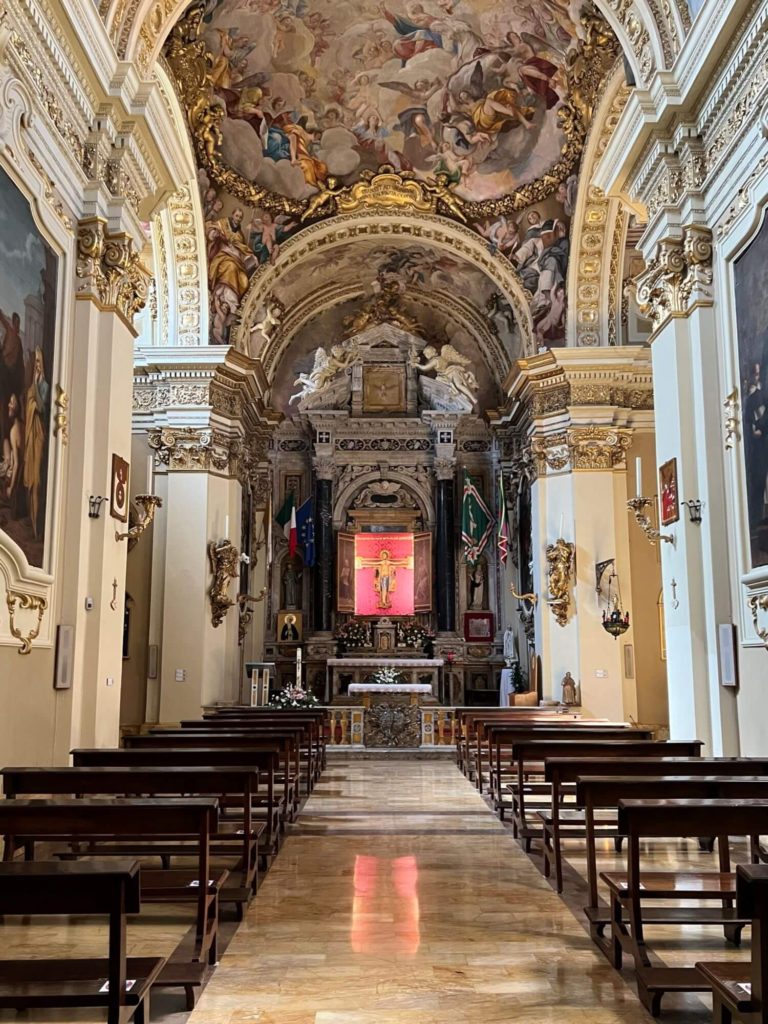

The Sanctuary of St Catherine is a blink-and-you-might-miss-it type of place. It has a fairly large courtyard at its entrance, but there isn’t much in the way of signage telling you where you’re at. Look for the black gate leading to a brick portico on Fondaco di Sant’Antonio.
Piazza del Campo
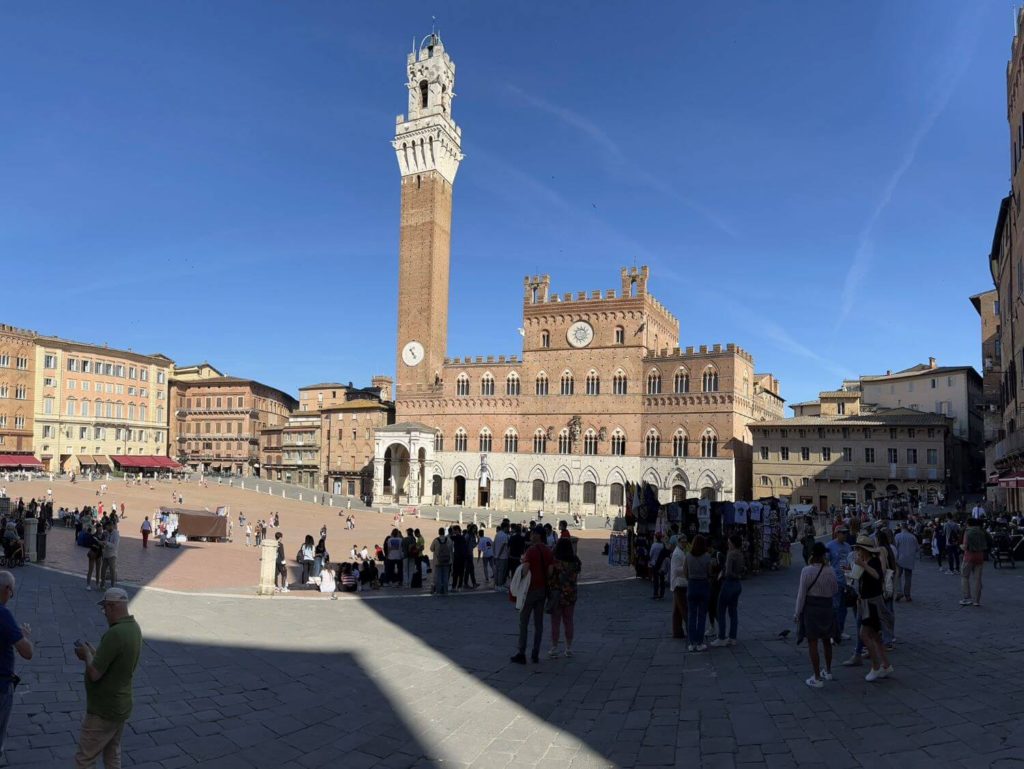
What can I say about Piazza del Campo? This large, spherical plaza was hands down my favorite of the many we spent time in during our trip to Italy.
From the sunburnt colors, the architecture of the city hall and surrounding buildings, the romantic Fountain of Joy and Italy’s famed la dolce vita permeating the square, there was just something supremely special about Piazza del Campo.
In addition to seeing the contrada parade I mentioned earlier, we also saw a fraternity from the local university have some sort of event. They turned one of the entrances to the square into an adult-sized slip and slide, paraded around in fancy outfits and drove around the plaza in very risqué cars. No other square we saw had quite the same degree of civic pride and use as Piazza del Campo.
I could have just sat in this square for hours on end watching everyone and everything, and that’s exactly what I did our second night in Siena. In what was one of my highlights from Italy, I spent two hours sitting here alone while the moon made its slow trek over the city hall. Children played without a care in the world, couples exchanged kisses and others simply took it all in like I was doing. It was the perfect combination of everything that makes Italy special.
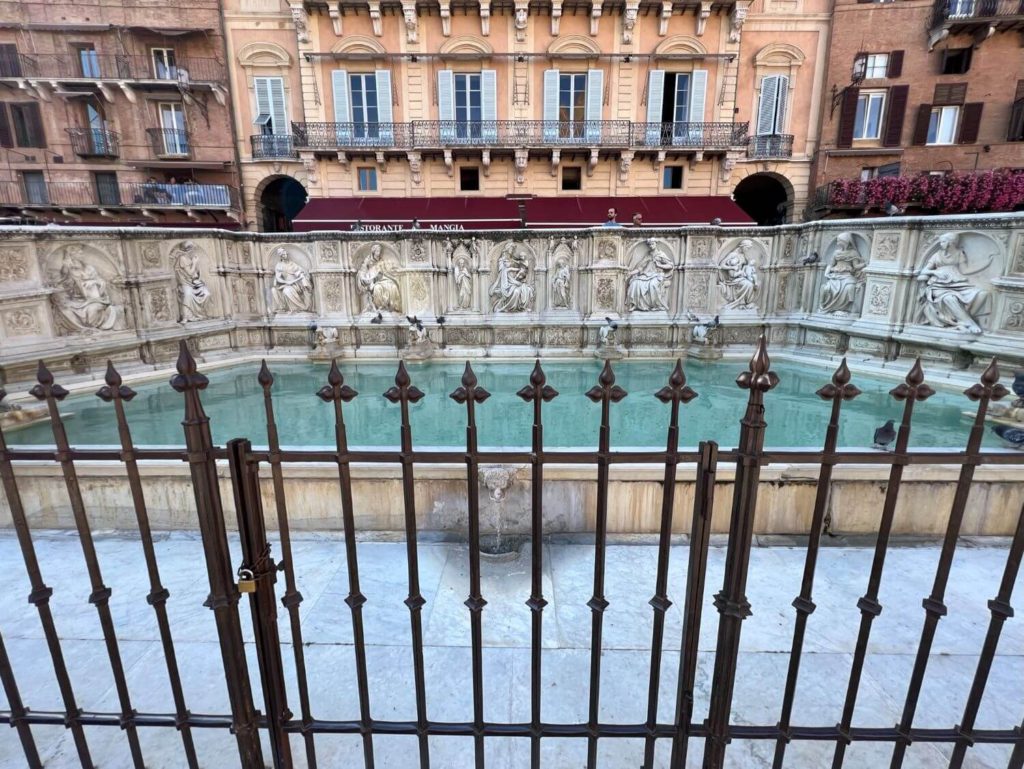

My evening in Piazza del Campo was one of my favorite moments in Italy. What was the favorite? Read about my early morning alone in Venice!
Wine Tour of Tuscany
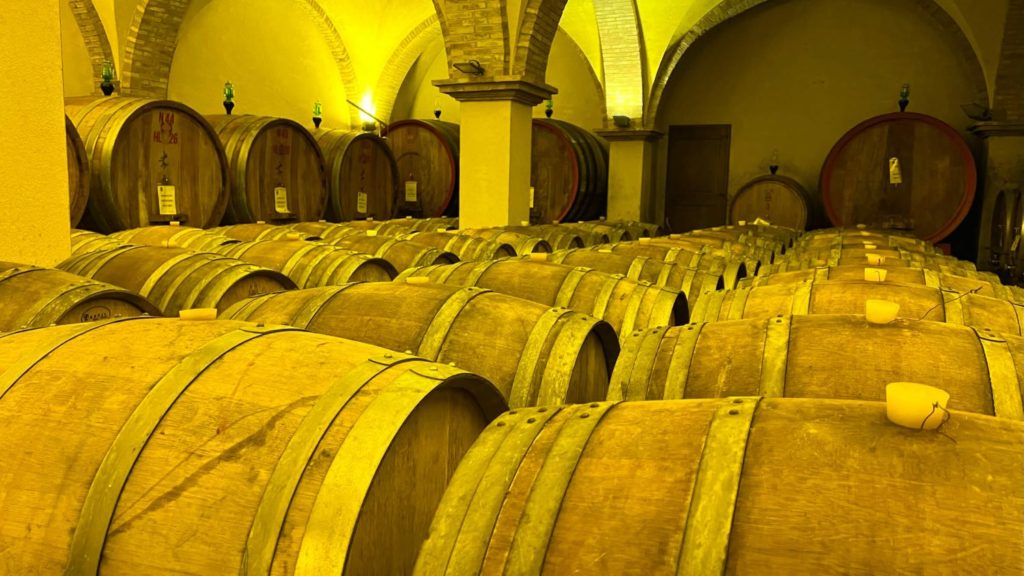
The Tuscany countryside is filled with vineyards producing excellent wines such as Chianti and Brunello di Montalcino. With its high-quality pedigree, many travelers to Italy consider touring some of the vineyards here a must, and this is how we spent our second day in Siena.
With its access to main roads, Siena is a great spot to use a homebase for a wine tour of Tuscany. Compared to Florence, another popular homebase for wine tours, its closer to many of the popular wine-producing towns and it maintains a sense of small-town charm that Florence lacks.
There are many options for a wine tour ranging from renting your own car to a wide number of tour groups. We purchased this wine tour from Viator that took us to three different wineries plus a visit to Pienza.
I’m not a big fan of tours, but we had a ton of fun with this group. Our driver was entertaining, the wine was delicious and, most importantly, we didn’t have to worry about driving.
Plan to have any tour of the countryside’s wineries take up most of a day. We left at 9:00 and didn’t get back till 4:00. There’s enough time to walk around a bit in the morning if you wake early enough. Then, you could plan something once you get back, but you will likely be exhausted by then. Don’t count on doing much else this day.
Still on the fence about doing a tour? You can read all about our tour here to help you decide!
Other Things to do in Siena, Italy
Palazzo Pubblica and Museo Civico (City Hall and Civic Museum)
Palazzo Pubblica is the iconic burnt orange building that dominates the skyline of Piazza del Campo. I enjoyed my time simply appreciating its impressive design and exterior, but you can also enter the building where Siena’s government resides to visit its museum.
The museum contains objects and paintings related to the history of Siena’s democratic institutions. Many of the frescoes act as a window into what life was like in Siena during the late Middle Ages.
After seeing the museum, for an additional fee you can climb the city tower for views of Siena.
Torre del Mangia (City Tower)
Serious question: Is it even an Italian city without a tall tower to climb?
Siena is no different. For a fee, you can climb the city hall tower for sweeping views over Piazza del Campo and Siena.
Even as a tower lover, I had to skip this one. We just climbed Siena’s Duomo’s tower (and several other towers over the preceding several days); I needed a break.
Next time, Siena!
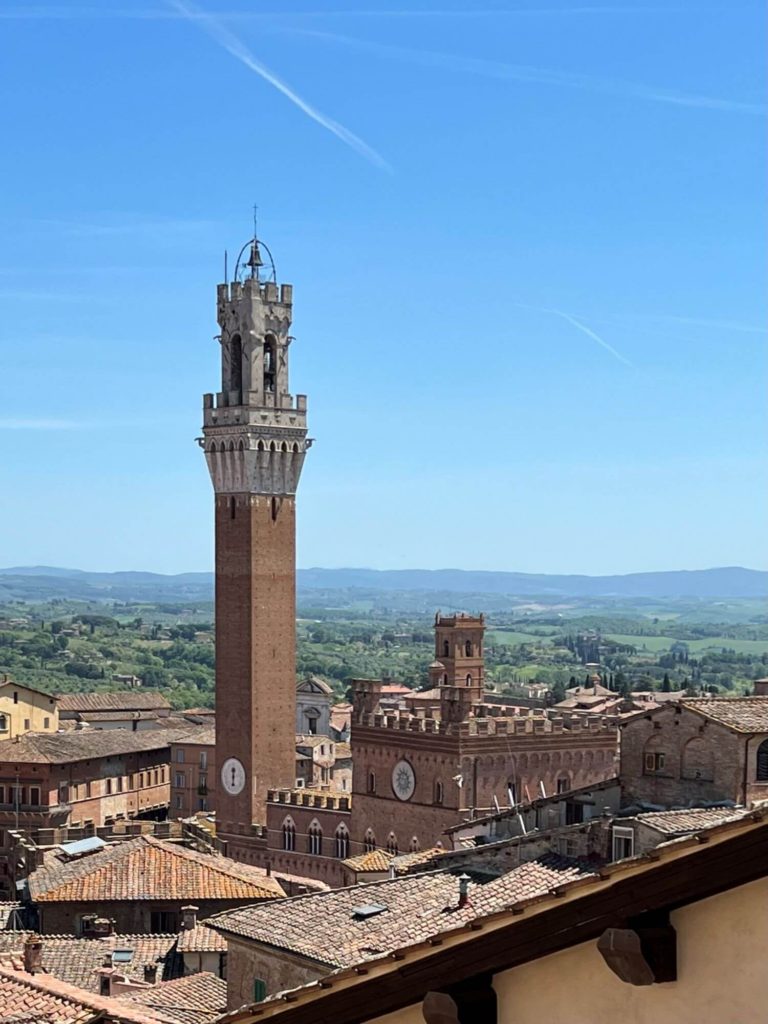
I’ve compared my photos from the duomo to pictures online from the city tower, and this one does look like it has much better views. Nonetheless, if you have tower fatigue, you may want to just pick one. I’d probably still pick the duomo for the additional views of its interior.
Pinacoteca Nazionale
The Pinacoteca Nazionale exhibits the development of Sienese art from the 12th to the 16th century. This art gallery has no particular highlights, but it does have some lesser-known works by Duccio.
It could be worth a visit if you like medieval art.
Santa Maria della Scala
Santa Maria della Scala is an extensive museum with an interesting history. It started its life as a hospital providing care and lodging to pilgrims traveling the Via Francigena to Rome. The hospital also served as an orphanage during these early years.
To encourage pilgrims to use their services, the hospital began acquiring an assortment of relics.
Today, you can view many of these relics and frescoes throughout the building showing the various services it offered to people over the years. There is also a section where the original statues from Piazza del Campo’s Fountain of Joy are stored. Other items on display are archeological finds from the Bronze Age, Etruscan civilization and Roman empire.
Eats and Drinks in Siena, Italy
La Vecchia Taverna di Becco
La Vecchia Taverna di Becco had two of the best pasta dishes we had in Italy. We sat at one of their outside tables on one of Siena’s narrow roads. The setting was a romantic one, especially considering it was our first meal in town.
We only had pasta since it was lunch, but, wow, it was amazing! I had the pasta carbonara while Michelle had cacio e pepe.
Prior to this meal, I never used to like pasta carbonara, but I now know that was because I never had a good one. As far as cacio e pepe, I had never had that at all. The pasta here was a fantastic introduction to these classic Italian dishes!
Trattoria la Tellina
We found Trattoria la Tellina just down the road on Via Della Terme from our hotel. The inside of the restaurant is unassuming, adorned with just a few decorations and red and white tablecloths. It reminded me of the types of mom-and-pop Italian restaurants you see in movies about the mob.
It wasn’t very crowded, presumably because it doesn’t do much to stick out on the road. The people who were there seemed to be locals, which is always a good sign for a restaurant.
The food was reasonably priced and tasty. We shared one of their pasta dishes and the grilled veal.
il Battistero Siena Bistrot
Bistrot itself is nothing especially memorable. However, it has a nice setting in Piazza San Giovanni where you can admire the baptistery while reflecting on your visit to the duomo complex with a drink and some snacks.
il Pomodorino
I discovered this restaurant up a small alleyway near the Sanctuary of St Catherine and knew we had to come back for dinner one night after seeing the views.
Il Pomodorino is a pizza place serving a wide range of red and white pizzas plus a handful of other dishes. We shared a margherita and Romana pizza. The Romana pizza, in particular, was very memorable. It’s tomato, mozzarella, anchovies, capers and oregano. It sounds salty, but it wasn’t overly so – nothing that a Birra Moretti couldn’t help with.
While the food was great, it was second fiddle to the best part of il Pomodorino: an incredible view of the duomo and city hall. Even if you don’t plan on eating here, you should still come up this way for the sights.
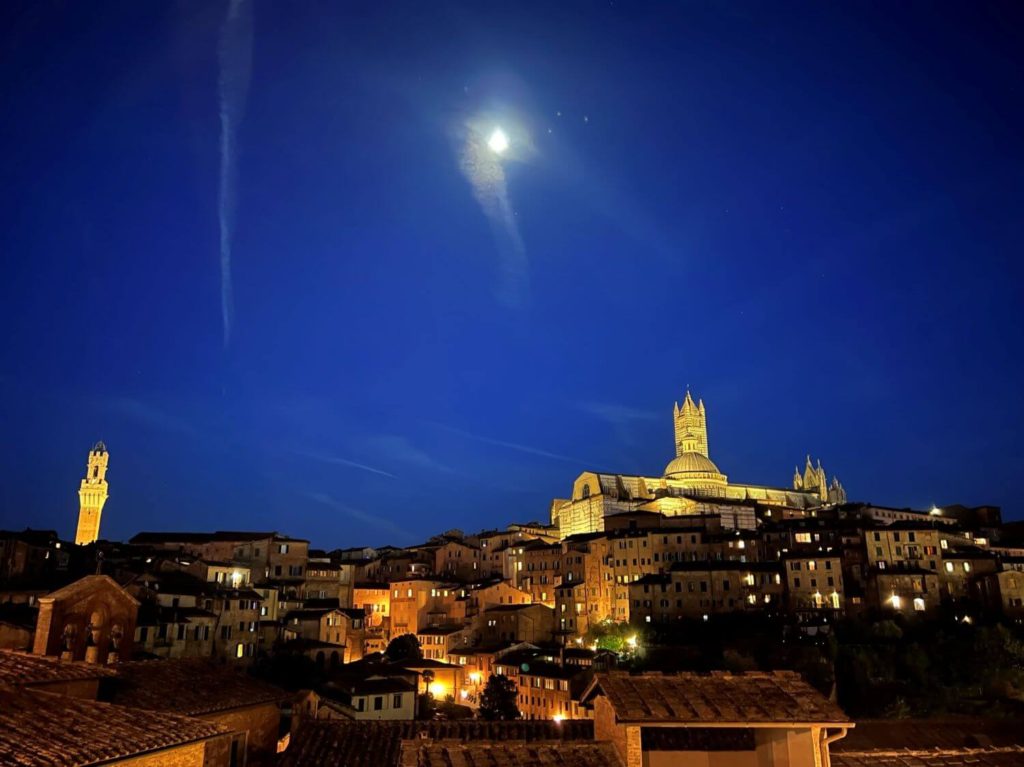

Try to get here around sunset if you can. The locals may think it’s a bit early for dinner, but you’ll be treated to some of the best scenes in Italy with your meal.
Ristorante alla Speranza
Ristorante alla Speranza was the cafe we randomly chose to have drinks at in Piazza del Campo. It sits a little off to the side behind the Fountain of Joy giving good views of the plaza.
And that’s about all I can say for this spot. There was nothing particularly special about Ristorante all Speranza, but there was also nothing bad about it.
Where to Stay in Siena, Italy
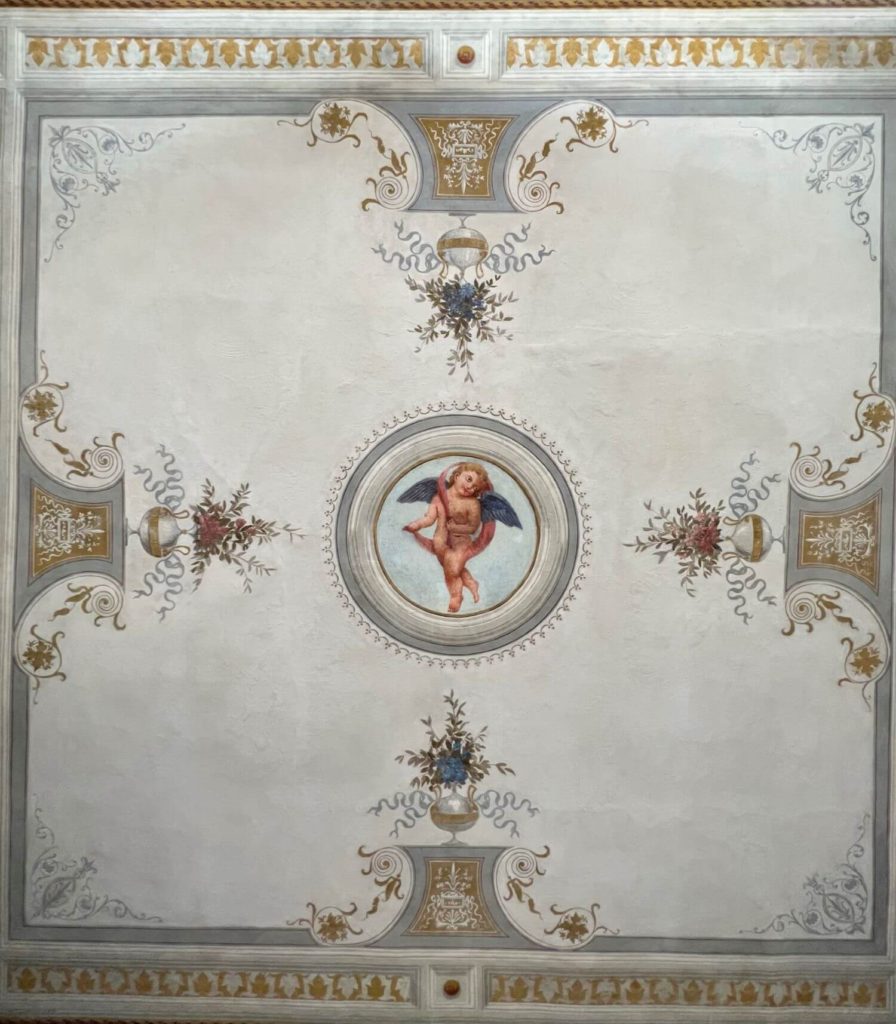
Antica Residenza Cicogne is a perfect hotel located just a short walk from Piazza del Campo. The hotel has seven spacious rooms accommodating groups of two to four. More importantly, each room is beautifully decorated with frescoes, carved-wood furniture and large, comfortable beds. Our room, the Lion Room, felt like it was right out of a villa in the Tuscany countryside.
Besides the rooms, there is a large common area with several tables, an electric tea kettle and small candies. It’s a delightful room to sit and rest after a day of sightseeing with some tea while you reflect on your day.
The proprietors of Antica Residenza Cicogne also provide an included breakfast consisting of various cereals, meats, cheeses, breads, pastries, fruit, coffee and tea.

Frequently Asked Questions About Siena, Italy
How to Get to Siena?
Siena has several public parking lots for those driving into town. There is also a bus stop that goes up to the city center and a train station located a short walk away from the city center.
For drivers, you should avoid driving into town. Siena has free parking outside of the city center at the Medici Fortress, pay parking at the soccer stadium and more pay parking south of town near Porta Tufi.
Can Siena be Done as a Day Trip?
If you have a short itinerary but really want to visit Siena, you could do it as a day trip.
However, I recommend taking at least two days to see Siena. A huge part of Siena’s appeal is the city itself and its individual neighborhoods, and the best way to experience both is early in the morning or late at night when the day trippers are gone.
More Posts for Planning Your Trip to Italy
Here are some of the other itineraries I’ve written to help you plan your dream trip to Italy!
And don’t forget to check out some of my tips and thoughts when it comes to planning a trip to Italy.
Thank you for reading this post. Paul Passing Through is a labor of love to which I’ve dedicated a lot of free time. If you’d like to show your support for my blog, you can Buy Me a Coffee to help fund the future of Paul Passing Through. I appreciate any contributions!
Resources to Book Your Trip to Siena
Whether you’re looking for tours, hotels or flights, here are some tools to help get you started planning your trip to Siena!
Look for activities and tours offered through GetYourGuide or Viator!
Search Flights
Still can’t find what you’re looking for? Check out my travel essentials pages for more of my recommendations.
Pin This Post!


