My Vienna Itinerary: A Quick 4-Day Dive into Austria’s Beautiful Capital
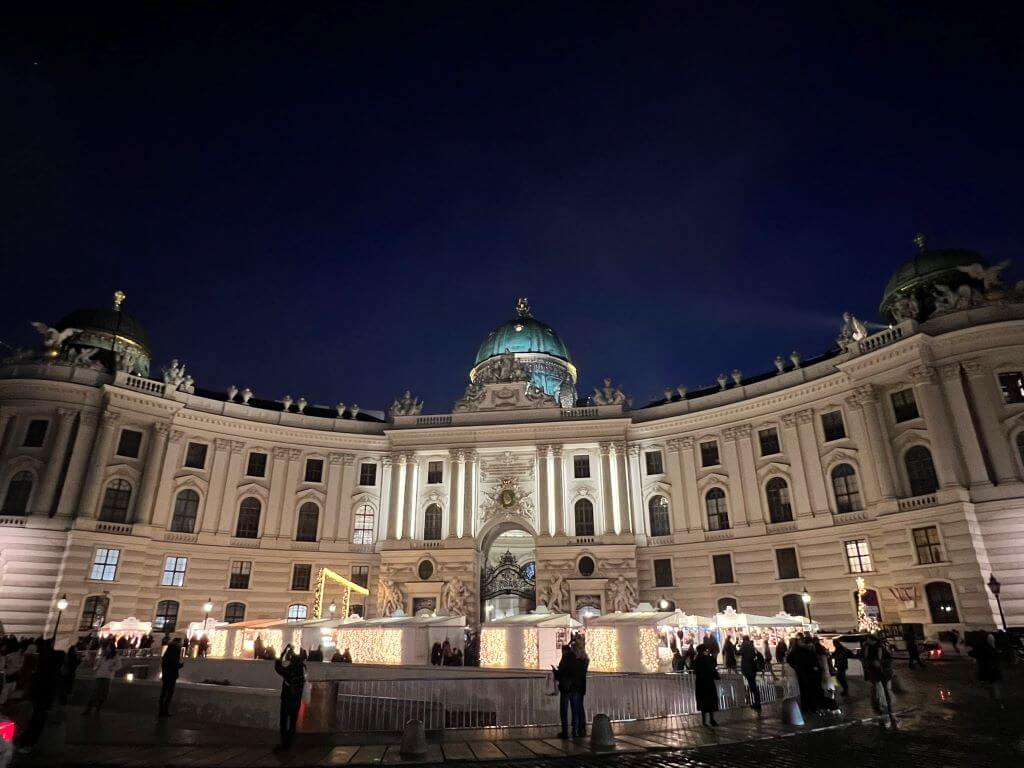
Visitors to Austria’s capital may have a hard time figuring out what to include on their Vienna itinerary. After all, Vienna is considered the City of Music with a rich tradition of classical and opera music. It was the seat of the Habsburg dynasty, where they ruled the Holy Roman Empire for nearly 350 years. Vienna was also an important artistic city, featuring Baroque and Art Nouveau elegance, as well as a whole new stylistic school known as the Vienna Secession.
And all that is just a brief overview of what you can expect when visiting Vienna. Unfortunately, if you’re like me, you may only have a few days here, so there’s no way to see it all. My Vienna itinerary is designed to help you out. It includes all the things we did during our visit around the holidays, plus several things I would have added had we not been busy ringing in the new year.
Disclaimer: This post may contain affiliate links. If you make a purchase through one of these links, I will earn a small commission. This occurs at no added cost to you.
Sights for Your Vienna Itinerary
Naschmarkt
| Hours: | Monday – Friday 6:00 – 9:00 Saturday 6:00 – 6:00 Food stands stay open till 11:00 |
| Length of Visit: | At least 30 minutes to peruse the stands |
| Cost: | Free |
| Highlights: | Wide variety of tasty-looking food stands |
Since we were traveling from Hallstatt and didn’t arrive in Vienna till the early afternoon, our first stop on our Vienna itinerary was the Naschmarkt. The Naschmarkt is Vienna’s most popular and most visited food market and can be found near the Karlsplatz tram stop.
At the Naschmarkt you can find food from all over the world. Even if you come here planning just to look, the various smells and colors will surely have your belly rumbling and mouth watering within minutes of your arrival.
Within the market are over 100 different stands selling spices, meats, vegetables, pastries, pastas, clothes and just about anything else you might want. In addition to all the vendors, Vienna’s Naschmarkt also has a number of restaurants if you’re looking for a place to sit down for a meal and a drink.
St Stephen’s Cathedral
| Hours: | Hours vary by attraction, day and time of year Click here for the cathedral’s calendar |
| Length of Visit: | 30 – 60 minutes |
| Cost: | All-inclusive ticket €25 South Tower €6.50 North Tower €7 Cathedral €7 Catacombs €7 |
| Highlights: | Views of Vienna, Romanesque and Gothic architecture |
St Stephen’s Cathedral is one of Vienna’s most historic and important buildings. It accentuates the central square of Vienna’s Old Town, appropriately named Stephansplatz after the cathedral.
A visit to St Stephen’s Cathedral can comprise several different parts of the church: the North Tower, the South Tower, its catacombs, the main part of the cathedral and a treasury museum. All these different things require a ticket, but you can walk a bit into the cathedral in a roped off zone for non-paying guests.
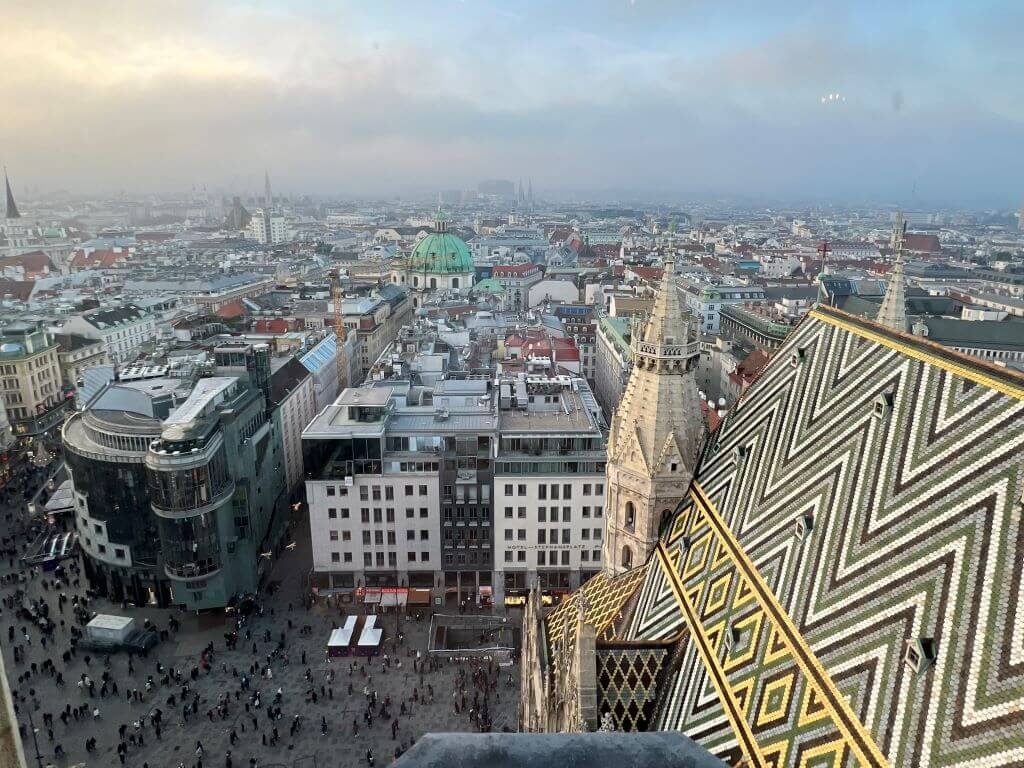
We only paid to climb the South Tower because we didn’t want to wait in line for the cathedral knowing we could take a look it in the free area. The climb up this tower was one of the more arduous tower climbs I’ve done in Europe. It requires taking 343 steps up an increasingly tight, narrow staircase while other visitors are coming back down the same route.
Once at the top, you have several great views of Vienna and the intricately tiled roof of St Stephen’s itself. Unfortunately, some of the views are partially blocked by iron bars. Despite all that, I thought it was worth it, but my wife thoroughly disagrees. If you like towers climbs, add it to your Vienna itinerary. If not, you can probably skip it.
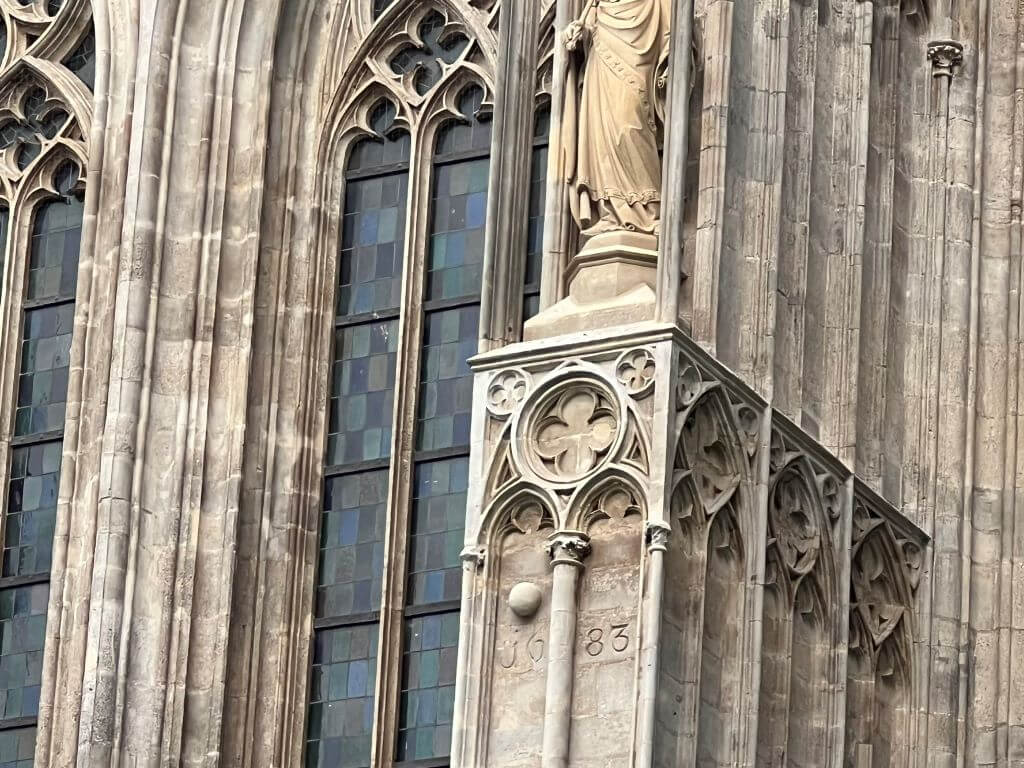
After climbing the South Tower, we waited in a bit of a line to enter the free section of the cathedral for a glance. Upon entering, we were able to see parts of the large Romanesque and Gothic interiors. It was a bit underwhelming if I’m being honest considering the amount of people there and the hype. It all felt a bit like visiting Disney World. I’ll give it the benefit of the doubt and say that paying for a ticket for the full cathedral could be worth it, but I wouldn’t bother waiting to enter the free section.
Upper Belvedere Palace
| Hours: | Daily 9:00 – 7:00 |
| Length of Visit: | 1 -2 hours |
| Cost: | €18.60 when purchased online €21.50 on site |
| Highlights: | Klimt paintings, the Marble Hall, Vienna views |
Throughout our two weeks in Bavaria and Austria, one of my favorite things we did was the Upper Belvedere Palace. This former palace belonged to Prince Eugene of Savoy, the savior of Austria during one of its wars with the Ottoman Empire. Today, it houses an impressive and easily managed art gallery to include on your Vienna itinerary.
The Upper Belvedere Palace features art from the 19th and 20th centuries with an emphasis on Impressionism, Art Nouveau, Romanticism and a handful of other styles. Yet, the real highlight for most is the number of paintings by Vienna’s own Gustav Klimt. His most famous work, The Kiss, is a must see here.
You can also see an impressive gallery of Modernist art. I don’t usually get too excited about this style, but the Upper Belvedere Palace’s collection was very nice and often thought provoking.
The gallery is well organized with rooms containing easily digestible amounts of art to prevent too much mental fatigue. Information placards are available throughout the palace with information on the paintings. You can get an audio guide, too. We skipped this option, and I never felt like I was missing out on anything.
Besides the art, the other highlight of the Upper Belvedere Palace is the Marble Hall. This palatial room is one of the first you’ll see as you walk through the art gallery. Rather than having any paintings, the Marble Hall’s opulent design is worth seeing. There are also some incredible views of Vienna from the windows in the Marble Hall.
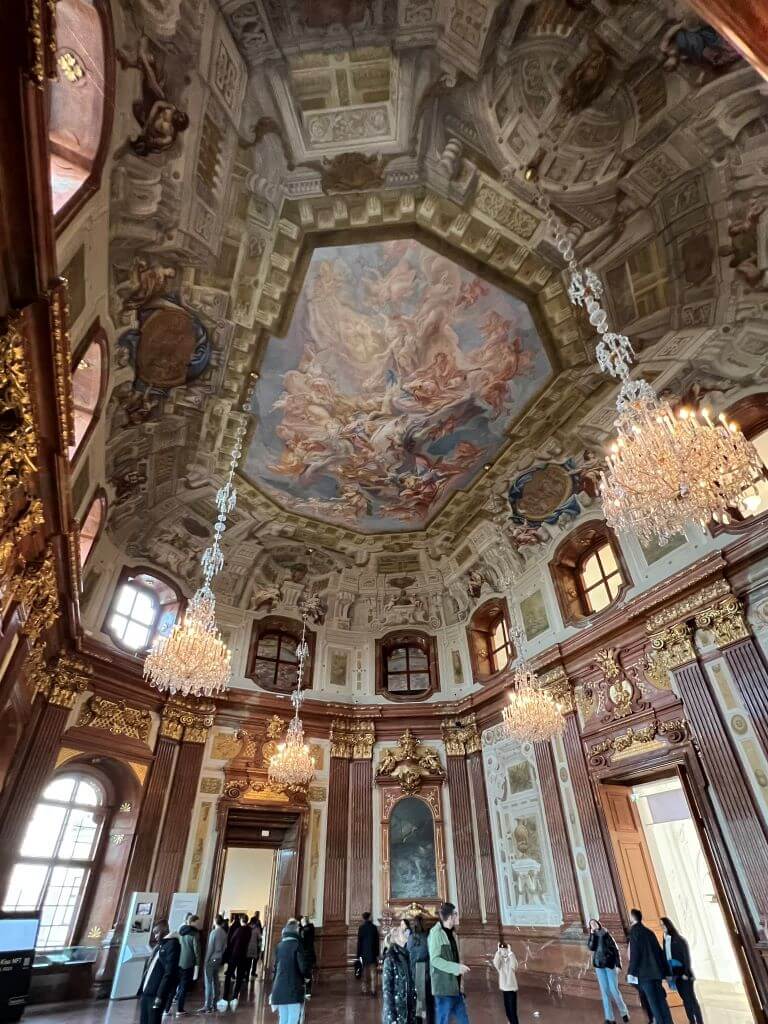

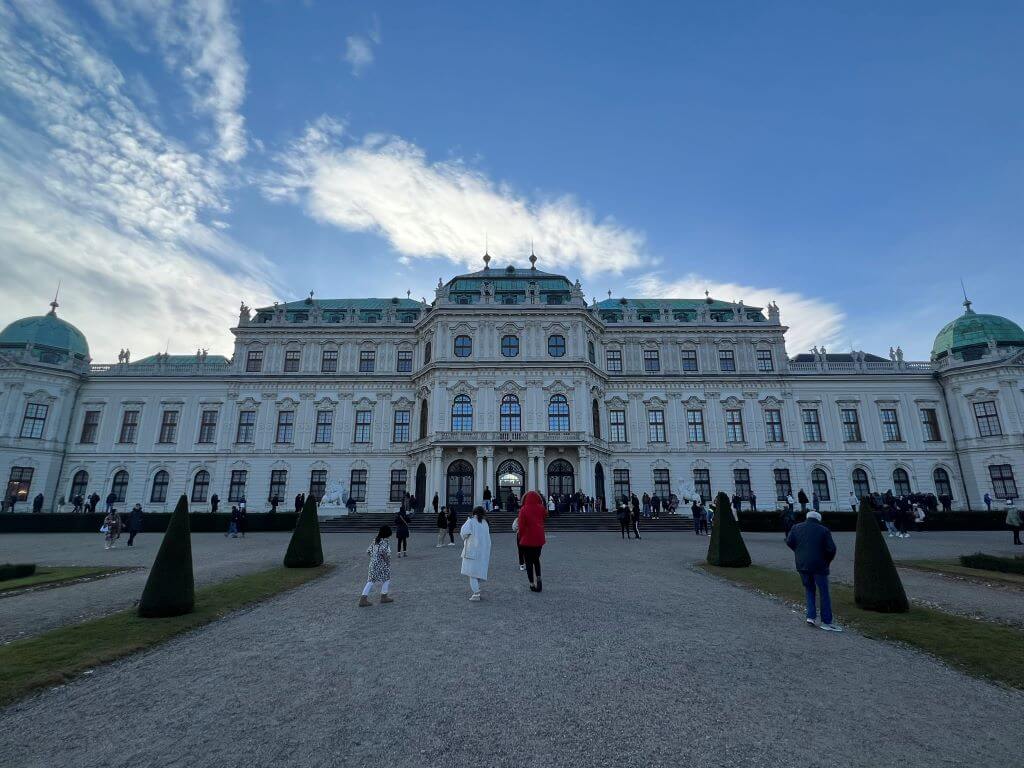
Be sure to spare 15 minutes or so in your Vienna itinerary to walk around the Belvedere Palace’s gardens. In addition to the relaxing garden scenery, you can get some great views of the palace.
Hofburg Imperial Apartments
| Hours: | Daily 9:00 – 5:30 |
| Length of Visit: | 1.5 – 2 hours |
| Cost: | €19.50 |
| Highlights: | Areas where emperor and empress lived, excellent audio guide |
The Hofburg Imperial Apartments are one of the attractions you should definitely include in your Vienna itinerary. This palace is where the Habsburg dynasty ruled over the Holy Roman Empire for a large part of its existence.
A visit to the Hofburg Imperial Apartments includes three different sections. You’ll first tour the Imperial Porcelain and Silver Collection. For me, this part of the visit was impressive but not particularly interesting. Nevertheless, it was a good window into the wealth of the Habsburgs. The included audio guide does a good job describing the highlights of the collection.
After the Imperial Porcelain and Silver Collection, you’re ushered into the popular Sisi Museum. The Sisi Museum tells the story of Empress Sisi, the wife of Emperor Franz Joseph I. Sisi became a popular figure over the years after being assassinated in 1898 and now holds an almost mythic legacy.
This section was more interesting than the silver collection because it starts to give you a glance into the historical era when Sisi lived. It was a bit hard to truly appreciate everything here, though. The corridors were kind of narrow and it was definitely very crowded. As a result, I felt kind of rushed along through the Sisi Museum.
The last section of the Hofburg Imperial Apartments takes you through the rooms where Franz Josef I and Sisi lived. This part of the visit was my favorite. All the different rooms are very ornate with various pieces of impressive art and furniture that alone are worth seeing.
Most importantly, the audio guide here did an excellent job at telling the history of Emperor Franz Josef I and Empress Sisi. I found this audio guide was the best we experienced during our trip through Germany and Austria. It really helped to bring everything we were seeing to life.
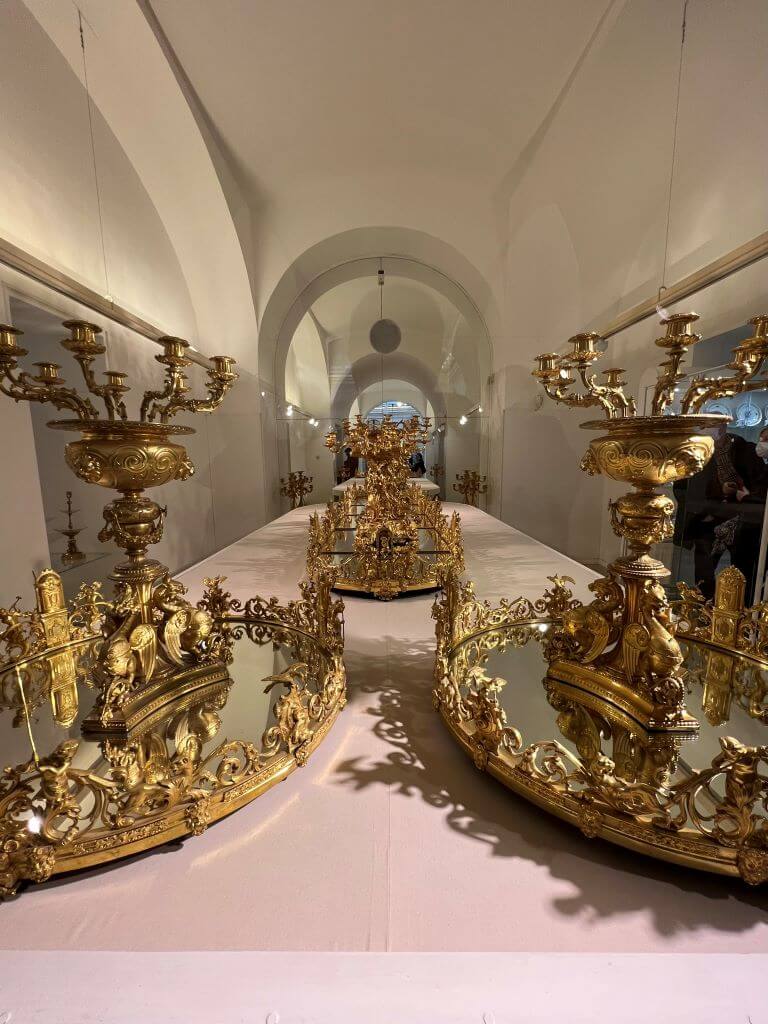
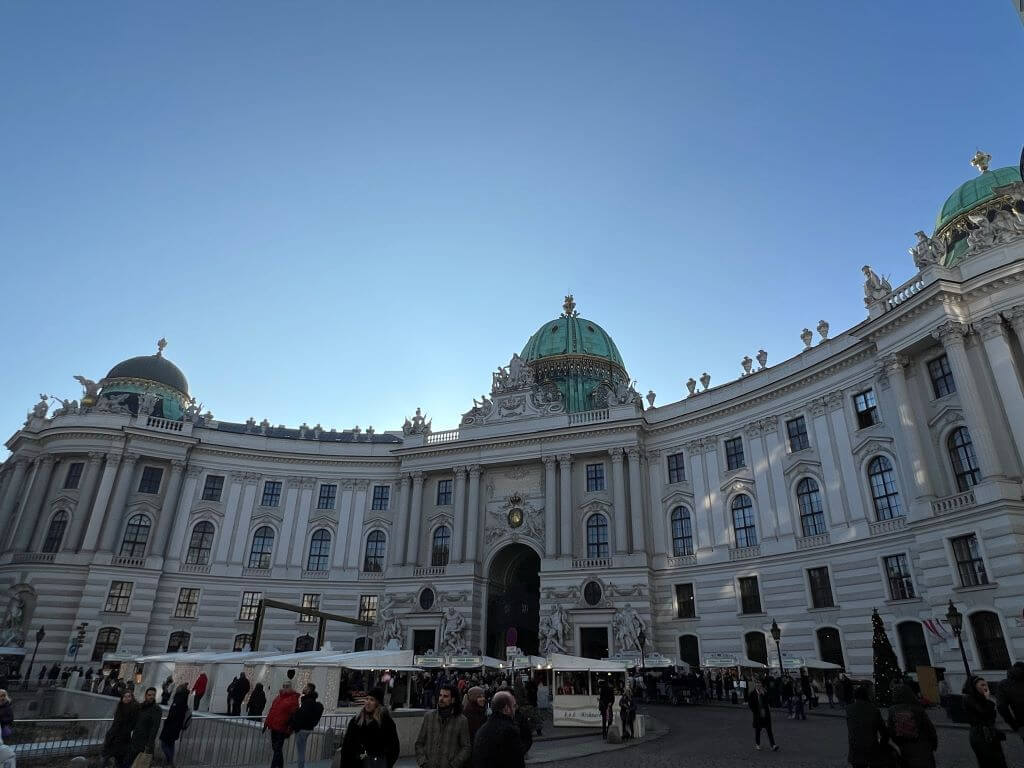
Make sure you purchase tickets for the Hofburg Imperial Apartments ahead of time. This is one of Vienna’s premier attractions. As such, you can expect a wait if you don’t buy a ticket to reserve your entry time ahead of time.
Imperial Treasury
| Hours: | Wednesday – Monday 9:00 – 5:30 |
| Length of Visit: | 30 – 60 minutes |
| Cost: | €16 Combo ticket with Kunsthistorisches Museum for €29 |
| Highlights: | Royal regalia and ornamentation |
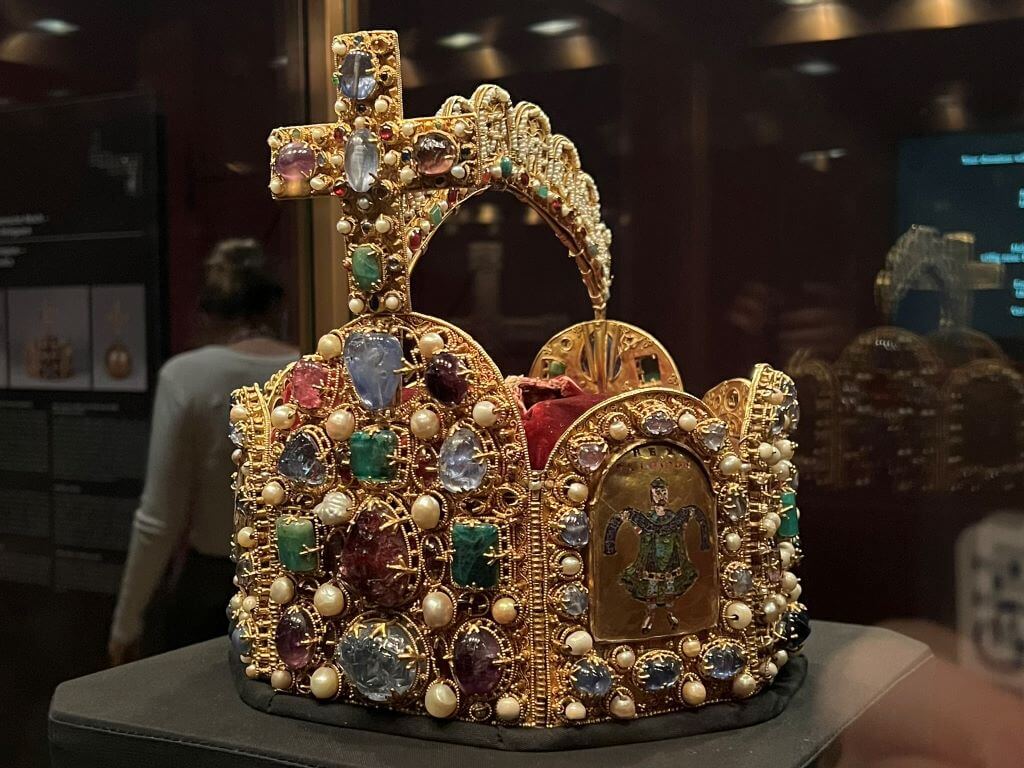
Of course, an empire that spanned much of a large chunk of Europe accumulated a lot of wealth and wanted to show it off. A tour of the Imperial Treasury gives you the opportunity to see much of the opulent ornamentation and regalia the Holy Roman Empire owned.
Despite the wealth of items contained within the Imperial Treasure, a visit here is relatively compact. Objects have good information placards accompanying them that give helpful information on what you’re looking at and its significance within the Holy Roman Empire. You can also get an audio guide, but unless you really want a deep dive into this history, I don’t think it’s necessary.
While walking from the imperial apartments to the treasury, you can stop for a peek at the horses of the Spanish Riding School. The Spanish Riding School features elite horses bred by the Habsburgs for their intelligence. You can take a guided tour for up-close looks (this might be a good Vienna itinerary idea with kids!) or just hope for a quick glance while walking around the Hofburg Palace.
Kunsthistorisches Museum
| Hours: | Friday – Wednesday 10:00 – 6:00 Thursday 10:00 – 9:00 Closed on Mondays during less busy times of the year |
| Length of Visit: | 2 – 3 hours |
| Cost: | €21 Combo ticket with Imperial Treasury for €29 |
| Highlights: | Paintings from Bruegel, Caravaggio, Rembrandt and Rubens |
Besides the relatively short, guided tour of the Vienna State Opera, we spent our New Year’s Eve morning at the Kunsthistorisches Museum. Our thought was to do this large and extensive art gallery on the day when we weren’t planning on much else so we wouldn’t have to worry about being exhausted later that night. You may want to plan your Vienna itinerary similarly so that you aren’t doing any other major museums on whatever day you’re here.
This Kunsthistorisches Museum features the collection of the Habsburg monarchy from the extents of their empire. As such, you can expect to see masterpieces from Italy, Germany, Spain, the Netherlands and, of course, Austria.
Despite its size, the gallery is still relatively straightforward and manageable. It was also not as crowded as I expected, which kept our visit relatively pleasant.
The highlights of the Kunsthistorisches Museum were wonderful to see. I especially loved all the paintings by Bruegel. I find his paintings to be endlessly entertaining. No matter how many times I see them, I always seem to find his peasants up to something new.
Beyond the highlights, I wasn’t too impressed with the rest of the museum. It was filled with religious art that started to kind of bleed together after awhile. Fortunately, because the Kunsthistorisches Museum has so many highlights to see, this quibble wasn’t too much of an issue.


Dorotheum Auction House
| Hours: | Monday – Friday 8:00 – 6:00 |
| Length of Visit: | At least 30 minutes |
| Cost: | Free |
| Highlights: | All sorts of antique items, excellent window shopping |
The Dorotheum auction house is a veritable museum of antiques, jewelry, furniture, paintings, and more. It’s an actual, functioning auction house, so everything you see can actually be purchased.
You’re free to wander around the Dorotheum’s many rooms and halls admiring the wares they have up for auction. Take your time and feel free to peruse at your leisure. It may not have the historical significance of a museum, but it’s also much less exhausting and not nearly as stuffy. It’s also neat in that you can see what some of these museum-esque items cost if you were to buy them.

Vienna Philharmonic
The Vienna Philharmonic is routinely rated one of the best orchestras in the world. If you enjoy classical music, including a concert here is a must for your Vienna itinerary.
Even if you don’t like classical music, this style of music is so ingrained in Viennese culture that I still think it’s worth seeing a concert here. Vienna isn’t known as the capital of classical music for nothing. You can see the Vienna Philharmonic on one of their tours around the globe, but there’s something extra special about seeing it in its hometown.
We were fortunate enough to see them do one of Beethoven’s symphonies, which made the concert extra special since the music was so well known and historically important. We saw the philharmonic perform at the Wiener Konzerthaus, a palatial building with a large auditorium with excellent acoustics.

If proper attire is something that concerns you, make sure you dress nice for the concert. I wore khakis and a polo thinking I might be okay with that, but I was definitely underdressed. I had to keep reminding myself that I was a tourist without space for a suit and that everyone there probably assumed that, making my outfit somewhat acceptable!
Vienna State Opera
| Hours: | Tours given hourly from 10:00 – 4:00 daily |
| Length of Visit: | Tours are 45 minutes |
| Cost: | €13 |
| Highlights: | Opulent auditorium, chance to see some exclusive areas |
Similar to the Vienna Philharmonic, a tour of the Vienna State Opera is another glimpse into Vienna’s music culture.
Guided tours take you through several of the Viena State Opera’s different rooms and the main auditorium where you can view the seating area and stage. Along the way, a guide provides information on the opera hall’s history and how it functions today.
Of course, the highlight is the main seating area and stage. It’s all very regal with the red velvet seating, grand chandelier and various gold flourishes everywhere you look. I imagine it must be quite the place to see an opera.
Make sure to book your guided tour at least a day in advance. We tried to do a same-day tour but were turned away because all the tours were booked for that day.


Another way to see the Vienna Opera Hall is to actually attend an opera. Don’t worry if you aren’t an opera fan: You can get standing room tickets for relatively cheap. Check out the architecture, listen to some of the music, and feel free to head for the exit when you’re ready.
Explore Old Town
The unfortunate thing about visiting Vienna during the holidays was that it was so crowded. We arrived two days before New Year’s Eve, and it was crowded that first day and just kept getting busier as New Year’s got closer. Because of this, we weren’t really able to explore or even appreciate Vienna’s UNESCO-recognized old town.
Fortunately, that all changed on New Year’s Day. By the time we rolled ourselves out of bed for the day, the crowds had almost entirely vanished.
We spent that entire last day just wandering around the old town, stopping in a couple churches and wandering down as many side roads as we could. It sometimes felt like we had Vienna all to ourselves. This day helped me to really appreciate the beauty of Vienna and to understand why so many people have fallen in love with it over the years.
Make sure you give yourself plenty of time during your Vienna itinerary to do the same.


Other Things to Add to Your Vienna Itinerary
While we hit all the main things we wanted to see with our Vienna itinerary, Austria’s capital has plenty more to offer visitors. Because of the time of year and our compact schedule with New Year’s festivities, there were a few things we had to miss.
Here are some other things you may want to add to your Vienna itinerary.
Schönbrunn Palace is probably the biggest attraction I left off our Vienna itinerary. We skipped it partly due to time and partly because I read it wasn’t worth seeing during winter. Schönbrunn was the summer residence of the Habsburgs. Unlike the Habsburg Palace in the city center, Schönbrunn also has extensive gardens you can visit.
The Weltmuseum Wien highlights important historical objects from the different lands that were controlled by the Habsburgs during their reign. On view at the Weltmuseum are items from the Americas, Asia, Africa and Oceania.
Had we not already had plans to visit the art galleries at the Upper Belvedere Palace and Kunsthistorisches Museum, the Albertina Museum would have been on our Vienna itinerary. The Albertina Museum features palatial rooms filled with modern art and classical European prints.
If there’s one museum I was most disappointed in missing, it was the Museum of Military History. As the name implies, the Museum of Military History goes over the military history of Austria through various artifacts and historical objects.
Besides the Museum of Military History, spending time among Vienna’s various wine gardens was the other thing I most regret missing. Nestled throughout the various hills surrounding Vienna, these wine gardens give you a more intimate Viennese experience while getting to enjoy local wine. Unfortunately, we opted not to bother visiting these during winter assuming the cold weather wouldn’t make them worth the time. With enough time and nice weather, visiting some of these wine gardens sounds like a must for your Vienna itinerary.
Our Day-by-Day Vienna Itinerary
Here is our exact daily Vienna itinerary. Keep in mind, though, that this itinerary includes New Year’s Eve festivities on our third day. Unless you’re also visiting during the holiday, your Vienna itinerary is going to look a bit different, but you can still use this as a general guideline while adding in a couple of sights from my list of other things to do.
- Day 1
- Naschmarkt
- Dorotheum auction house
- St Stephen’s Cathedral
- Day 2
- Upper Belvedere Palace
- Hofburg Imperial Apartments
- Imperial Treasury
- Vienna Philharmonic
- Day 3
- Vienna State Opera
- Kunsthisorisches Museum
- Day 4
- Walked around old town
Where to Eat and Drink During Your Vienna Itinerary
Owing to its former Holy Roman Empire heyday, Vienna has a rich culinary tradition sure to please most tourists. Since we were only here for four days, we by no means tried even a fraction of what Vienna has to offer, yet here are some recommendations based on our time.
Café Bel Étage
If you’ve done any research on Vienna at all, you may have come across the name of Café Sacher. This popular cafe is the home of one of Vienna’s most popular dishes: Sachertorte, a dry chocolate cake with chocolate icing and a thin layer of apricot jam that is typically served with whipped cream.
That said, Café Sacher often has long lines for just that reason. If you want the real original Sachertorte with only a marginal wait, go around the corner to Café Bel Étage instead. This small cafe is owned by the same hotel that owns Cafe Sacher, but since it isn’t the place where it was created, it’s much less popular. Still, the Sachertorte is delicious and the ambience has a romantic Eastern European feel with notes of velvety red all over.

GmoaKeller
Before seeing the Vienna Philharmonic, we had a pre-concert meal at GmoaKeller. GmoaKeller is a traditional Viennese eatery with several different seating areas. We were sat in a sort of cellar room with a large barrel arched ceiling. GmoaKeller is clearly popular among people going to the symphony as it was crowded with smartly dressed locals on their way to the concert.
The menu is filled with traditional fare. I had the pork schnitzel with potato salad. I’m personally not a fan of pork schnitzel, but I thought I should have it at least once while at its birthplace. It was a huge portion covering my whole plate. I can’t say it was my favorite thing ever, but I think a lot of that was more due to me not liking pork schnitzel. On the other hand, the potato salad it came with was delicious.

KIBŌ Ramen and Izakaya
After nearly two weeks of hearty German and Austrian food, we were both ready for something a little different. Fortunately for us, KIBŌ Ramen and Izakaya was right around the corner from our hotel. The inside is pretty generic, but the spicy tonkotsu ramen was delicious. It was savory, salty and very spicy. If you’re in the mood for something different and like ramen, check KIBŌ out!
Santos Neubau
We also decided to try out some different types of drinks before our Japanese meal. Santos Neubau was nearby, so we decided to try out this Mexican-style cantina. Their drink menu was filled with various traditional and more experimental Mexican cocktails. Adding to the varied menu, the bar itself was pretty cool. Its shelves are filled with a wide range of liquor bottles glowing with a soft backlight backed by chic tiling with interesting motifs. Like KIBŌ, Santos Neubau is a nice choice if you’re looking for something a bit different from the more traditional Austrian bars and cafes.
Zur Eisernen Zeit
Our first meal in Vienna was at Zur Eisernen Zeit in the Naschmarkt. We had to have a meal while we were in this iconic food market, and this place caught our eye with its outdoor seating. It was cold, but they had blankets and heaters, so we didn’t notice the temperature too much. I’m glad we stopped here because my lunch was one of the best meals I had in Vienna. I had their fiakergulasch, a goulash with a fried egg, sausage, roast beef and a potato dumpling. It was as tasty as it sounds and looks.

Café Hawelka
In case you didn’t have your fill of Sachertorte at Sacher Eck Wien, Café Hawelka is another fun cafe where you can try this delicacy with a bit more traditional Viennese coffee culture flair. Café Hawelka is the complete opposite from the elegance of Sacher Eck Wien. It’s filled with dark wood tones, dimly lit, and cozy. It has a bit of a salt-of-the-earth personality. Even the Sachertorte was different here. It had a much drier texture, which I suspect is more authentic. I enjoyed it, but I did prefer the Sachertorte at Sacher Eck Wien.

Brezl Gwölb
Our last meal in Vienna was at Brezl Gwölb, a charming little restaurant with tasty food. We passed this spot earlier on our last day, and it looked like a cozy spot, so we decided to come back later for dinner. This turned out to be a good decision. The inside was filled with dark wood furnishings and traditional decorative touches. Significantly, it had a very good pretzel. This was important since it was my last pretzel during our trip through Bavaria and Austria. The pork roast I had was very good, too.

Where to Stay During Your Vienna Itinerary
While we stayed in K+K Maria Theresia, I can’t really recommend that specific hotel. It wasn’t bad, but it was fairly generic and expensive. It felt like a big chain hotel with a bit of modern elegance, which is fine if that’s what you want.
However, I do recommend staying in this area of Vienna. The neighborhood is just outside of the old town and a short walk from Vienna’s MuseumQuartier where the Kunsthistorisches Museum is located. It’s a pretty quiet neighborhood, yet only about a 5-to-10-minute walk to everything.
Despite it being relatively quiet, this area still has lots of bars, cafes and restaurants for visitors to try out away from the crowded old town. You can also get what felt like a bit more of a local vibe by checking out these spots.
Frequently Asked Questions About Vienna
Do they speak English in Vienna?
Yes. Everyone we interacted with spoke perfect English despite the official language being German.
When is the best time to visit Vienna?
If you’re looking for comfortable weather with smaller crowds, try to visit during the shoulder months of April, May, September and October. The best weather is during summer, but these months also bring the biggest crowds.
I do think there’s something special about visiting around the holidays, though. It’s cold and it’s crowded, but seeing Vienna lit up with all the Christmas decorations adds an extra layer of magic.
Vienna also puts on a huge New Year’s Eve party called the Silvesterpfad that is well worth attending. We had a blast partying through Vienna’s Old Town to ring in 2023.

Is Vienna expensive?
Vienna is pricey, but I didn’t find it to be much more expensive than any other large European capital. That said, you can definitely splurge while in Vienna. If you look closely enough and don’t mind eating outside of the old town for some meals, you can find opportunities to save some money.
Make sure to always have euros on hand. Many smaller cafes and businesses prefer or require cash payments. You don’t want to be left emptyhanded when you see a delicious Viennese pastry staring at you through a glass case.
Thank you for reading this post. Paul Passing Through is a labor of love to which I’ve dedicated a lot of free time. If you’d like to show your support for my blog, you can Buy Me a Coffee to help fund the future of Paul Passing Through. I appreciate any contributions!
Book Your Trip to Vienna
Whether you’re looking for tours, hotels or flights, here are some tools to help get you started planning your trip to Austria!
Look for activities and tours offered through GetYourGuide or Viator!
Search Flights
Still can’t find what you’re looking for? Check out my travel essentials pages for more of my recommendations.
Pin This Post!