
A Brief Tour of the Historic Château d’Amboise

Château d’Amboise is one of over 300 châteaux in the Loire Valley region of France. Located in the town of Amboise, it’s easily the most popular tourist destination in this small French town.
It’s not quite as elegant as some of the other chateaux, but what it lacks in opulence, it makes up for it with history, pleasant gardens and some great views from its ramparts. It’s these things that make it a must-see when you’re staying in or near Amboise.
Updated November 2024
Disclaimer: This post may contain affiliate links. If you make a purchase through one of these links, I will earn a small commission. This occurs at no added cost to you.
A Brief History of Château d’Amboise
The history of Château d’Amboise is long and complicated. The château has changed hands multiple times from one French family to another or from a king to his heir. It’s frankly confusing and somewhat difficult to summarize for the purpose of this post.
I’ll try to be brief and hit the main points. It’s important to know this information to make sense of some of what you’ll see when touring Château d’Amboise.
Origins of the Site
The land was first used by Celtic tribes in the Iron Age due to its prime location on top of a hill overlooking the surrounding land. The first fortifications on this hill were built during that time, and it has had fortifications ever since.
Over the next several centuries, the site and its fortifications continued to evolve and would become a point of dispute between the d’Anjou and de Blois families. A castle was built here in the 11th century by the Count of Anjou.
Château d’Amboise Enters Into History
Eventually, the castle and its land passed to the house of Amboise-Chaumont, vassals of the King of France Philippe Auguste. Then, in 1431, Louis of Amboise was arrested and condemned to death for plotting to murder the future king, Louis XI.
Louis of Amboise was pardoned at the expense of the château. The château was seized by the then-current king, Charles VII, in exchange for Louis of Amboise’s life.
Château d’Amboise’s Royal Heyday in the 15th and 16th Centuries
This is when Château d’Amboise came into its own. Louis XI made the château the residence of his queen, Charlotte of Savoie, and his son, the future king, Charles VIII. It was Louis XI and then Charles VIII who began various constructions during their reigns to create the château that we see today.
It was also during this time that the château served as a chief residence of French royalty, with Charles VIII and later Francis I holding court there. Frances I was the Renaissance king who, in 1515, invited Leonardo da Vinci to Amboise to continue his work until his death in 1519. You can find da Vinci’s burial site in the chapel located at the château.
Château d’Amboise’s Decline
During the French Wars of Religion in the mid-16th century, French Huguenots conspired against the young king Frances II to gain power in the country. The conspiracy was discovered resulting in 1,200 Protestants being killed and hung throughout the city, including the château’s ramparts.
It was around this time the Château d’Amboise began to fall out of favor as a royal residence with future kings using it less and less. It would still be used as a temporary residence for sovereigns traveling around the country, but it would never again hold the primacy it held during Charles VIII’s and Frances I’s reigns.
The Ensuing Years for Château d’Amboise
The following centuries would see Château d’Amboise receive damage during the French Revolution, exchange hands a number of times, act as a prison for various occupants and be further damaged during World War II.
Despite all this, the château survived. Since 1974 the Foundation Saint-Louis has owned the property and has been responsible for its maintenance and restoration.
A Brief Tour of Château d’Amboise
There are ten rooms in total to visit within the main château plus the St. Hubert Chapel and cavalier ramp. This guide is not comprehensive. Rather, it includes what I think are some of the more interesting bits of the tour.
St Hubert’s Chapel
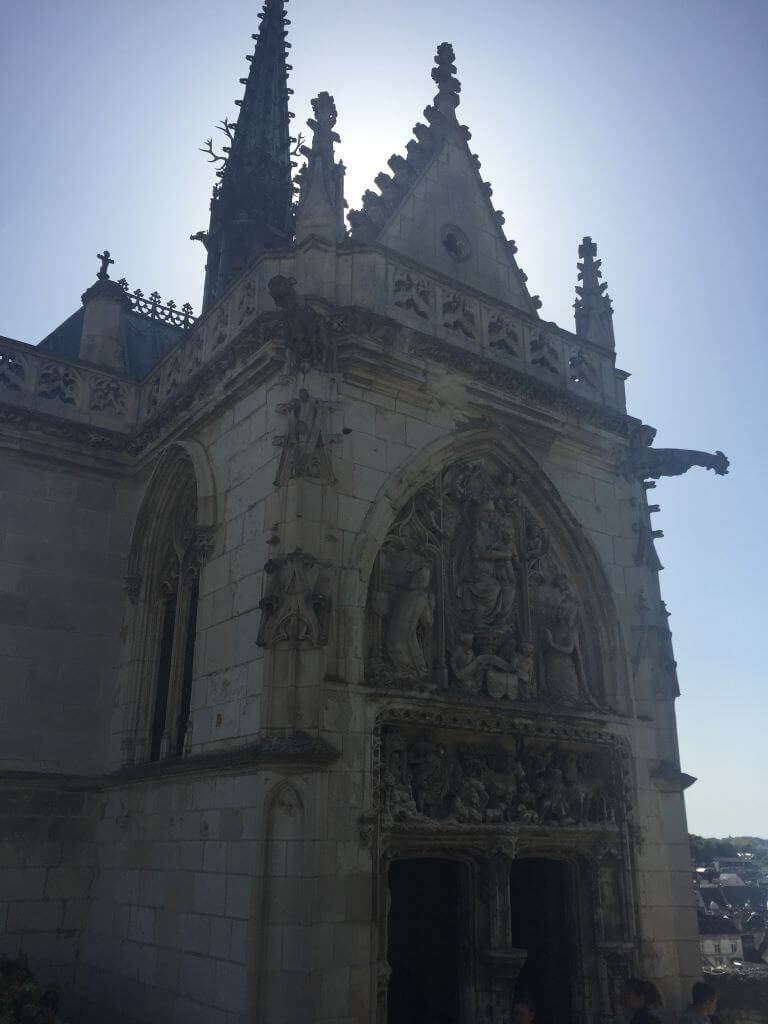
St Hubert’s Chapel is one of the first things you see upon arriving at Château d’Amboise. It just so happens to also be one of the highlights of the whole tour.
The Gothic chapel is tiny but filled with exquisite detail. The first thing you notice is the impressively sculpted lintel showcasing the life of St Hubert above the entrance. A lot is going on here, but even if you don’t know all the symbolism, it’s still fascinating to observe the detail. It was one of my favorite pieces of artwork in the entire château.
For me, the highlight is inside the chapel, where Leonardo da Vinci, one of the most important and famous Renaissance thinkers, is buried. It’s rather unadorned, but it’s still neat to see where he’s buried.
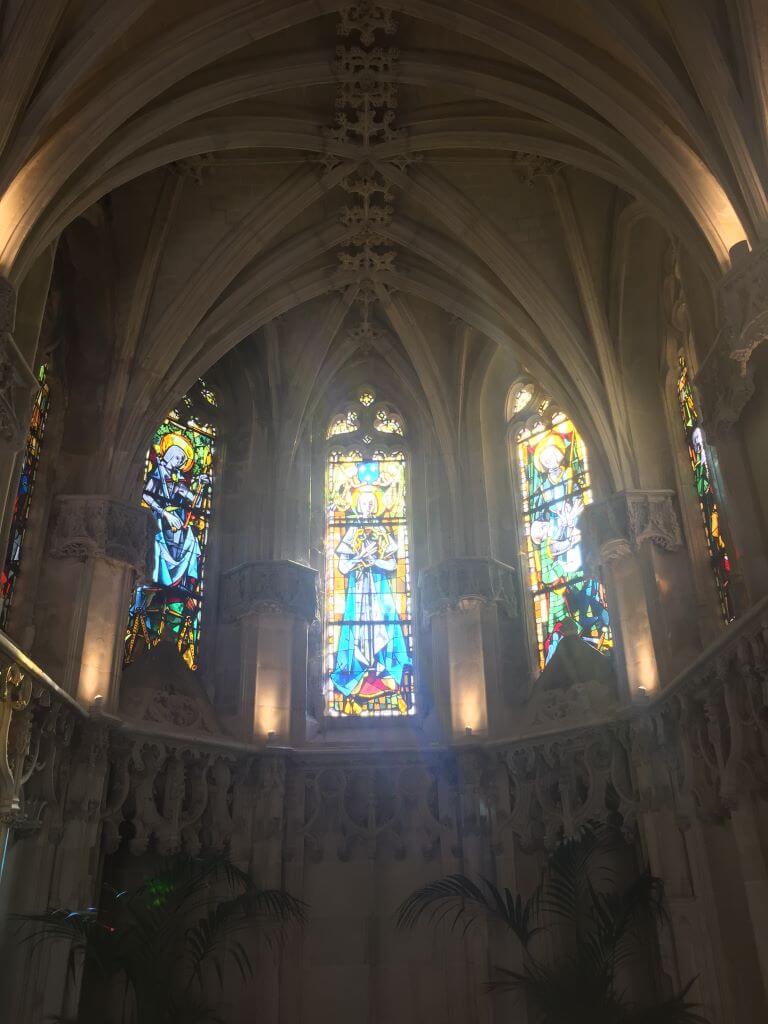
Apart from this, take time while in St Hubert’s Chapel to observe the intricate stained-glass windows illustrating the life of King Louis IX.
The Drummer’s Room
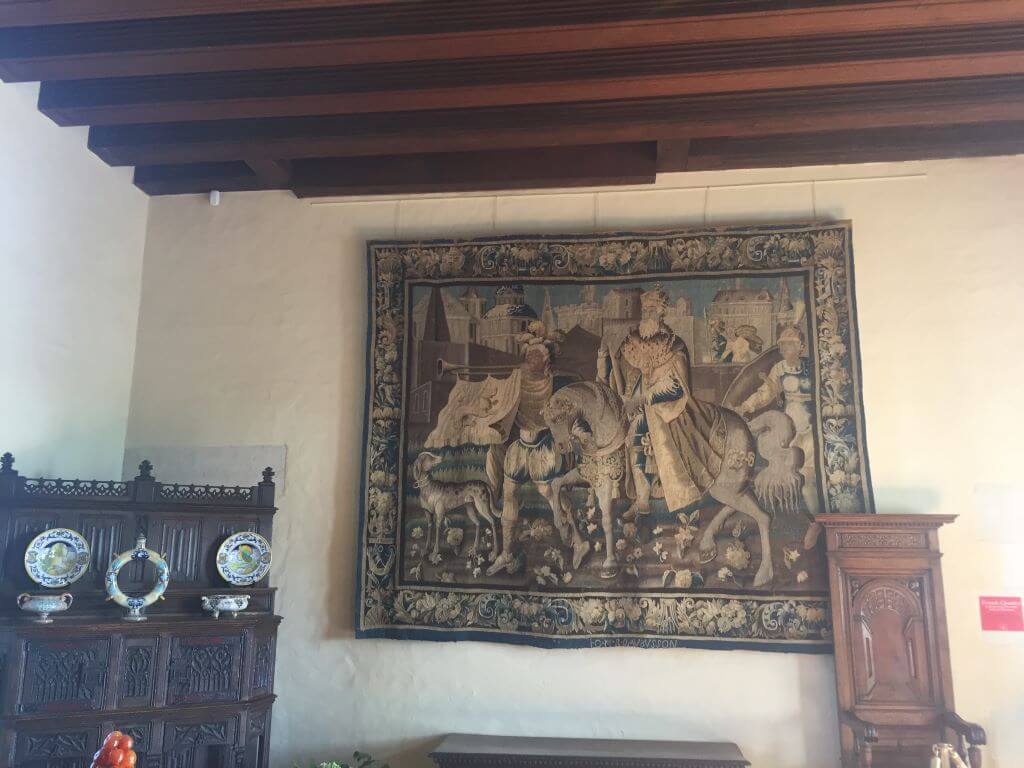
A few different unique artifacts can be found in the Drummers’ Room. The most striking is easily the 16th century Flemish tapestry. This tapestry shows the Darius family paying homage to Alexander the Great.
Other interesting pieces are the 15th century floor tiles showing fleurs-de-lis, an illustrated prayer book used by Charles VIII, and Cardinal Georges d’Amboise’s bishop’s chair.
The Great Hall
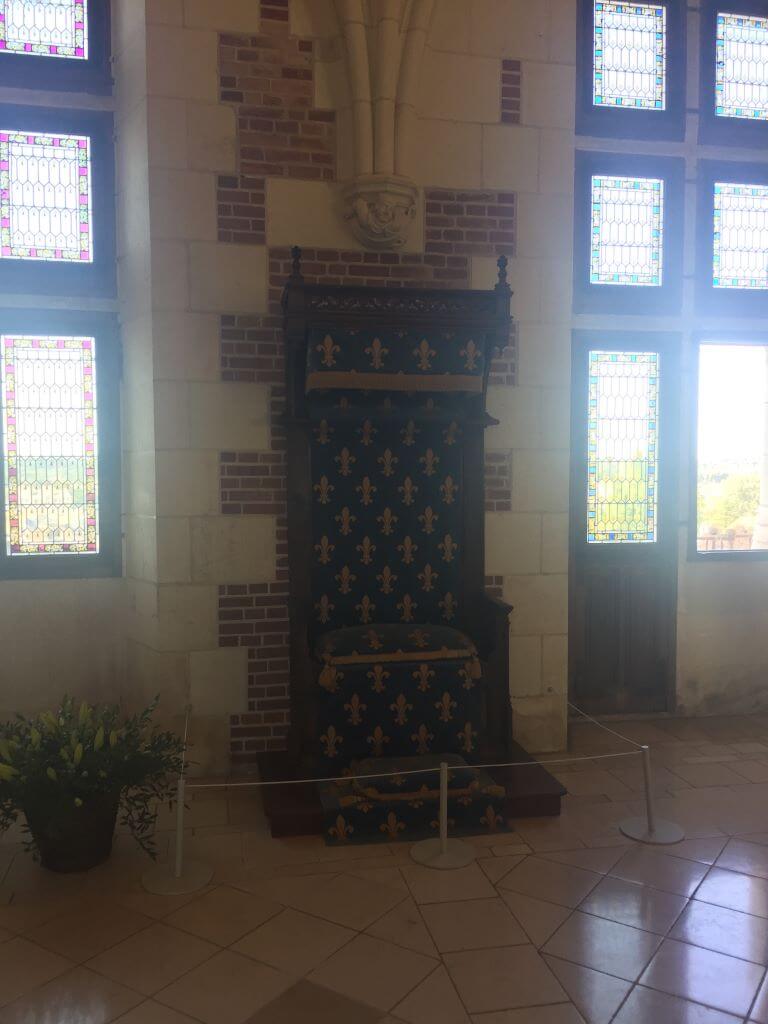
The Great Hall was where festivities were held and the king entertained guests. The throne decorated with fleurs-de-lis along the wall shows where the king would sit.
My favorite part of this room were the marvelous columns that vault out to decorate the ceiling. I also enjoyed the openness of the whole room. Because of that feature, it really draws your eyes towards the columns and the ceiling above.
Another fun feature can be found in some of the decoration at the end of some of the ribbed vaults along the walls. Take a close look to find some interesting characters frozen in time.
The Great Room
The name of this room used to be the Cupbearer’s Room, highlighting the cupbearers who served drinks to the king and his guests. In the center of this room is an Italian Renaissance-style dining table where the king ate.
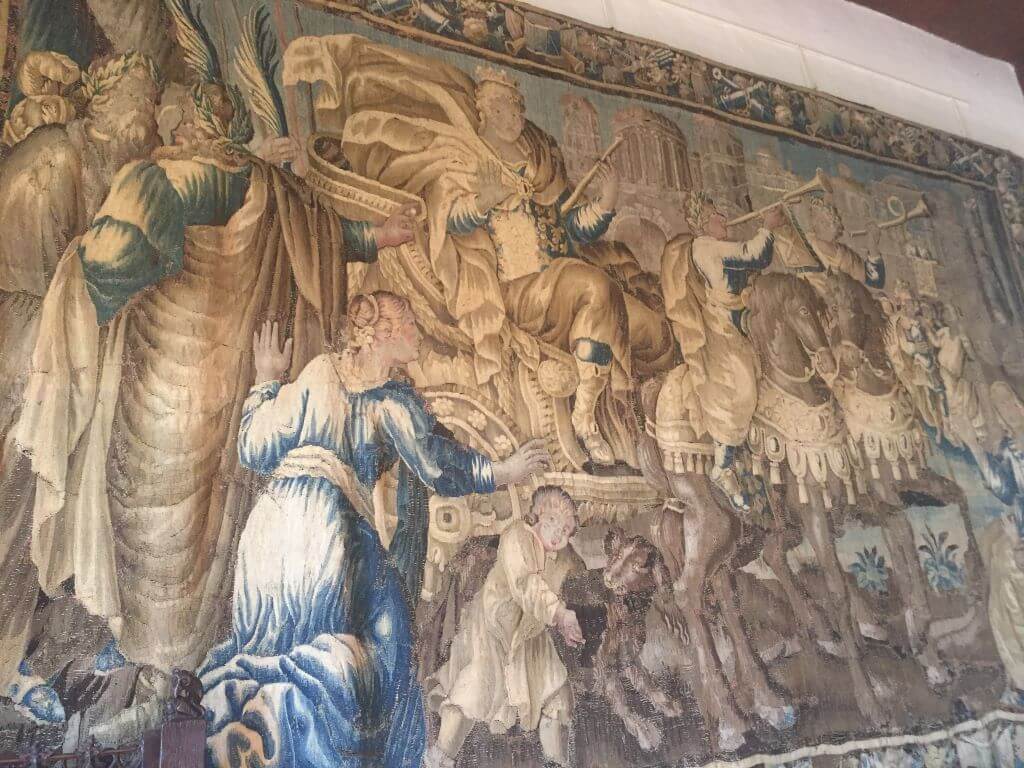
Other features of this room include the 17th-century French tapestries adorning the walls.
The King’s Room
Like many other rooms in Château d’Amboise, the King’s Room used to be known as Henri II’s Room. Appropriately, this room is where King Henri II slept during his time here. The main feature in the King’s Room is Henri II’s bed, a large bed for this time period owing to Henri’s larger-than-normal size.
The Music Room
This room features several souvenirs from when the Orléans family would use the château as a holiday retreat. Most of the pieces date from the late 18th through 19th centuries.
Château d’Amboise’s Gardens
The gardens at Château d’Amboise are immaculately maintained and are a bit unique for French châteaux in the region. Rather than having any French gardens as you might expect, you’ll find an English and Italian garden instead.
In a way, it was a bit disappointing. I was looking forward to showy, pristine French-style gardens. This garden was a bit more like a structured park. It wasn’t bad. In fact, it was quite pleasant, but it wasn’t what I was hoping for.
(If you’re like me and you’re looking for the perfect French gardens, make sure to check out Château de Chenonceau.)
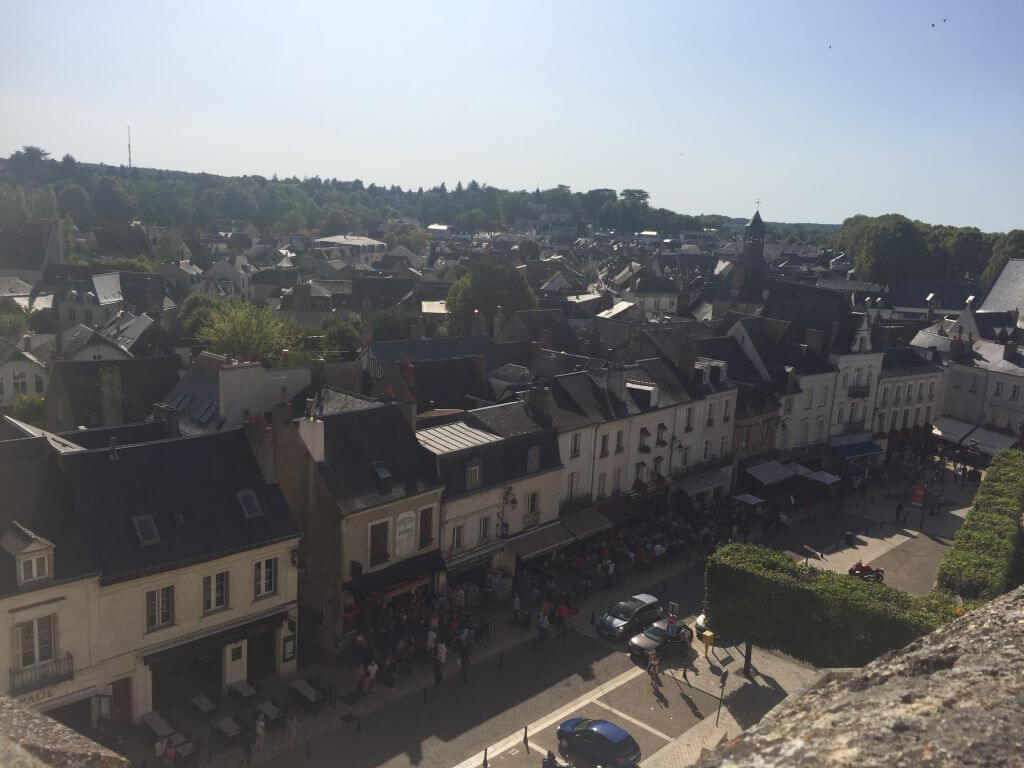
The highlight of the gardens is the spectacular view of Amboise and the Loire River. It’s easy to see why fortifications have been atop this hill since the Iron Age. You have unimpeded sightlines covering all of the whole area. It was great fun to look down at the rooftops of all the old buildings while trying to trace the winding paths of the Medieval roads.


Is It Worth a Visit?
If you are staying in or near Amboise as a homebase for exploring the Loire Valley, you should definitely add Château d’Amboise to your itinerary. It has an interesting history, fabulous views of the town and surrounding countryside, and some equally impressive architecture and art within its walls. The garden is lackluster, but everything else more than makes up for that fact.
You could also visit Château d’Amboise if you are staying in the Loire Valley for several days. If that describes your visit, you should still have plenty of time to visit Château d’Amboise in addition to several other grander châteaux.
On the other hand, if you are not near Amboise or are only visiting for one or two days, you may want to skip Château d’Amboise. There are so many great châteaux throughout the Loire Valley that you should maximize your time visiting them.
Domaine Chaumont-sur-Loire: Is This French Château Worth a Visit?
Thank you for reading this post. Paul Passing Through is a labor of love to which I’ve dedicated a lot of free time. If you’d like to show your support for my blog, you can Buy Me a Coffee to help fund the future of Paul Passing Through. I appreciate any contributions!
More Posts About French Châteaux
Here are more guides I’ve written to help you if you’re planning to visit other French châteaux.
Resources to Book Your Trip to Château d’Amboise
Whether you’re looking for tours, hotels or flights, here are some tools to help get you started planning your trip to France!
Look for activities and tours offered through GetYourGuide or Viator!
Search Flights
Still can’t find what you’re looking for? Check out my travel essentials pages for more of my recommendations.
Pin This Post!


