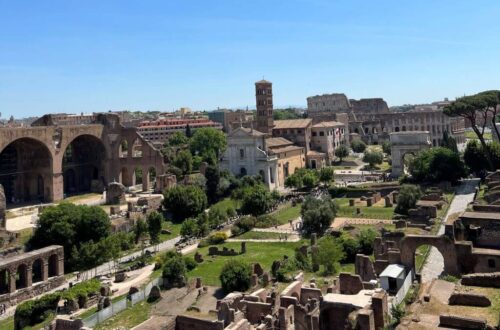
A Day in the Hills of Volterra, Italy

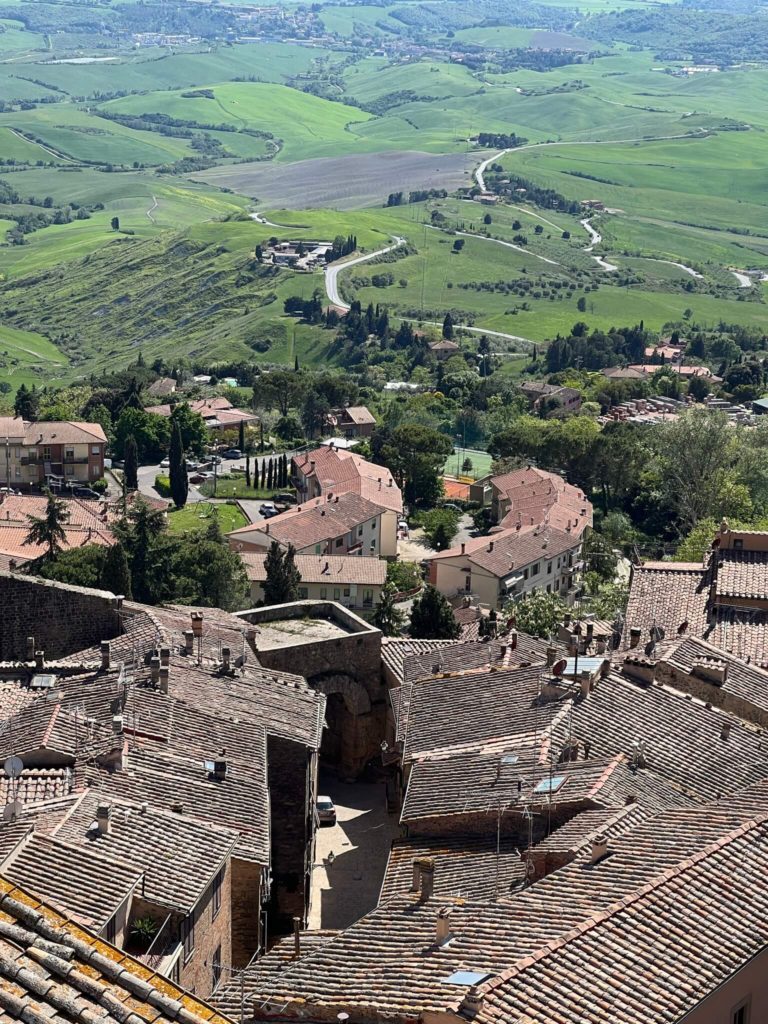
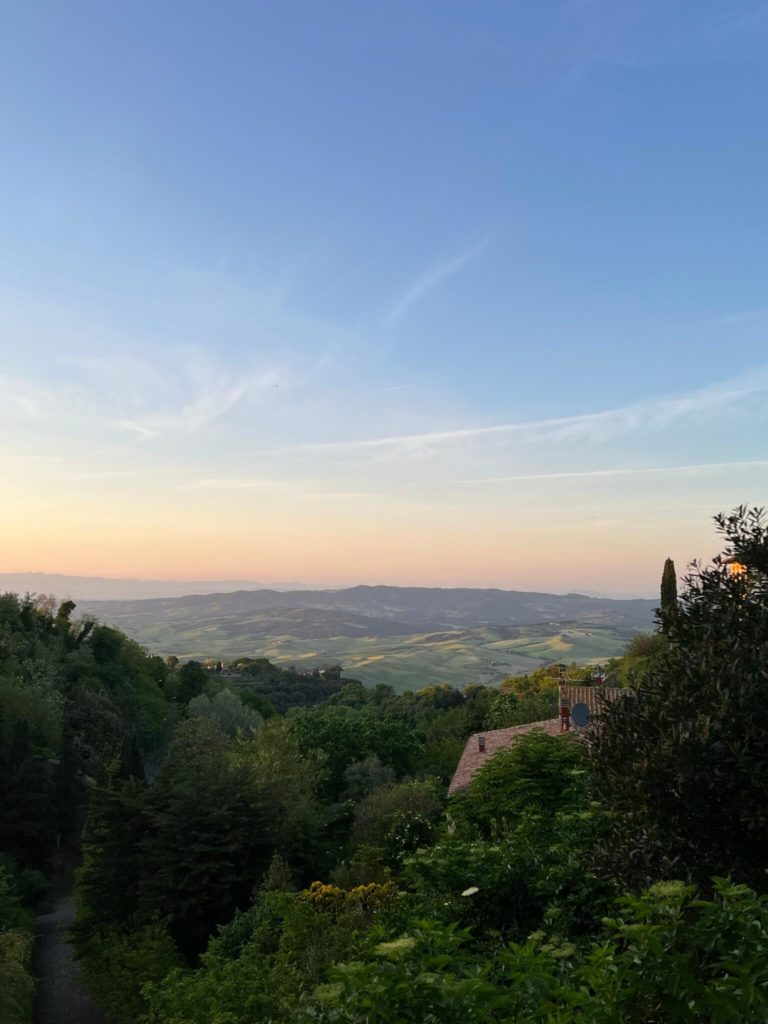
Volterra, Italy isn’t the easiest town in Tuscany to reach, but it’s well worth the effort to get there. Sitting atop a large hill, Volterra offers winding medieval roads, museums, ancient history and a relaxed atmosphere that makes it worth visiting and spending a night in as you trek through Italy.
With so much to do, how should you spend your time? Relaxing with a view and a glass of wine? Visiting a museum filled with ancient artifacts? In this guide I’ll answer all those questions to get you on your way to Volterra!
Disclaimer: This post may contain affiliate links. If you make a purchase through one of these links, I will earn a small commission. This occurs at no added cost to you.
Orientation to Volterra, Italy
People have inhabited this strategic hilltop since at least the 8th century BC. Around 2,000 years ago it became a major Etruscan city, housing its people within the ancient walls you can still see today. In addition to the wall, Volterra’s citizens also left behind numerous Etruscan artifacts that can be seen in the fabulous Etruscan Museum.
Over time, the Roman Empire conquered and absorbed the Etruscan civilization into its ranks. Like the Etruscans before them, the Romans left behind signs of their civilization that can be seen today including the ruins of a theater, mosaics and cisterns.
After the fall of Rome, Volterra became an independent city-state in the region vying for power and influence with other cities like Florence and Siena. Florence eventually won control over the region, and their reign can be seen in the Medici Fortress looming over the Archeological Park.
Today, Volterra is a great Tuscan hilltop town to use as a slow visit between some of Italy’s bigger sights. It has enough to see in terms of historical sights and lived-in charm to make it worth visiting for a night.
The Volterra Card
Volterra’s tourism board offers an excellent combination ticket for visiting almost all of their museums and archeological sites. The Volterra Card gives you access to all the attractions listed that we did plus the Art and Civic Museum and the Alabaster Ecomuseum. The only notable sights it does not cover are the Duomo and Palazzo Viti.
We purchased our Volterra Cards at the Etruscan Acropolis for €15 a piece (they’re now €16), but you can purchase them at any of the attractions covered by the card. What’s more, the card is valid for 72 hours from the time of purchase. While you don’t really need more than one day in Volterra (two if using it as a homebase for day trips), having multiple days on the ticket is convenient if you want to do things the morning before you leave for your next destination.
Here is a list of the prices for all the major attractions covered by the Volterra Card to help you decide if this ticket is right for you.
| Etruscan Museum | €7 |
| Etruscan Acropolis and Roman Cistern | €5 |
| Palazzo dei Priori | €7 |
| Roman Theater (can be seen without entering) | €7 |
| Alabaster Ecomuseum and Art and Civic Museum | €7 |
What to do in Volterra, Italy
There are several tourist attractions to visit during your time in Volterra. You can pick and choose, or you can see everything if you arrive early enough and plan your time efficiently. Fortunately, of the attractions we visited, they’re all well contained and can be seen fairly quickly with the exception of the Etruscan Museum.
Archeological Park
After getting some focaccia, our first stop in Volterra was the Archeological Park to see the Etruscan Acropolis. The park is located in the southeast corner of the old town, and there are a few different entrances from the rest of town.
If entering from near the entry to town, the Etruscan Acropolis will be to your right. From here, you can purchase the Volterra Card to set you up for the rest of your time in Volterra.
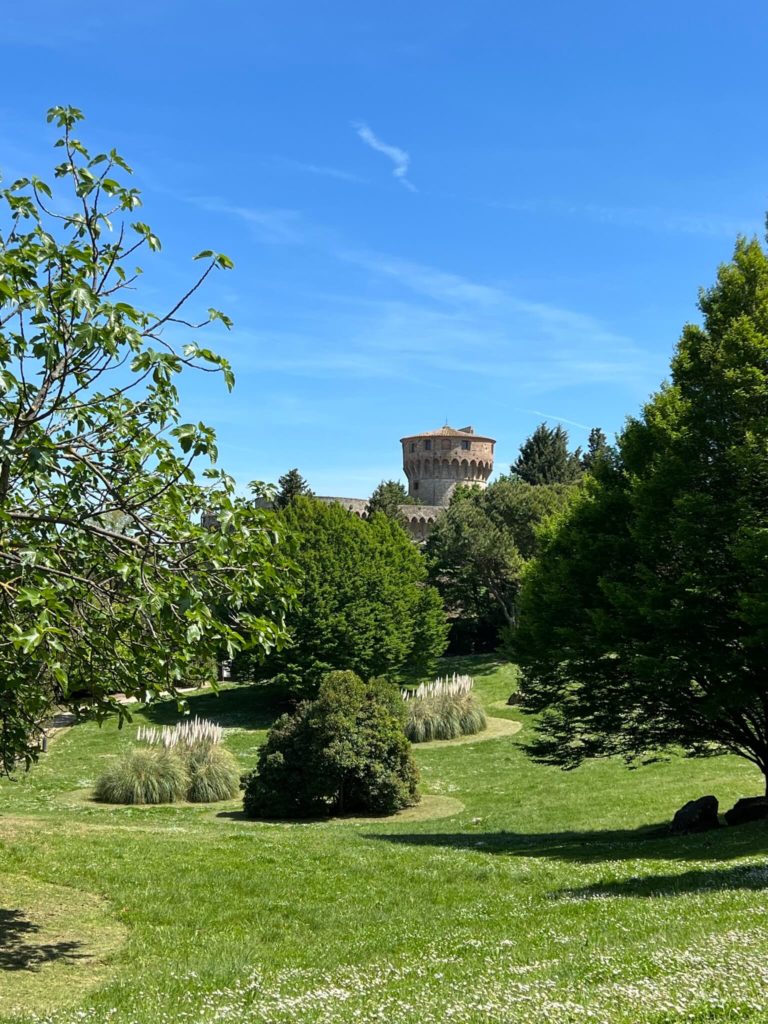
Besides the acropolis, the rest of the park is a pleasant green space to stroll through or have a picnic. You can also see the 15th century Medici fortress on top of the hill for a nice photo op. The park is as close as you can get to the fortress as it’s now a prison.
Etruscan Acropolis and Roman Cistern
There are actually two small attractions here: the Etruscan Acropolis and a Roman cistern. The acropolis is a series of small ruins dating as far back as the 3rd century BC. There are a few signs explaining what you’re looking at, but these weren’t always clear and contained much more info than you could possibly need. We walked among the ruins for a few minutes before moving on to the Roman cistern.
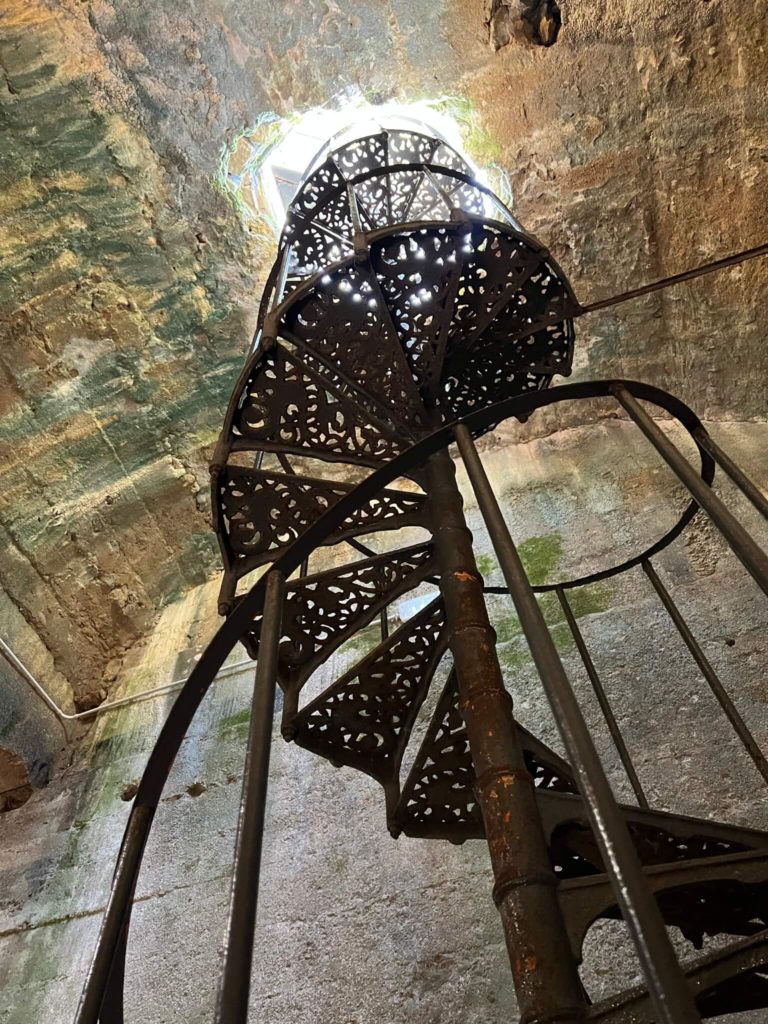
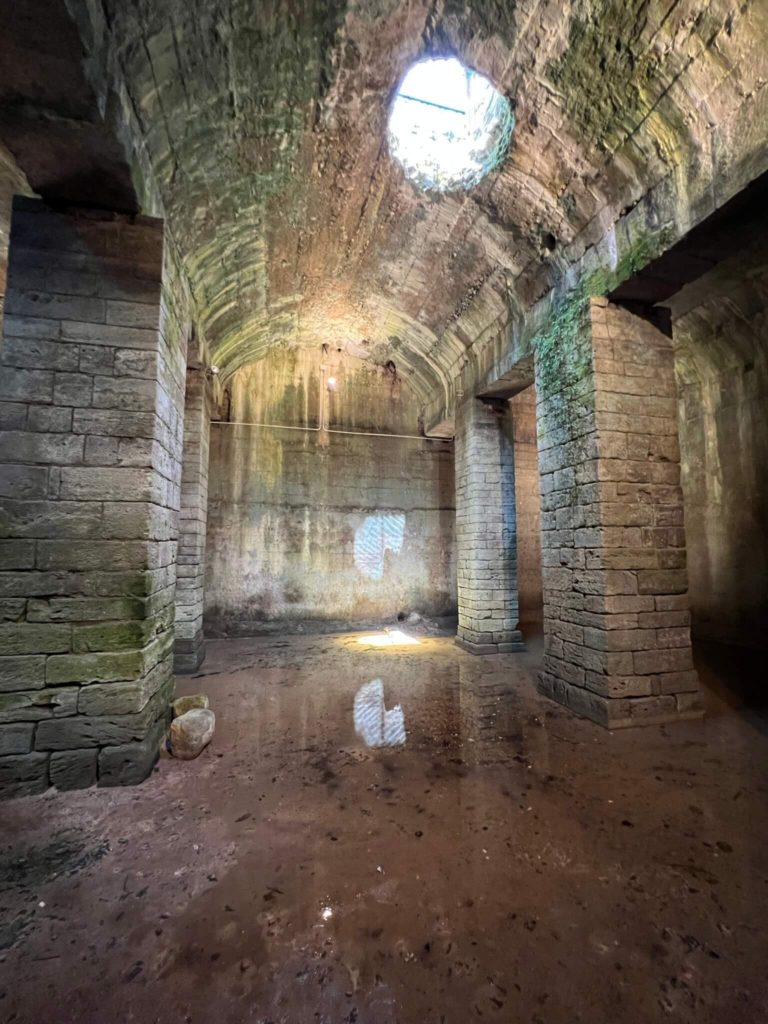
The cistern was the more interesting sight for me. It’s down a tight spiral staircase right next to the acropolis. Once you reach the bottom, it’s just a large empty chamber with some water sitting on the ground below the walkway for tourists.
In all honesty, there’s not much to see. It’s also eerily silent with just the slow drip of water to keep you company, which I enjoyed but some may not. Nevertheless, the age of the cistern and engineering involved for this to still be standing is impressive.
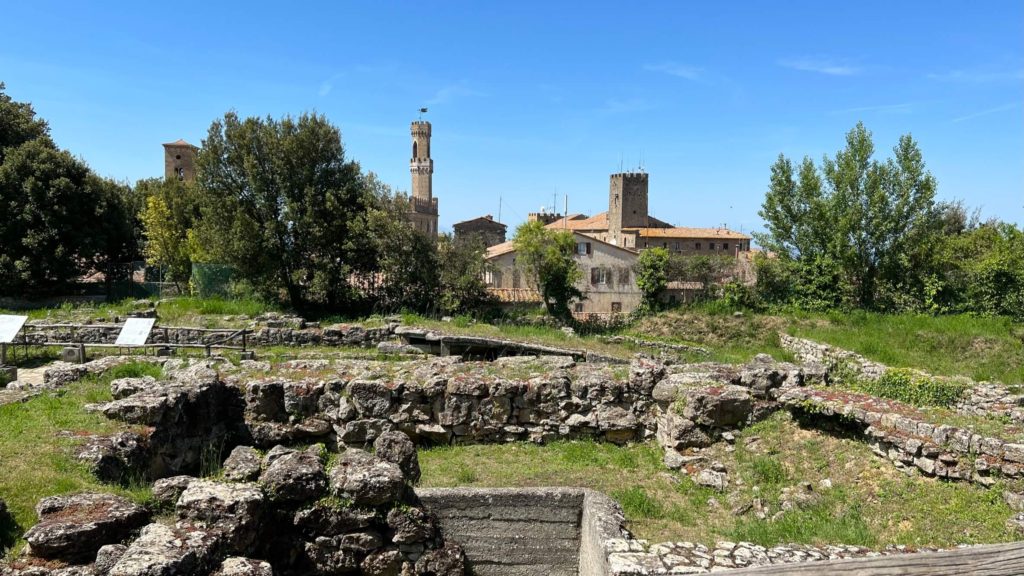
Don’t visit the Etruscan Acropolis unless you are purchasing the Volterra Card. It and the Roman cistern are interesting but not extensive or detailed enough to warrant a visit by themselves.
Etruscan Museum (Museo Etrusco Guarnacci)
This wonderful collection of Etruscan artifacts is the one must-see museum in Volterra. There are two floors of mostly Etruscan and some Roman mosaics. Near the entrance is also a small collection of pre-Etruscan items from around 1,500 BC.
The ground floor has the largest collection in the museum with several rooms of Etruscan urns. These funerary urns contained the ashes of the departed. On the lids are small sculptures of the person contained therein posed as if at a banquet while the bottom parts consist of various reliefs of mythological beings, parades of dignitaries, journeys to the underworld, and other scenes.
The urns are all decently preserved. You can even still see pigments used to color many of the urns which I found fascinating!
My only complaint is the confusing layout. It’s easy to get lost and miss something because of how rooms have multiple exits to other rooms. Fortunately, there aren’t any singular highlights on this floor. Rather, almost every urn has its own interesting detail separating it from the rest.
The two major highlights are upstairs.
The first is a tall, thin statue of an Etruscan boy titled The Evening Shadow. It’s a haunting piece that is also interesting because of how contemporary it seems. You would be forgiven for thinking this was a modern art sculpture, but it was sculpted 2,500 years ago.
The Urn of the Spouses is the other highlight. This urn lid shows an Etruscan couple looking longingly at each other. Like The Evening Shadow, this sculpture looks much more recent than the 1st century BC when it was made. The detail in the faces is exquisite. It’s almost like looking through a window at our past selves. This urn lid is also unique in that it shows two people whereas most only showed a single person.
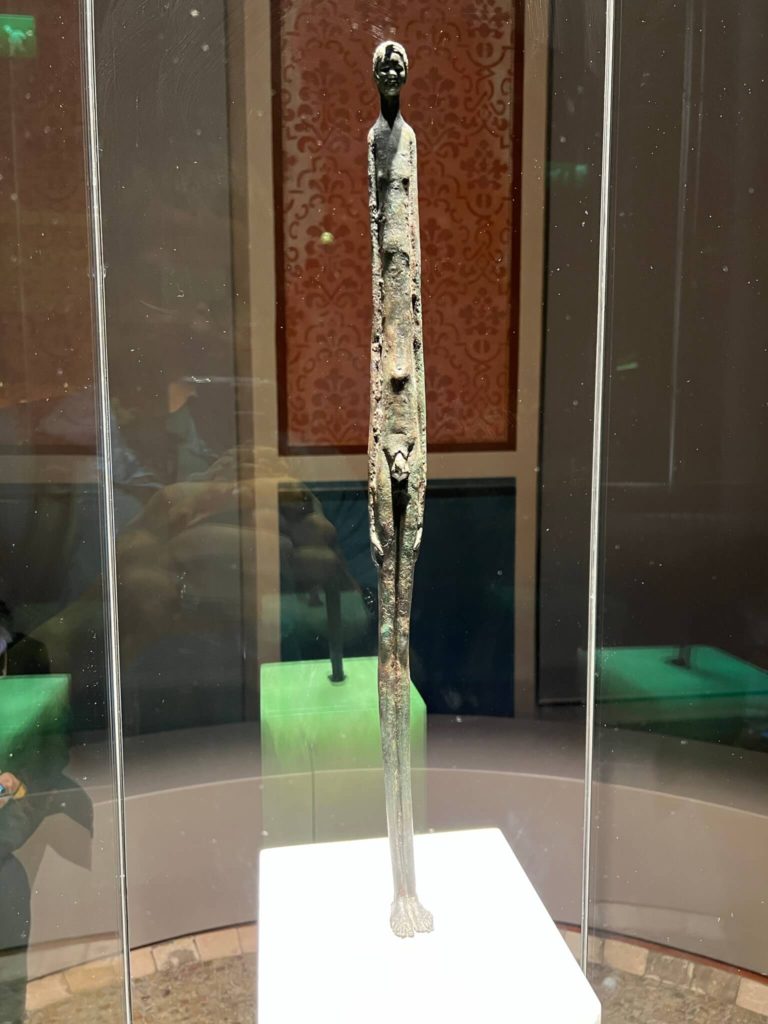
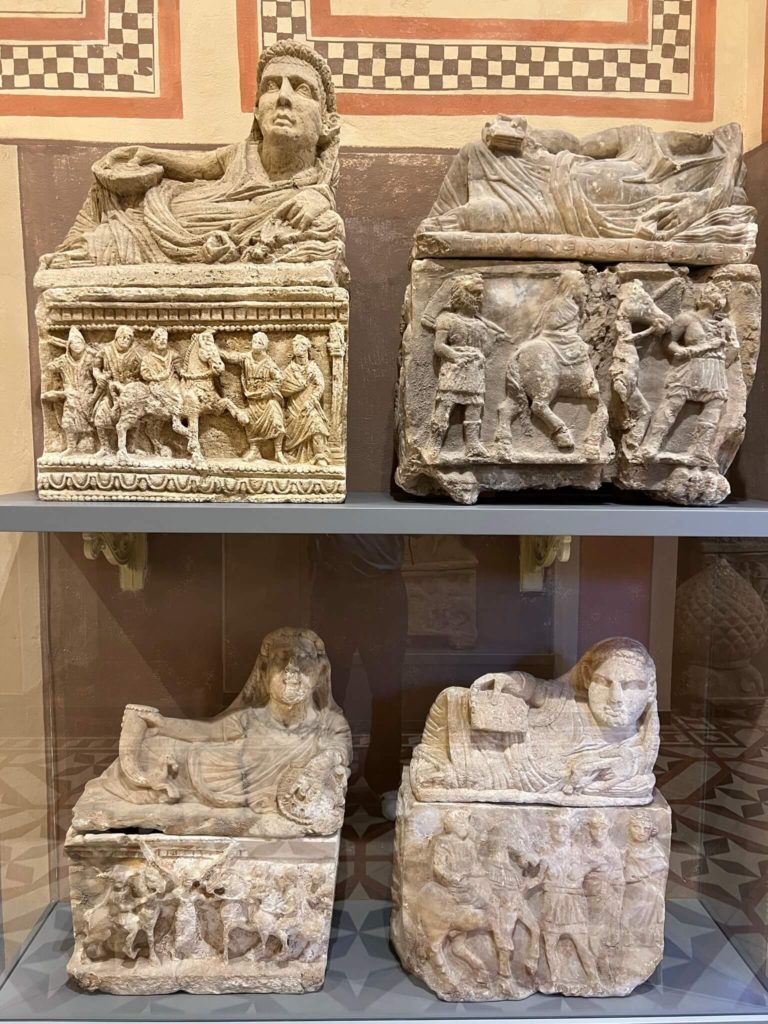
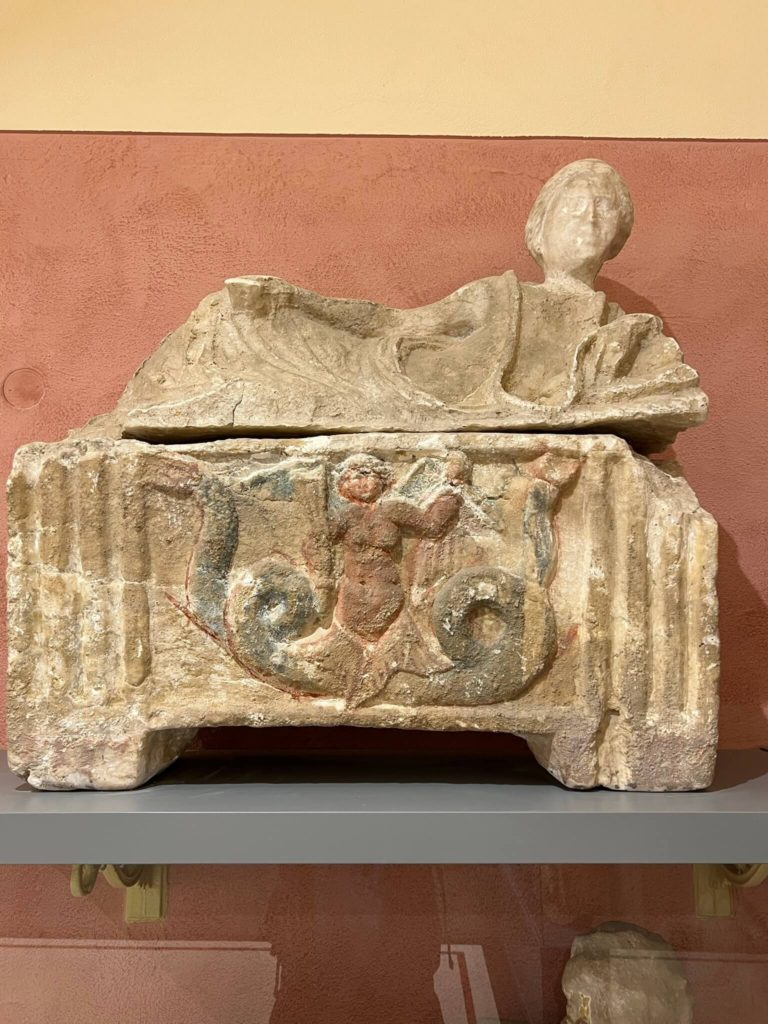
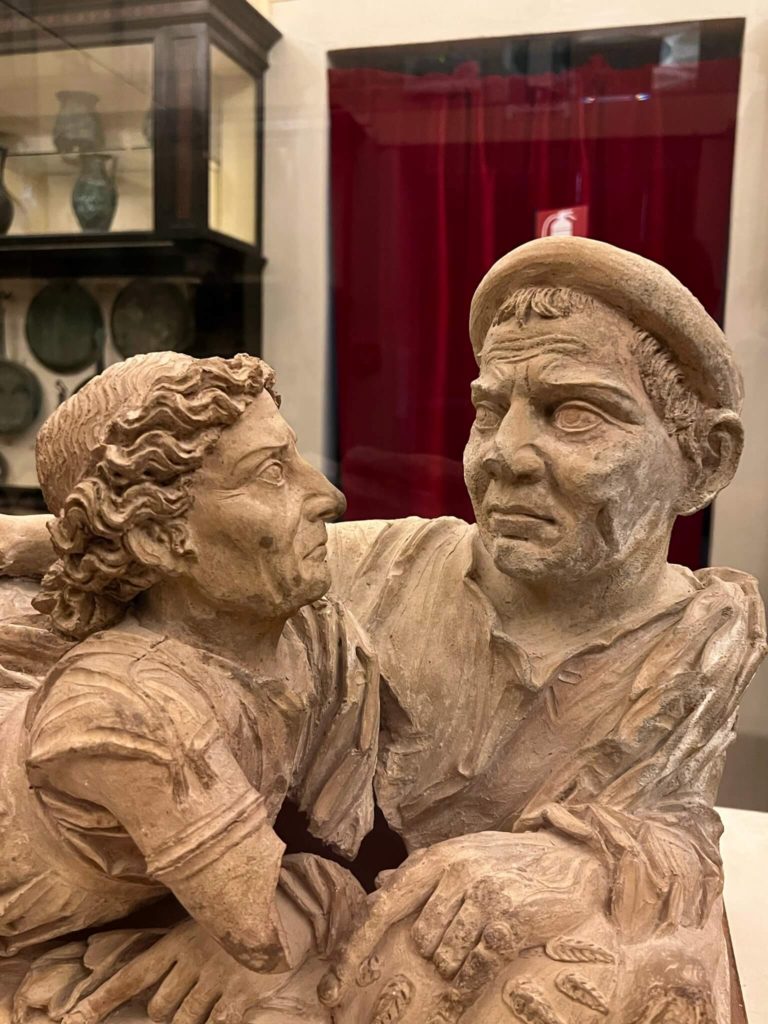
Expect to spend at least 45 – 60 minutes in the Etruscan Museum. You could easily spend more depending on how closely you are looking at each urn. They do start to blend together a bit after awhile, though.
More Great Italian Museums: My Top 8 Highlights of the Uffizi Gallery in Florence
Roman Theater
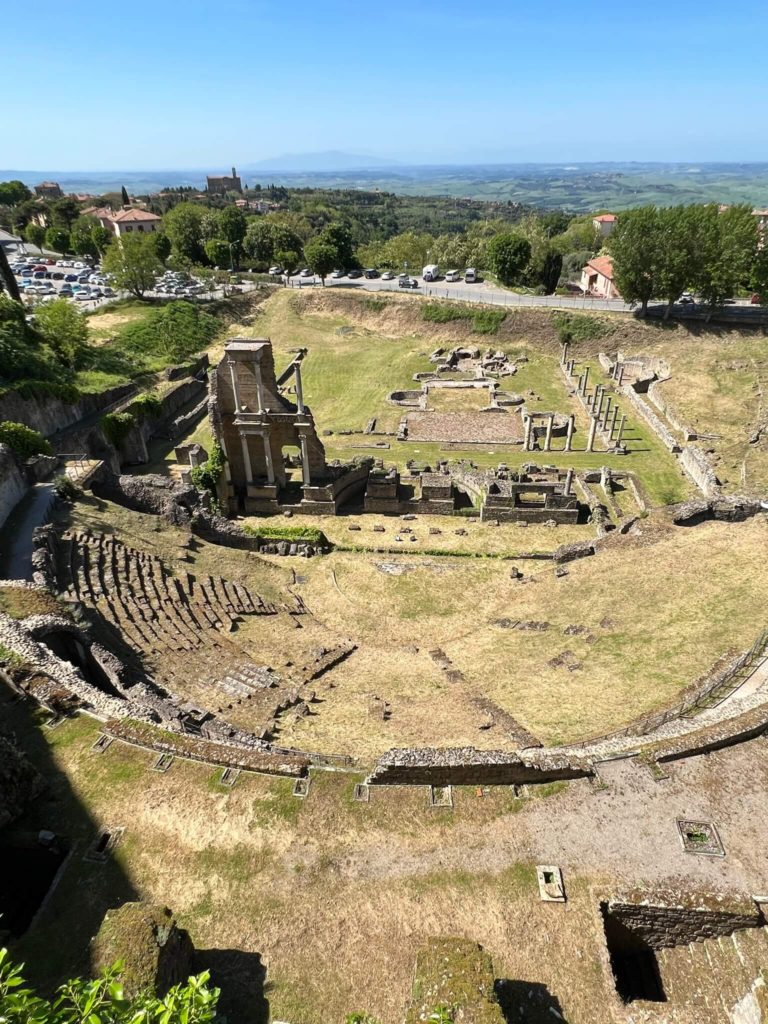
Along the northern edge of town is the 1st century Roman Theater. The Volterra Card covers entry if you want to get up close to the ruins. However, there’s a great view of them from Via Lungo le Mura del Mandorlo. We didn’t bother entering the ruins, and I’m not sure it would be worth the time.
This theater was in use till the 3rd century when residents began removing some of the stone to construct baths. These baths are the scant ruins located just behind the theater.
Over time, this section of town became used to dump the refuse of centuries. The ruins weren’t discovered till the 1950s.
Palazzo dei Priori
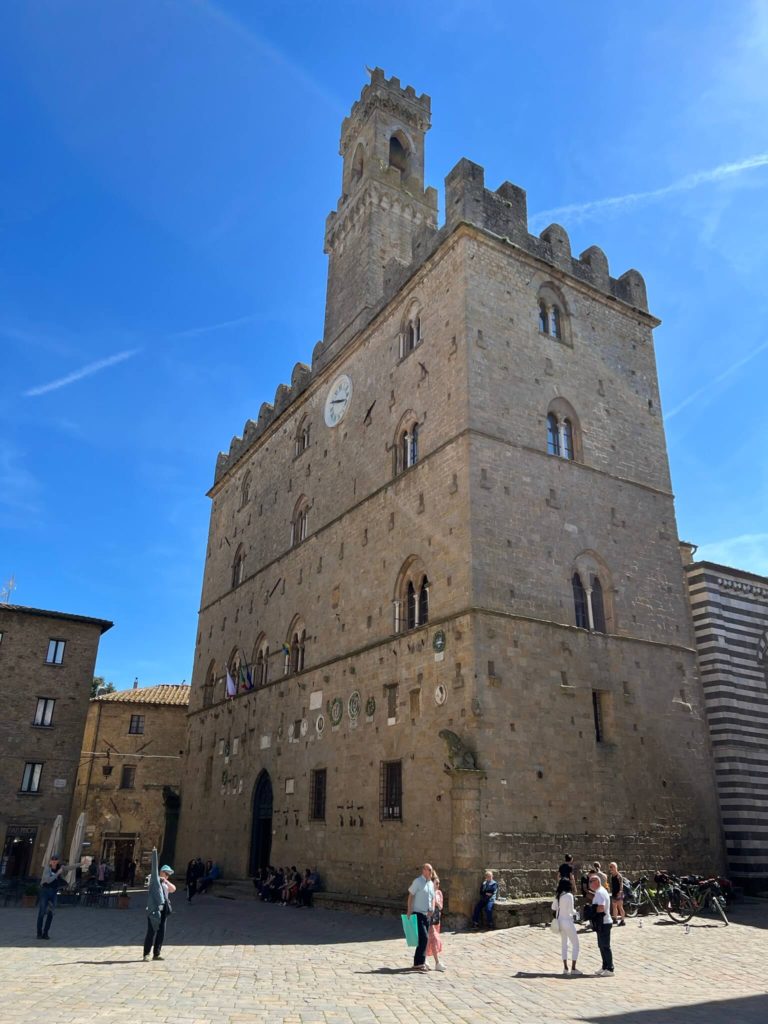
Palazzo dei Priori is Volterra’s town hall dating back to around 1,200. Interestingly, this is thought to be the first city hall of this style in Tuscany, inspiring the rest including Florence’s Palazzo Vecchio.
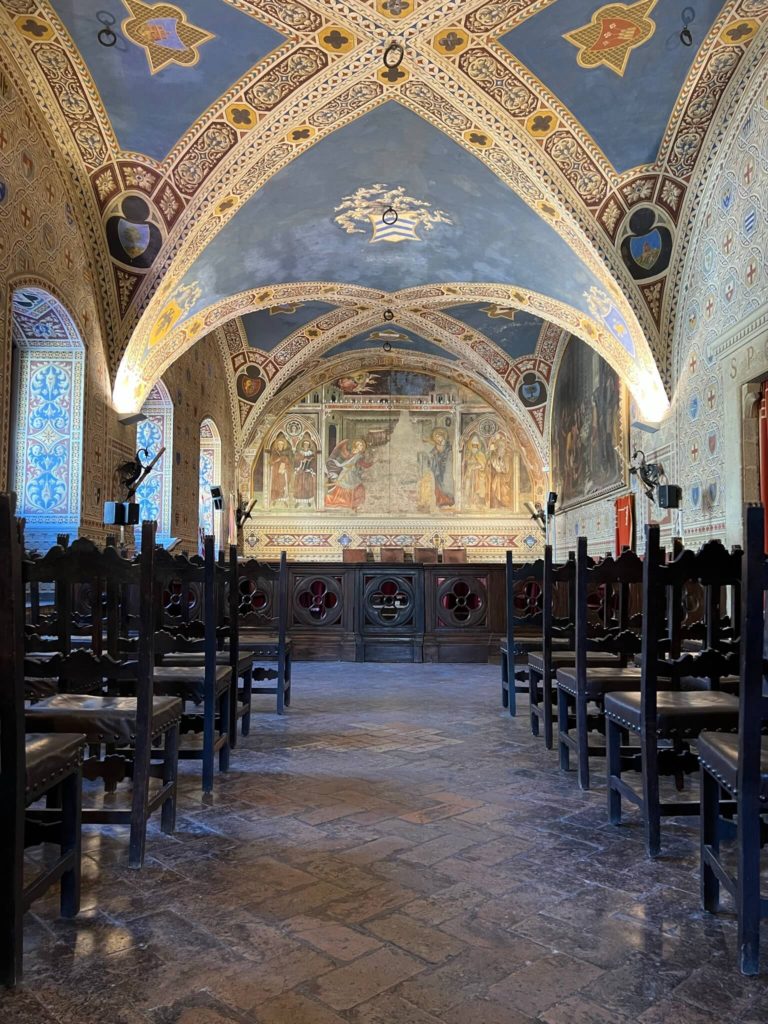
A visit to this palazzo takes you through the building to see the elaborate council chamber, a small museum (this room was largely empty during our visit, so I’m not sure what is typically housed here) and a climb up the bell tower for expansive views of Volterra and the surrounding countryside.
Take note of the griffin motifs throughout Palazzo dei Priori. The griffin was the symbol of Volterra and can be found in abundance in the council chamber.
Etruscan Arch
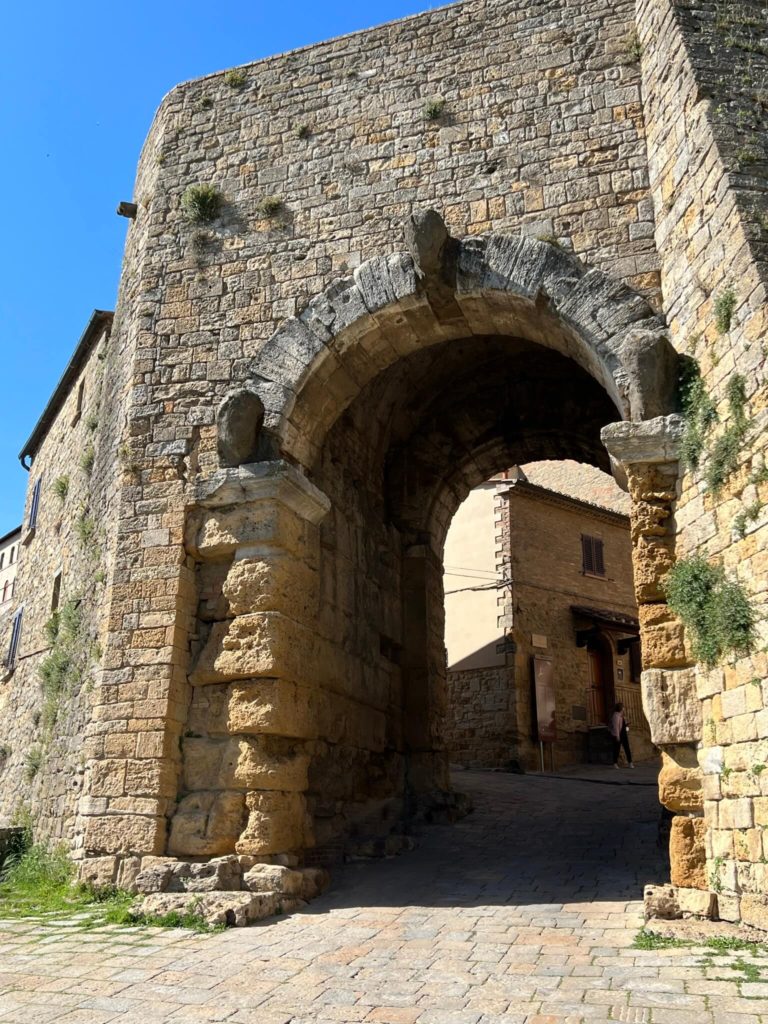
This brief stop was one of my favorite things in Volterra. On its surface, it’s only an archway into town with three rounded stumps of rock protruding from it.
Once you know the history of the arch, it becomes a much more evocative experience. Those three oddly placed chunks of rock are actually sculpted Etruscan heads from the 1st century BC and the rest of the rocks forming the arch are from the 4th century BC. While it may not look like much today due to erosion, it’s astonishing to think of how old this arch is while also trying to envision what these heads might have looked like before the winds of time had their way with them.
There’s also a bit of interesting WWII history related to this arch. On June 30, 1944, the Nazi army was preparing to blow up the arch to prevent Allied forces from taking this strategic location. Locals caught word of the plan and ripped up the stones from the adjacent road to block the archway up in order to preserve their town’s heritage. They were able to convince the Nazi commanders that there was no longer a need to blow up the archway.
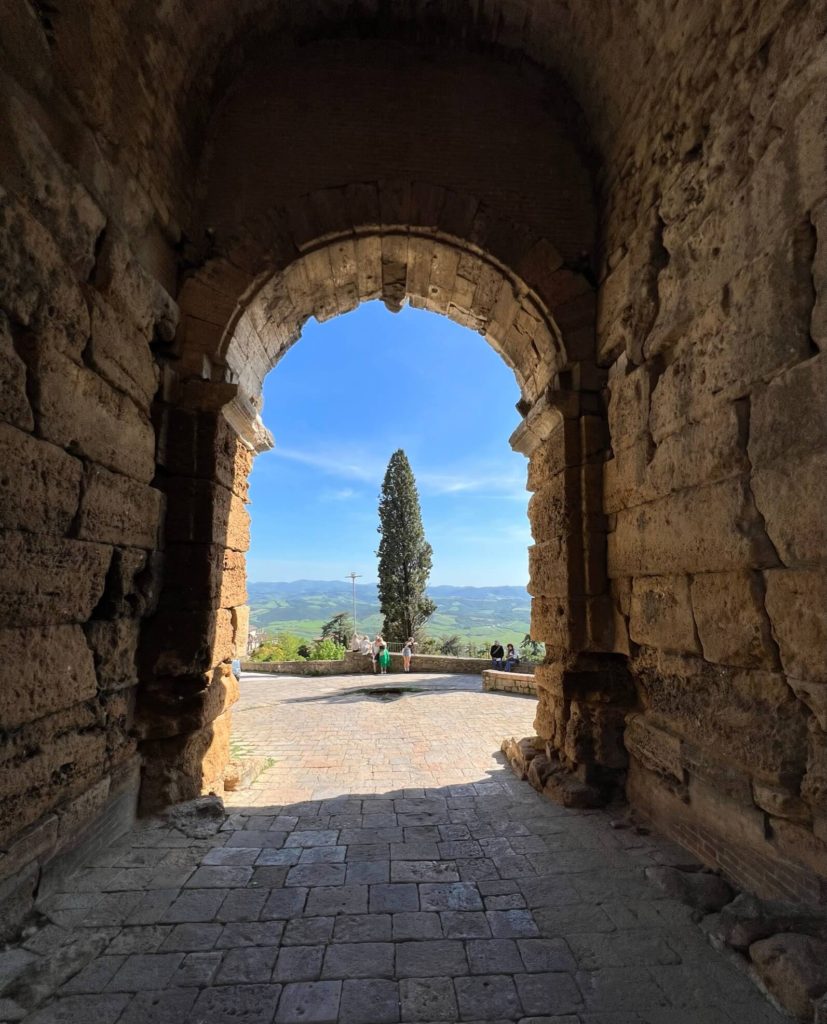
Besides the historical context, the archway is also a great spot for views looking out at the surrounding country or back up along Via Porta all’ Arco.
Walk Around
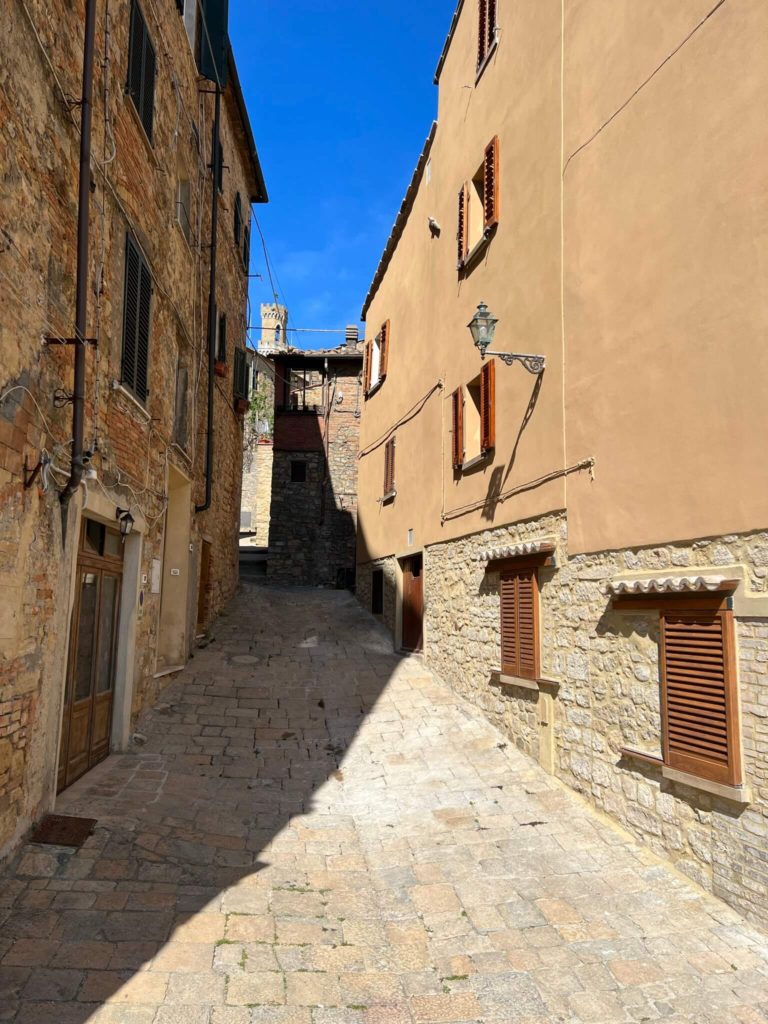
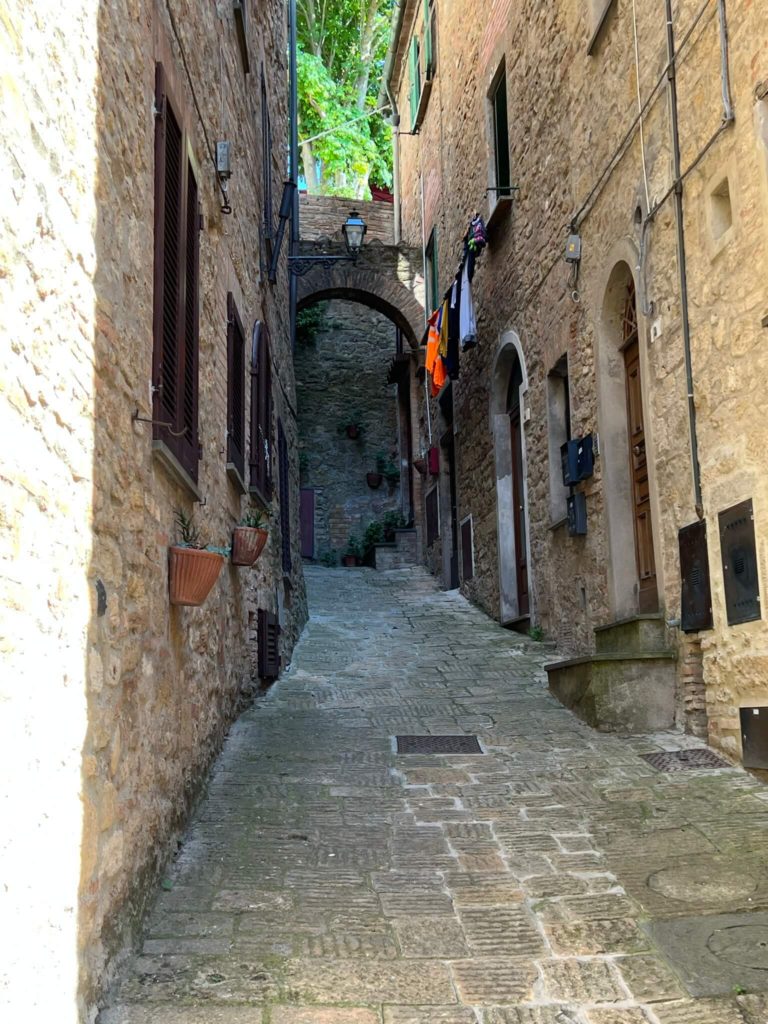
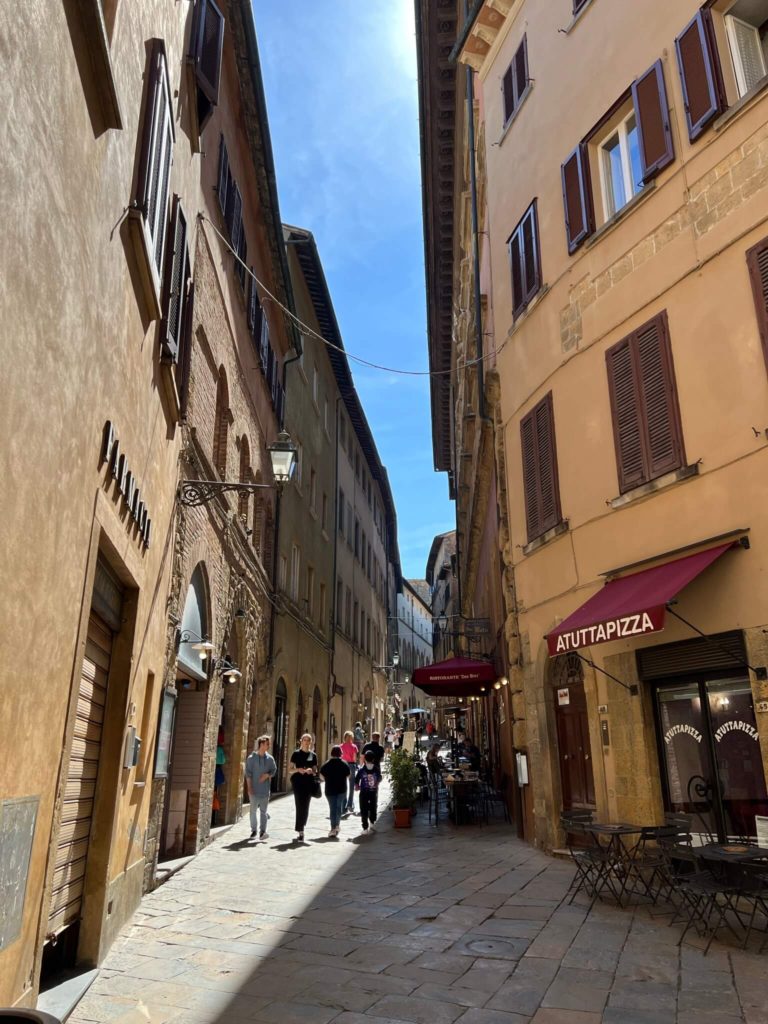
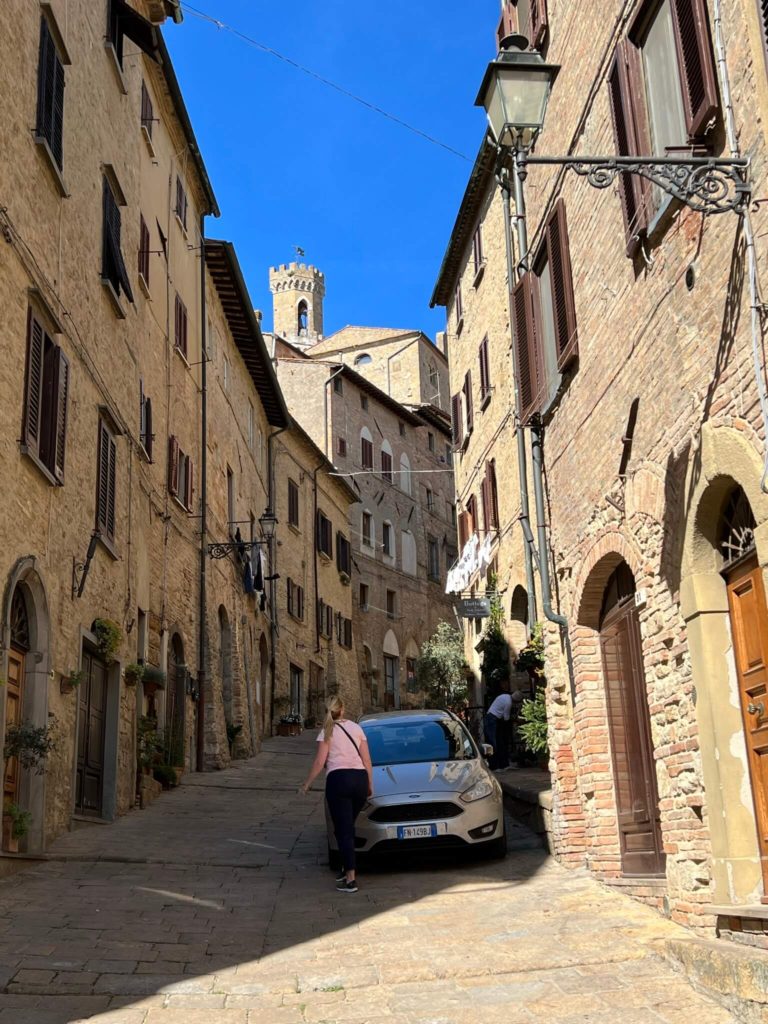
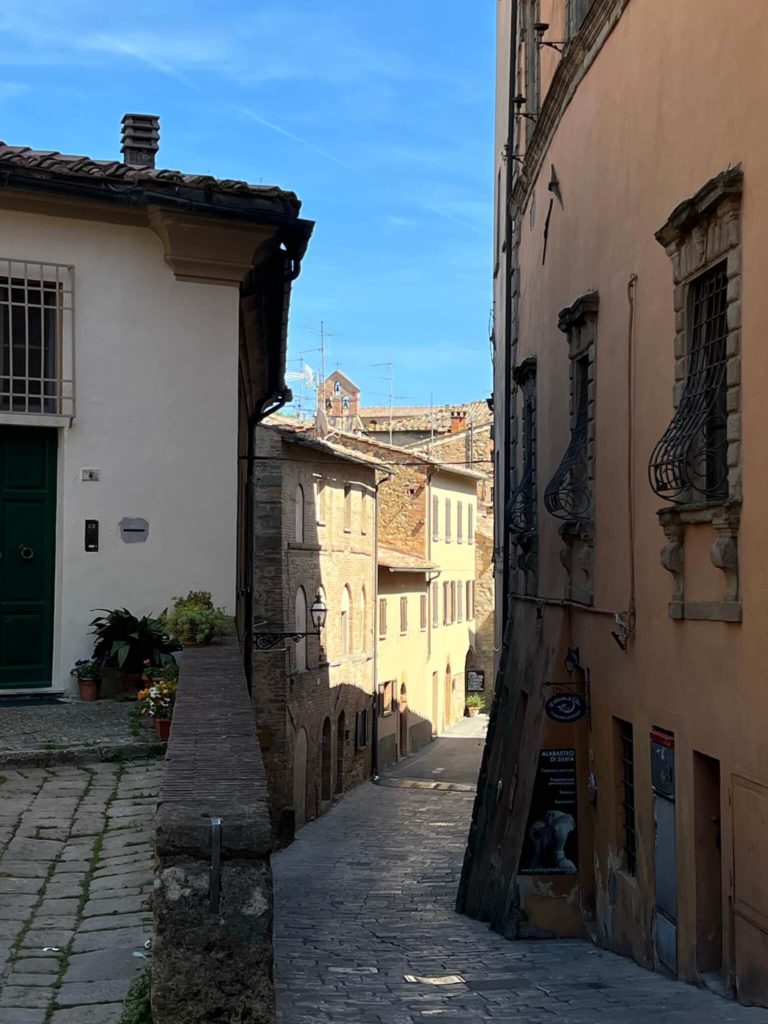
The true highlight in Volterra the town itself. Take time as you walk between attractions to wander down as many side streets as you can and to admire the various buildings.
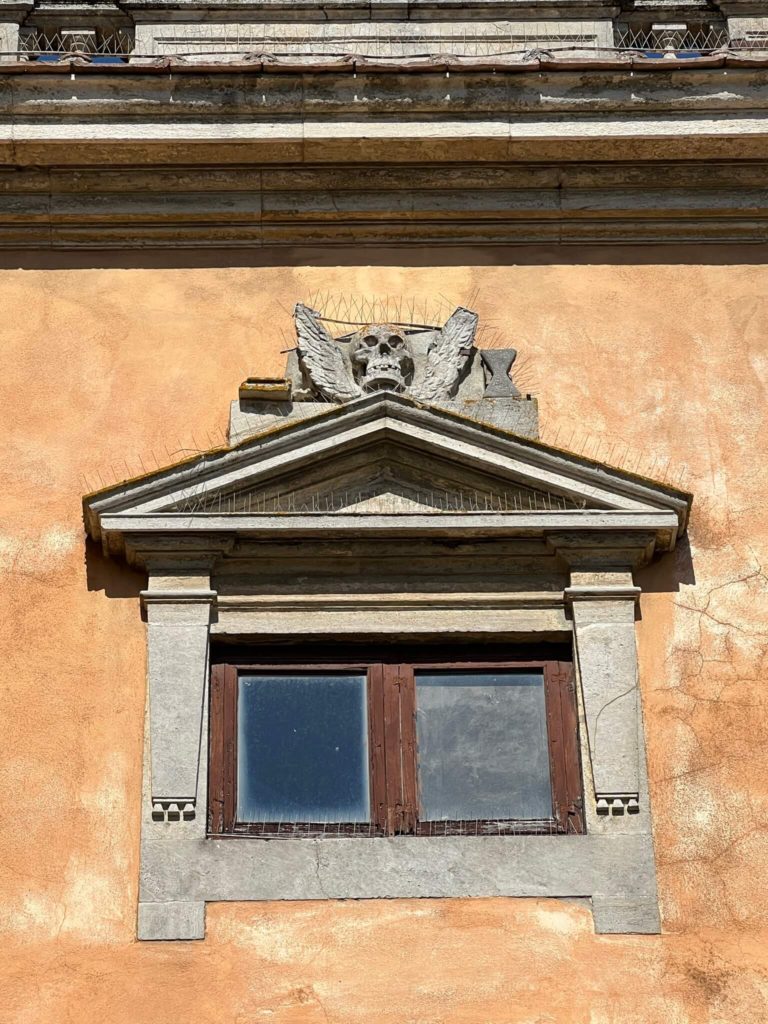
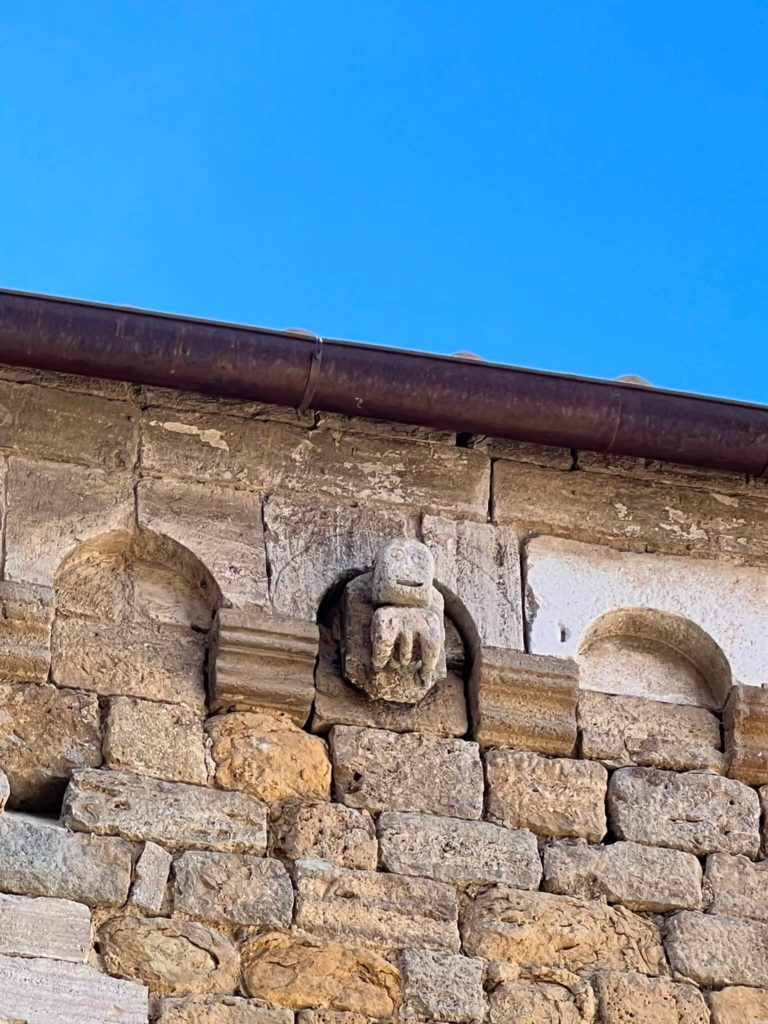
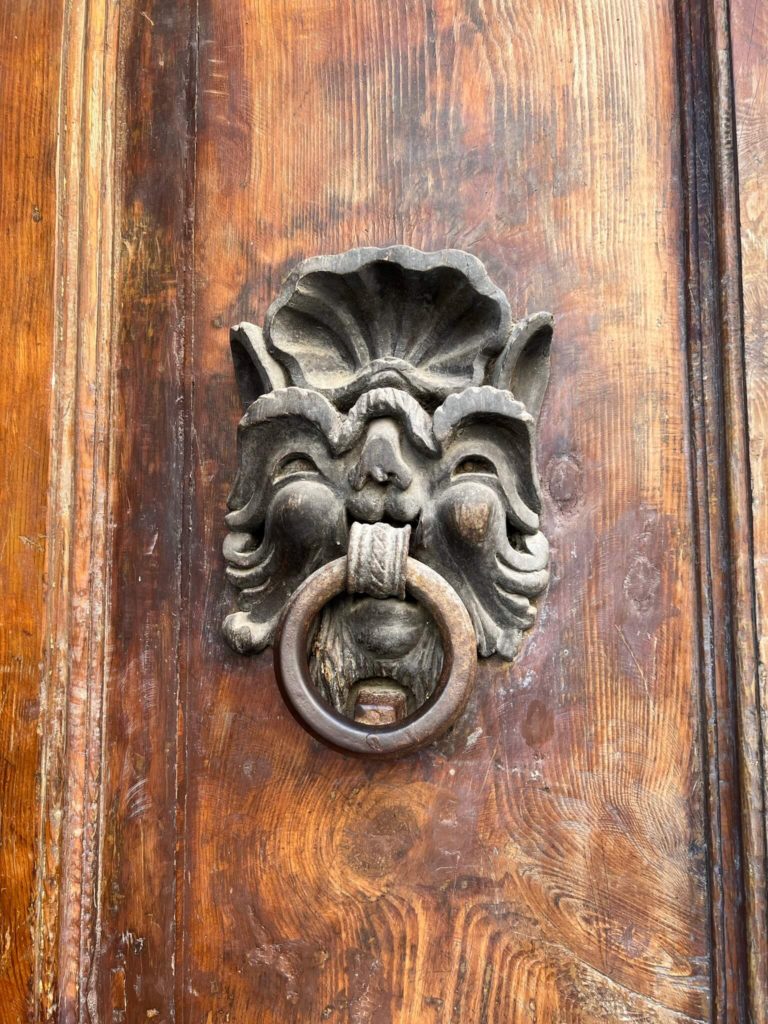
There are plenty of small details on many of the buildings that you might not notice if you’re too focused on the bigger tourist sights. Some of my favorite finds were the skull with wings on the Chapel of Misericordia, a knocker that looks like a gremlin, and a smiling monk and octopus on a side of the Church of St Michael.
In addition to those finds, I simply enjoyed wandering the old, medieval twisting roads. Sometimes they lead somewhere interesting like a view of the Tuscan countryside or rustic shops, sometimes not. Regardless, it’s just fun exploring and thinking of all the people who have walked these roads before you.
One thing to look out for that we missed is Docciola. It’s a relic from Volterra’s medieval past: an old fountain and city gate. I hadn’t heard of this spot when researching our trip, but I saw it on I Travel for the Star’s blog recently. It looks like a neat little spot that I wish I had heard of beforehand.

Related: A Walk to Discover Romantic Venice
Where to Stay in Volterra, Italy
Because Volterra is so small, there’s not a bad place to stay as far as location is concerned. Keep in mind, however, that you will have to lug whatever luggage you have from the parking garage to the hotel and back again.
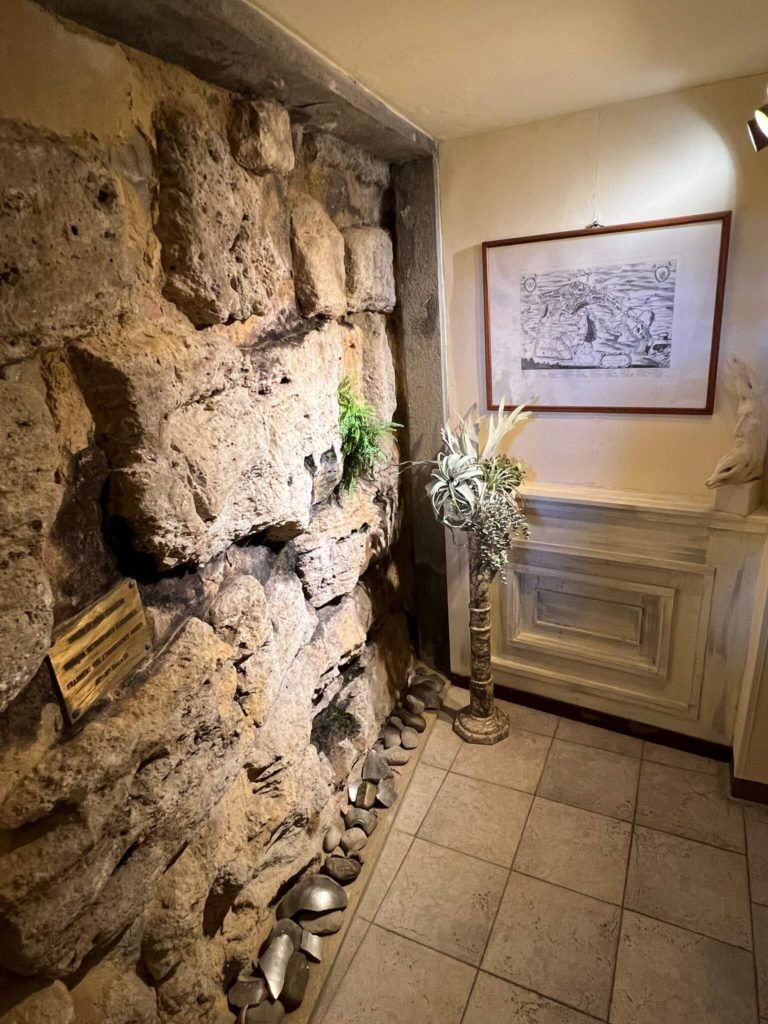
We booked a room at Albergo Etruria for our stay. Run by the Moretti family, Albergo Etruria is a true delight in the middle of Volterra. The Moretti’s gave us a warm welcome upon entering. We chatted for a bit before quickly being shown our room. Along the way, the owner gave us some recommendations and pointed out the section of the original Etruscan wall running through the hotel.
Throughout the hotel’s halls are various colorful paintings and decorations that create a bit of a cutesy atmosphere without being over the top. The room itself was similarly brightly painted with a handful of flower paintings.
Asides from the decor, the room was nice. We had a double bed and a small but private bathroom. My only tiny complaint was with the bathroom. The door on the shower was difficult to open and close. Certainly not a dealbreaker.
Further, Albergo Etruria has a decent breakfast included with your room. Their breakfast buffet included various pastries, meats and cheeses and a quiche. Like most breakfasts in Italy, it wasn’t anything particularly special. Yet, it was enough to get the job done before a day of sightseeing.
Lastly, there’s also a rooftop cafe attached to Albergo Etruria for a drink to wind down with between touring the city and heading out for dinner. More on that below!
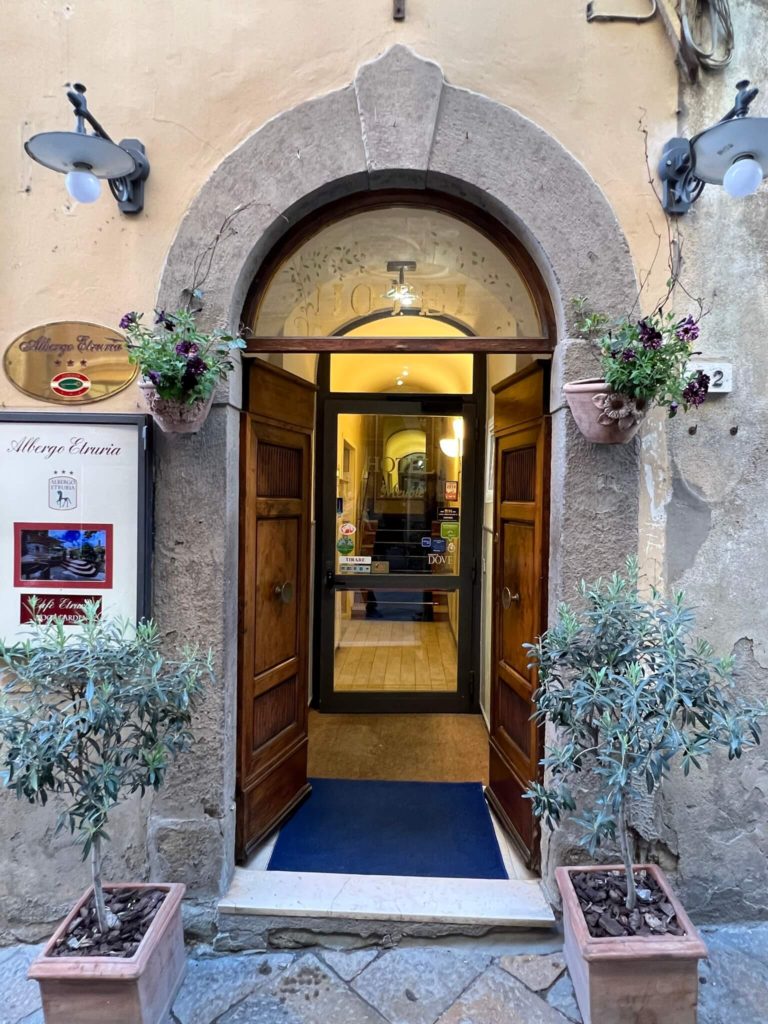
Click here if you’re ready to book at Albergo Etruria!
Eats and Drinks in Volterra, Italy
La Vena di Vino
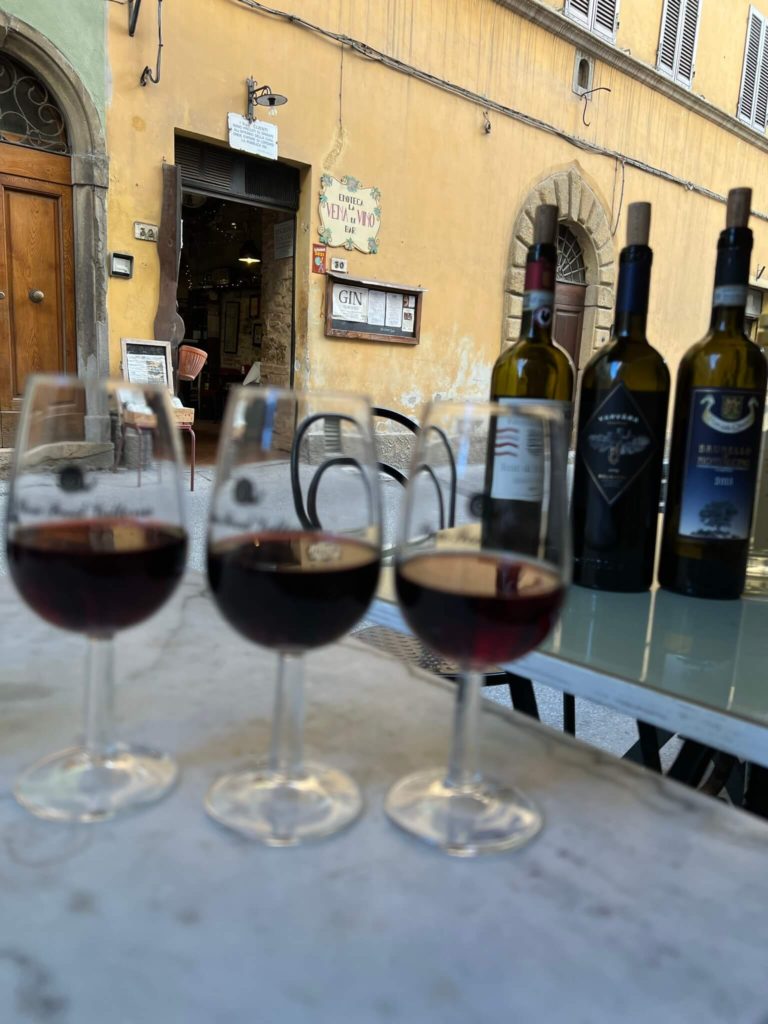
If Volterra has a dive bar, La Vena di Vino is it, and I say that with love. Down a small side street near the Etruscan Museum, you’ll find this small wine bar owned by Bruno and Lucio. When you enter their tiny bar, you’re greeted by bras strewn across the ceiling and antique decor along the walls.
It smelled smoky and was slightly foreboding for me as a newcomer. The person running the bar (I’m not sure if it was Bruno or Lucio) spoke English with a thick Italian accent. I ordered a flight of whatever local reds he had for Michelle and me. We enjoyed the wines outside next to a group of regulars winding down at the end of the day.
One thing I will say about La Vena di Vino is it seems like the type of place where you need to stay for multiple drinks to really experience all it has to offer. If you’ve frequented dive bars, you understand what I mean. Since we wanted to see more of Volterra, we only had the one flight. Still, you should definitely check it out!
Enoteca Scali
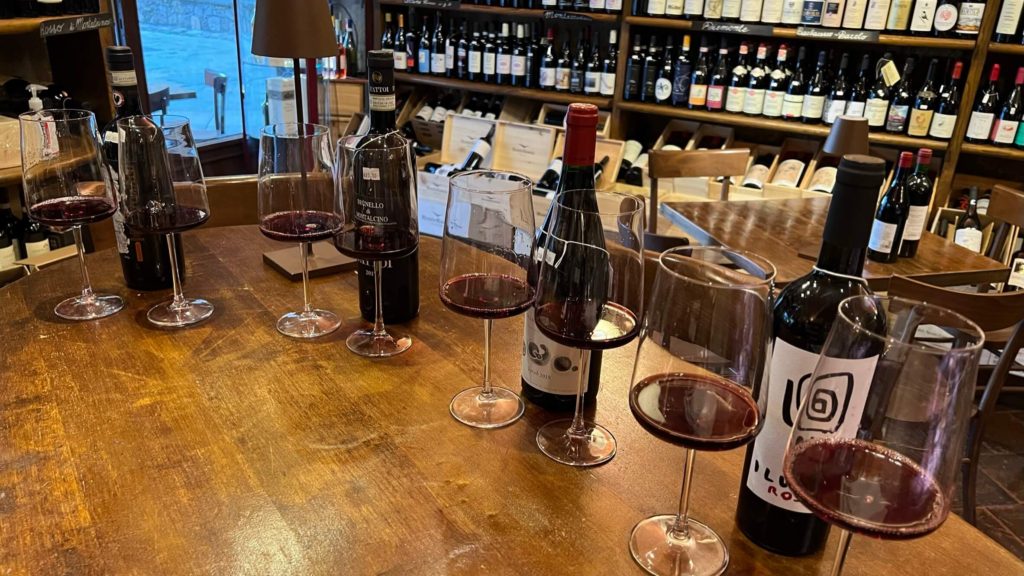
Enoteca Scali was hands down my favorite bar in Italy. Owners Patrizia and Massimo run an expansive wine bar in a way that feels like how a wine bar should be managed. It’s intimate, a little chaotic and has enough wine for any palate.
When we arrived, there was a heated conversation going between Patrizia and Massimo in Italian. I don’t think they were arguing so much as just being emotive as Italians tend to be. I already loved being here. It made me just uncomfortable enough to be intrigued but not so much as to want to leave.
There was 1940s American blues on the radio. Again, another delightful touch. A wine bar should never have pop music on. It needs to have music that the pretentious among us can bob our heads to knowingly or else music that has some deeper meaning to spark conversation. If chosen well, the music will meet both requirements.
No matter where you looked there were wine bottles of varying vintage stacked haphazardly. This arrangement lets you know they know their stuff.
To top it off, they had an assortment of meats and cheeses to prepare fresh charcuterie boards. A wine bar simply does not get much better than that!
Once we sat, Massimo greeted us. He was a fast talking, somewhat hectic small Italian man. Yet, it was obvious he was passionate about wine and knew his stuff. We each ordered flights of local red wines and a charcuterie board chosen by him and Patrizia. Both the wines and the charcuterie were top notch.
Of everything I’ve discussed so far, if you only do the Etruscan Museum and Enoteca Scali, you’re bound to have a good time in Volterra!
For more Italian wine, check out my review of our Tuscan wine tour!
Cafe Etruria
If you’re staying at Albergo Etruria, this small rooftop cafe is worth a visit for a drink and some snacks after a day of sightseeing. Cafe Etruria has a relaxing garden with several tables and seating areas overlooking the roofs of Volterra.
You can enter the cafe from the hotel if staying there or from the adjacent Archeological Park.
Other Things to do In and Around Volterra, Italy
Visit San Gimignano
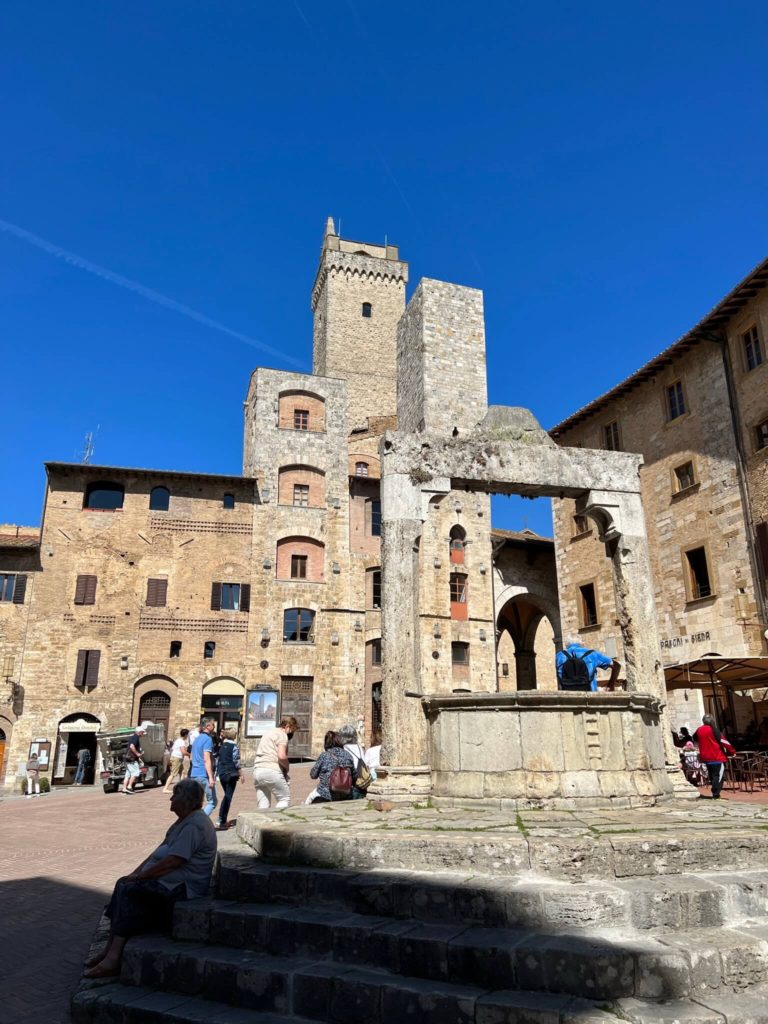
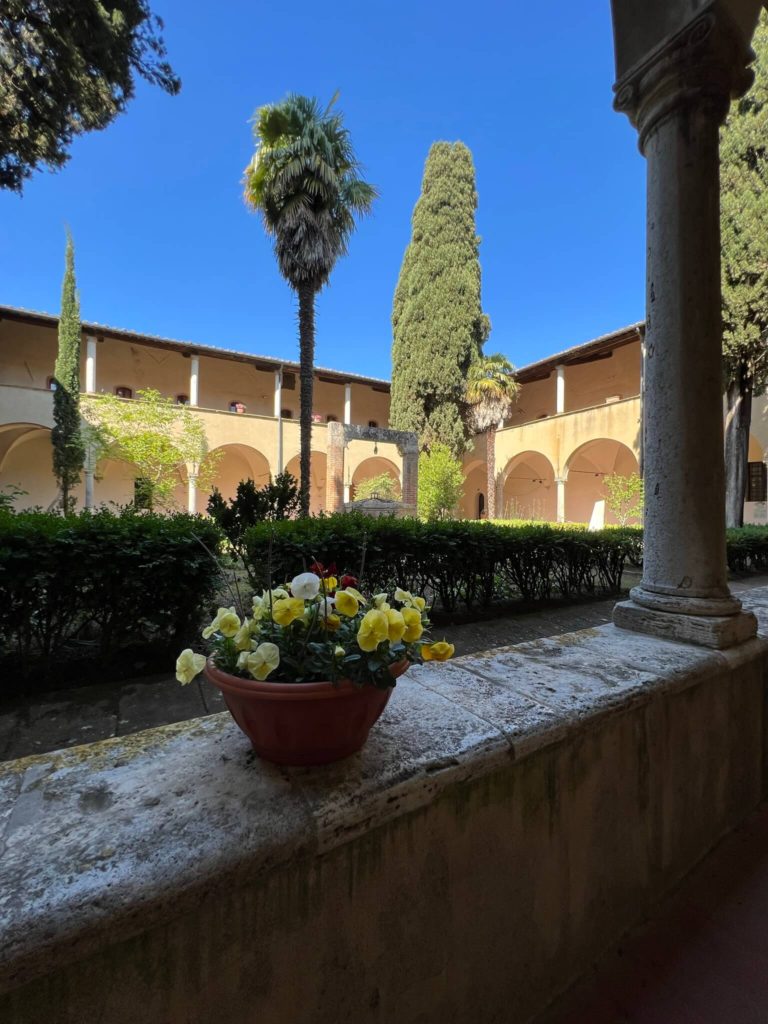
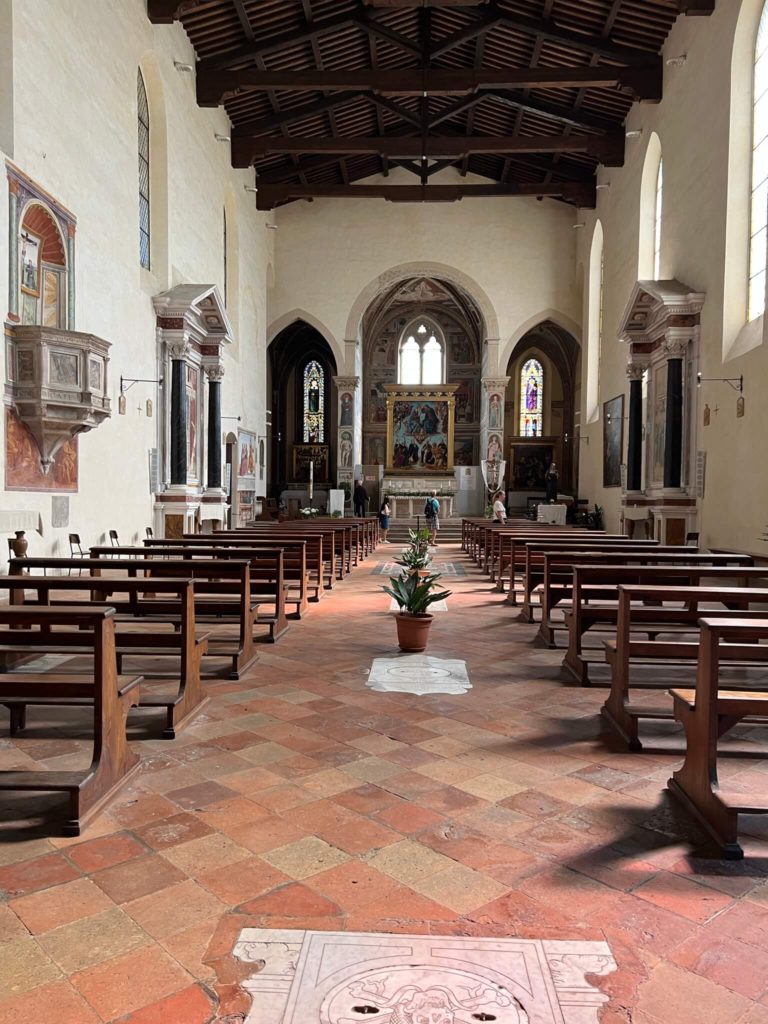
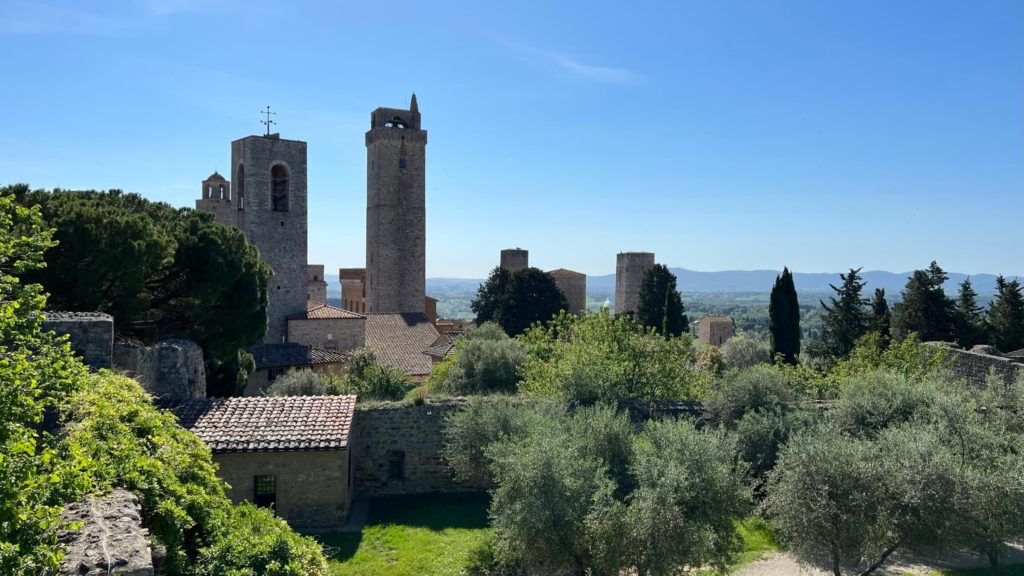
Only 30 minutes away from Volterra, San Gimignano is another popular hilltop town in Tuscany. San Gimignano is famous for its 14 towers punctuating its skyline.
In some respects, San Gimignano is similar to Volterra with its medieval architecture and narrow roads. However, it feels much more touristy and commercialized than Volterra. Still, it’s worth visiting to walk around for at least an hour or so on your way to or from Volterra.
A few things to see while you’re there include Rocca Park (there’s a small tower to climb in the far corner with great views), Sant’Agostino Church and Piazza della Cisterna.
Palazzo Viti
The only main attraction in Volterra that isn’t included in the Volterra Card, Palazzo Viti shows a more personal side of town. In this privately owned home, you can view how a wealthy Volterran family lived during the 19th century.
You can purchase tickets for Palazzo Viti at the entrance for €5.
The Duomo
Somewhat annoyingly, the Volterra Card does not include the Duomo. We had already visited plenty of renowned churches and cathedrals, so when I learned you needed to pay to enter, we decided to pass.
Having done some research beforehand, I didn’t think it was worth entering. However, if you are a big fan of small-town churches, you may want to visit.
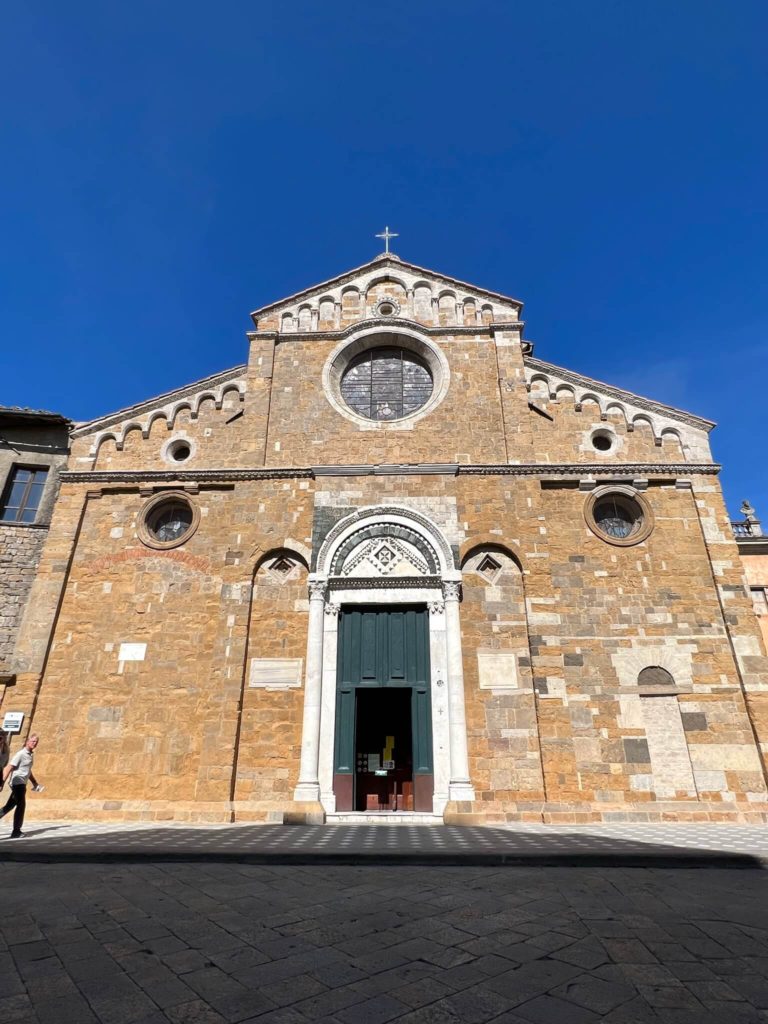
If using a guidebook from before the COVID-19 pandemic, you may incorrectly think the Duomo is free. I assure you that is no longer the case as of this writing.
Alabaster Ecomuseum and Art and Civic Museum
The Alabaster Ecomuseum demonstrates the importance of this material to Volterra over the ages. It is divided into three sections showing how alabaster is used, the historical context of alabaster in the region, and how it is crafted by contemporary artists.
The Art and Civic Museum contains important artworks from Volterra and the surrounding region.
You can visit these museums with purchase of a Volterra Card.
Volterra, Italy FAQ
How to get to Volterra, Italy?
The easiest way to reach Volterra is by car. Simply plug Volterra into your GPS and drive up the hill towards the old town till you see the parking garage on your right.
Volterra is much more difficult to reach otherwise. There is no train station directly in Volterra. There’s a small train stop nearby named Volterra Saline-Pomerance. Larger train stations are a little farther away at Cecina and Pontedera. You can take a bus from any of the three stations to Volterra.
Where to park in Volterra, Italy?
Volterra is one of many cities and towns in Italy that don’t allow vehicles except for residents. However, there is a large underground parking lot shortly before the main entrance to town. Simply drive uphill towards town and turn right into the garage before the bus roundabout (it’s hard to miss).
Can Volterra, Italy be done as a day trip?
Sure can! It just depends on the rest of your itinerary and how much time you have. If you’re able to, though, I do recommend staying overnight to experience the town when the rest of the tourists leave.
More Posts to Plan Your Italy Trip
Don’t miss out on these other guides and itineraries to help plan your trip to Italy!
Thank you for reading this post. Paul Passing Through is a labor of love to which I’ve dedicated a lot of free time. If you’d like to show your support for my blog, you can Buy Me a Coffee to help fund the future of Paul Passing Through. I appreciate any contributions!
Resources to Book Your Trip to Volterra
Whether you’re looking for tours, hotels or flights, here are some tools to help get you started planning your trip to Volterra!
Look for activities and tours offered through GetYourGuide or Viator!
Search Flights
Still can’t find what you’re looking for? Check out my travel essentials pages for more of my recommendations.
Pin This Post!