Dogs In National Parks: Everything You Need to Know

What could be more fun than bringing your dog to a national park? That seems like a simple question, but unfortunately, there’s a little more to it than meets the eye. There are a few big considerations you need to plan for when bringing dogs in national parks.
Some of these tips may seem a little obvious at first glance, but did you know not all national parks allow dogs? That’s more common than you might think. Don’t get all the way to the park and have to leave Fido in the car!
Read through this guide to find out some of the most important things to know about having dogs in national parks.
Updated August 2024
Disclaimer: This post may contain affiliate links. If you make a purchase through one of these links, I will earn a small commission. This occurs at no added cost to you.
Make Sure Dogs are Allowed
The biggest consideration about having dogs in national parks is finding out if they’re even allowed in the first place. It may seem counterintuitive: Why would our furry friends not be allowed in the great outdoors with us?!
Turns out, there are some very good reasons for these restrictions in some parks. I won’t list out each one, but the most important reasons are to protect the native of wildlife and vegetation and to protect your dog.
As our national parks are protected zones for wildlife, dogs can negatively impact that balance. For example, your dog could get off its leash and go after an endangered animal while trampling native plants and soil.
In addition to that, dogs in national parks can introduce smells into the environment which may prevent native animals from performing their normal routine. Similarly, if your dog barks or growls it can scare wildlife causing a change in their behaviors. All this is to say that a dog can create imbalances to an otherwise balanced ecosystem.
Besides being a potential hazard to the parks, the wildlife and landscapes of some parks can be dangers to your dog. Consider places like Zion or Bryce Canyon with their steep cliffs and cougars. If your dog gets off its leash, it could potentially either fall or be attacked. It’s simply safer for everyone involved to not always allow dogs in national parks.
What Trails Allow Dogs
You’ve done your research and know your dog is allowed in the national park you’re visiting, so now you’re good to go, right? Wrong!
There is still one other important consideration for dogs in national parks. While the park you’re seeing may say they allow dogs, that doesn’t mean that Fido is allowed everywhere in the park. The reasoning is the same as above. An added reason is some trails may be too difficult for your doggos, creating a hazard to them and other people.
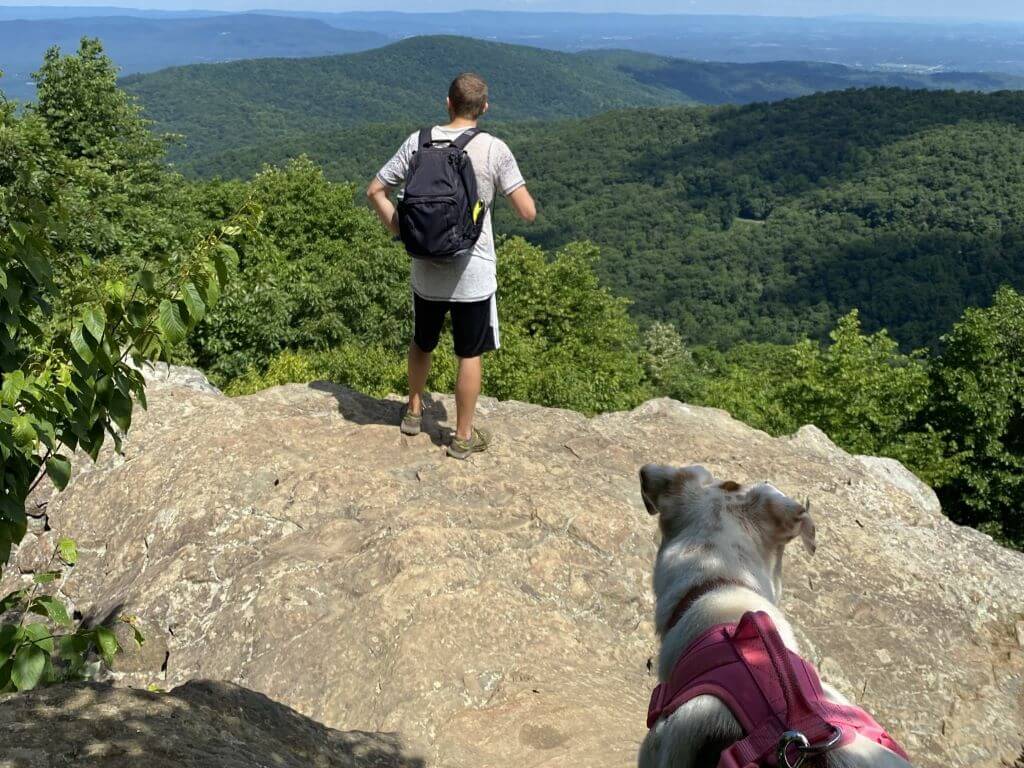
An example of this is Shenandoah National Park. Dogs are allowed throughout the park with the exception of several trails. These trails include Old Rag, Bearfence and Stony man, all of which also happen to be among the park’s most popular.
Depending on what hikes you want to do, this can really affect your plans. If you’re like us, it’s difficult to leave your dog alone for any extended period. You might need to compromise with a friend or significant other to have them stay in the hotel while you do that bucket list hike you’ve been waiting years to do.
Here is a list of restrictions for dogs at each national park.
Hiking Gear for Dogs
These four pieces of gear are essential if you’re doing a long day of hiking with your pooch.
Hands-Free Leash
Hands-free leashes are a big help when having dogs in national parks. They keep your hands free, so you have one less thing to worry about while hiking. If you happen to lose your balance, you have your arms available to help balance yourself. Your hands are also free to take all the photos you want without having to worry about what to do with the leash.
A good hands-free leash has some elasticity to it. If your dog starts to get too far ahead, the leash will get taut, cuing your dog to slow down. It also should slide around on the waist band allowing your dog to move around without pulling you along too much.
Doggy Water Bottle
You need a lot of water while hiking. The same is true for dogs in national parks, and you shouldn’t rely on streams along the way. If you wouldn’t drink from untreated water in the park, you shouldn’t let your dog do it either.
Bring along a small water bottle that opens up to include a small bowl for your dog to drink from. Some water bottles will have a clip on them to attach to your backpack or leash. The clip isn’t absolutely necessary if you have a backpack, but it is nice for easy access.
Poop Bag Dispenser
If you have a dog, you probably already have a poop bag dispenser for walks. If you don’t, it’s time to get one if you’re bring your dog to a national park.
An ideal dispenser has a clip to attach either to your leash or backpack and a hook to hand any used bags from till you can find a garbage can.
Kibble and Treats
If you’re going to be hiking for several hours, bring along some kibble to keep your dog energized. Like with water, dogs need to be replenishing calories while hiking just like we do. The amount you bring will be dependent on how much your dog typically eats and how long you plan to be gone.
Some treats in your pack are important to reward your dog for good behavior while hiking. They can also be used to keep them engaged in case their interest in the hike starts to wane.
Bring Poop Bags (and Use Them!)
Do not be that person who lets their dog do its duty on the trail without picking it up. It’s gross and everyone hates you. They may not know who you are, but they definitely hate you. Also, make sure to deposit your bag in a garbage can rather than just leaving it on the trail. Everyone hates you if you do that, too.
Make sure to bring plenty of poop bags to attach to your leash and use them!
Food and Breweries
As a dog owner, you already know that some places are more open to dogs than others. Restaurants with only indoor seating tend to not allow dogs. Breweries are usually more lenient. However, if they serve food, these likely won’t allow your pup indoors.
Research beforehand for dog-friendly places to grab some food and enjoy a drink after a day of hiking. It’s much easier to have some places in mind already rather than searching in the moment.
Further, if you know ahead of time there aren’t many options available, you can bring your own meals and drinks. Otherwise, you may be stuck purchasing groceries at stores near the park where things tend to be more expensive and in limited supply.
Thank you for reading this post. Paul Passing Through is a labor of love to which I’ve dedicated a lot of free time. If you’d like to show your support for my blog, you can Buy Me a Coffee to help fund the future of Paul Passing Through. I appreciate any contributions!
Resources to Book Your Next Trip
Whether you’re looking for tours, hotels or flights, here are some tools to help get you started planning your next trip!
Look for activities and tours offered through GetYourGuide or Viator!
Search Flights
Still can’t find what you’re looking for? Check out my travel essentials pages for more of my recommendations.
Pin This Post!


