
A Perfect Ireland Itinerary: Places to See in 13 Days

If you’re heading to the Emerald Isle, this Ireland itinerary is for you. This itinerary takes you through some of Ireland’s cutest small towns while offering many great examples of the country’s natural beauty.
You’ll hike along cliffs hundreds of feet high, bike on a remote island, visit world-class museums, explore Ireland’s Christian past and then wash it all down in one perfect Irish pub after another.
Even though this itinerary is for 13 days, towards the end I’ll give some suggestions for more or less time to help with however long your trip to Ireland will be!
Disclaimer: This post may contain affiliate links. If you make a purchase through one of these links, I will earn a small commission. This occurs at no added cost to you.
Arrival in Dublin
You’ve touched down in the Emerald Isle! The first thing to do is pick up your rental car, and then get out on the road.
This itinerary is essentially one big circle around the lower half of Ireland. We chose Dublin as our arrival and departure city. However, depending on your preferences and available flights, you could just as easily use the Shannon Airport to start and end your trip. The order of stops will be different, but otherwise, the itinerary is the same.
Days 1 and 2 in Galway
My detailed two-day Galway itinerary!
- Day One
- Clonmacnoise
- Explore the Latin Quarter and Eyre Square
- Hall of the Red Earl
- Galway City Museum
- Day Two
- Galway Market
- Connemara National Park
- Galway Cathedral
- Explore the city
Once you pick up your car in Dublin, it’s time to head to Galway. But first, there’s one side trip on the way worth your time if you’re eager to start seeing some Irish ruins.
Clonmacnoise
The ruins of Clonmacnoise cover a large area of land right next to River Shannon. This monastery was built in the 6th century by St Ciarán and the future High King of Ireland, Diarmait Uí Cerbaill.
The monastery started modestly with just one church, but it eventually grew to include a cathedral, two round towers, three high crosses, nine churches and hundreds of early Christian graves. You’re free to wander around the site and inside the various churches at your leisure.
It’s the perfect way to start your tour of Ireland! More importantly, it’s almost right in the middle between Dublin and Galway, so it’s a great excuse to get out of the car. The town of Athlone is nearby, too, if you need to stop for food.

First Day in Galway
The touristy area of Galway is pretty small, so as long as you reach Galway by mid-afternoon, you’ll have plenty of time to do some sightseeing. I suggest seeing the Galway City Museum today as tomorrow is spent outside the city.
The Galway City Museum covers the history of the city with some interesting objects but way-too-descriptive information placards. Still, it’s worth seeing to get some perspective on Galway. It also has a decent exhibit on the Irish Civil War.
When you’re done at the museum, spend the rest of the day wandering around the Latin Quarter and Eyre Square. Make sure to see the Hall of the Red Earl to see the excavations of the oldest building in town.

Second Day in Galway
Most of this day will be spent in Connemara National Park about 90 miles west of Galway. The drive out of town is a pleasant one on a country road with great panoramas of lakes, mountains and roving sheep. At the end of the drive is Diamond Hill, a hike through a perfect Irish landscape culminating in some of my favorite views on this itinerary.
Once you return to Galway, you’re free to explore more of the city at your leisure. If you haven’t already done so, walk out to the bay and follow the path towards Salthill for as far as you want.
You should also try to see Galway Cathedral. Galway Cathedral is a relatively new church, but it is still impressive, nonetheless. A visit here should only take about 10 – 15 minutes, so it should be manageable to fit in.


Click the link for my full guide to the Diamond Hill hike to help you prepare for this day!
Where to Stay in Galway
We booked a lovely and spacious one-bedroom rental just a short walk from the Latin Quarter. This spot is right next door to a very good fish and chips spot and down the road from a nice coffee shop with various pastries. It also has a kitchenette if you prefer to prepare your own meals.
Days 3 and 4 in Doolin
My detailed two-day Doolin itinerary!
- Day One
- Drive to Doolin Pier for the ferry to Inis Mór
- Dun Eochla
- Dun Aengus
- Seven Churches
- Seal Colony
- Return to Doolin
- Drive to Doolin Pier for the ferry to Inis Mór
- Day Two
- Killilagh Cemetery
- Doolin Cliff Walk along the Cliffs of Moher
- Explore Doolin
The first day in Doolin is mostly spent taking in Inis Mór, the largest of the Aran Islands. Be sure you leave yourself plenty of time to drive from Galway to the pier. We gave ourselves an hour, which ended up being just enough time.
You could also drive to Rossaveel near Galway for a ferry to Inis Mór, but then you’d still have to drive south to Doolin when you return later in the day.
Inis Mór
Once you arrive in Inis Mór, your first order of business should be to rent a bike from one of the rental companies near the pier. If you have any specific needs, you can reserve a bike ahead of time from Aran Islands Bike Hire. It’s not a must, but I recommend an e-bike to allow you to get around the island more quickly.
After getting your bike, you’re free to explore this hauntingly beautiful island for the next five hours. I listed out a few suggestions above. However, with the exception of the must-see ruins of Dun Aengus, you can just ride around and stop wherever seems interesting.

For more information and recommendations, check out my guide to Inis Mór!
Day One in Doolin
The ferry from Inis Mór doesn’t get back to Doolin till around 5:00 leaving enough time to check in to your accommodations and then find a pub to spend the rest of your evening in.
Fortunately, there are a large number of high-quality pubs to choose from for such a small village. Whether you’re looking for a pint with a cozy atmosphere, some of Doolin’s notorious trad music or a fine meal that takes pub grub to another level, you’re spoiled for choices here. The three pubs I recommend during your two days here are McGann’s, Gus O’Conner’s and McDermott’s.

Day Two in Doolin
Much of your second day in Doolin is going to be spent at the Cliffs of Moher. You can drive up to the visitor center, but I highly recommend doing the Doolin Cliff Walk. It’s a long hike on mostly uneven ground with a few treacherous spots. Still, as long as you’re physically able, this hike is one of the absolute must-dos of this itinerary.
Besides the hike, the only other sightseeing thing I suggest doing today is heading up to the Killilagh Church ruins. These ruins sit atop a hill overlooking the north end of Doolin. The ground is very uneven and unkempt, and lichen and weeds have overtaken most of what remains of the church and tombstones. Try to visit at sunrise if you can for some spectacular views of the sun coming up over the hills.
Other than those two things, the rest of the day can be spent wandering around the village’s shops and admiring the scenery Doolin has to offer. There is more to do around Doolin, but after the hike, you probably won’t be up for much more than window shopping and relaxing in pubs.


Click this link to read more about this great hike along the Cliffs of Moher!
Where to Stay in Doolin
Just like the pubs, Doolin has a glut of bed and breakfasts, hotels and hostels to choose from when looking for accommodations. We stayed at Nellie Dee’s, which, at the time, was a bed and breakfast. Unfortunately, they no longer offer the breakfast part of the name, so it’s just a bed. While I enjoyed the host’s company, without their excellent breakfast, I can no longer give them my full recommendation.
There was nothing bad about Nellie Dee’s, but it was small and lacked any ambience (outside of the breakfast area). Until they bring their breakfast back, if that ever happens, you can find a better option.
Days 5 and 6 in Dingle
My detailed two-day Dingle itinerary!
- Day One
- Doonagore Castle
- Inch Beach
- Minard Castle
- Explore Dingle
- Day Two
- Slea Head Drive
- Pub Crawl
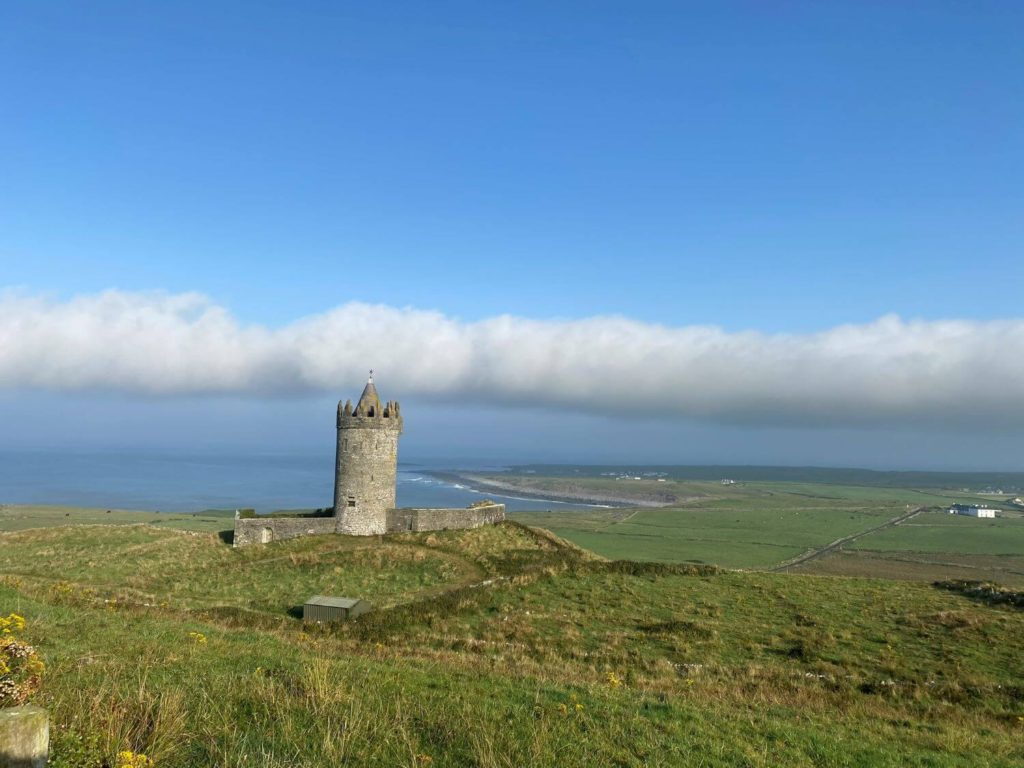
On your way out of Doolin, don’t forget to stop at Doonagore Castle for some great views of Doolin with the castle. There are two pull-offs for parking, but be careful when getting out of your car as both spots are skinny and on bends in the road.
A stop at Doonagore Castle should only take a few minutes, and when you’re done, it’s on to the Dingle Peninsula!
Day One in Dingle
On the way from Doolin to Dingle, there are at least two stops just outside Dingle worth stopping at. The first you’ll come across is Inch Beach. Even if you don’t like beaches (like me), Inch Beach a captivating stop. It’s a 4-mile-long stretch of sand that is unique in that it’s almost entirely flat and has great views up and down the coast.
As you leave the beach, take another short detour before Dingle to see Minard Castle. Like Connemara National Park, this off-the-radar spot is quintessential Ireland. It’s a ruined castle that sits on a bluff overlooking a remote rocky beach. It’s just a small castle and it’s just a small beach, but it packs an emotional punch.
After you’re finished at Minard Castle, it’s time to head to Dingle. Like most of Ireland’s smaller towns, the attraction here is the town itself. There are plenty of small shops, pubs, art galleries and more to see while you’re here. If you don’t want to do any of that, simply admire the adorable buildings along the harbor.


Day Two in Dingle
The majority of your second day in Dingle will be spent doing the Slea Head Drive around the peninsula. Before heading off for the day, if you wake early enough, head down to the harbor to watch the sunrise over the hill across the bay.
After doing the Slea Head Drive, the rest of the day is open to just wander around Dingle seeing what you missed the first day.
Make sure to check out Foxy John’s and Curran’s. These two establishments are two of the most unique Irish pubs you’ll come across in that they both double as hardware stores while serving up their share of Guinness. Even if you don’t drink, it’s still worth checking out for the interesting assortment of goods.

Dingle has a handy laundromat where you can arrange to have your clothes washed while you’re away for the day if you’re backpacking and starting to run out of fresh clothes.
Slea Head Drive
The Slea Head Drive takes you around the peninsula for dramatic coastal views and glimpses into Ireland’s early Christian past.
Stops along the drive range from petting zoos, viewpoints, short hikes, multiple ruins and more. It’s a microcosm of Ireland. Because there are so many stops, the drive takes several hours despite only being 30 miles long. It took us five hours to go around the loop, but it could be shorter or longer depending on how many stops you make.
Along with the Doolin Cliff Walk and Connemara National Park, the Slea Head Drive is another must-do on this itinerary. Between these three activities, you’ll experience some of the best Ireland has to offer and come home with memories you’ll never forget.
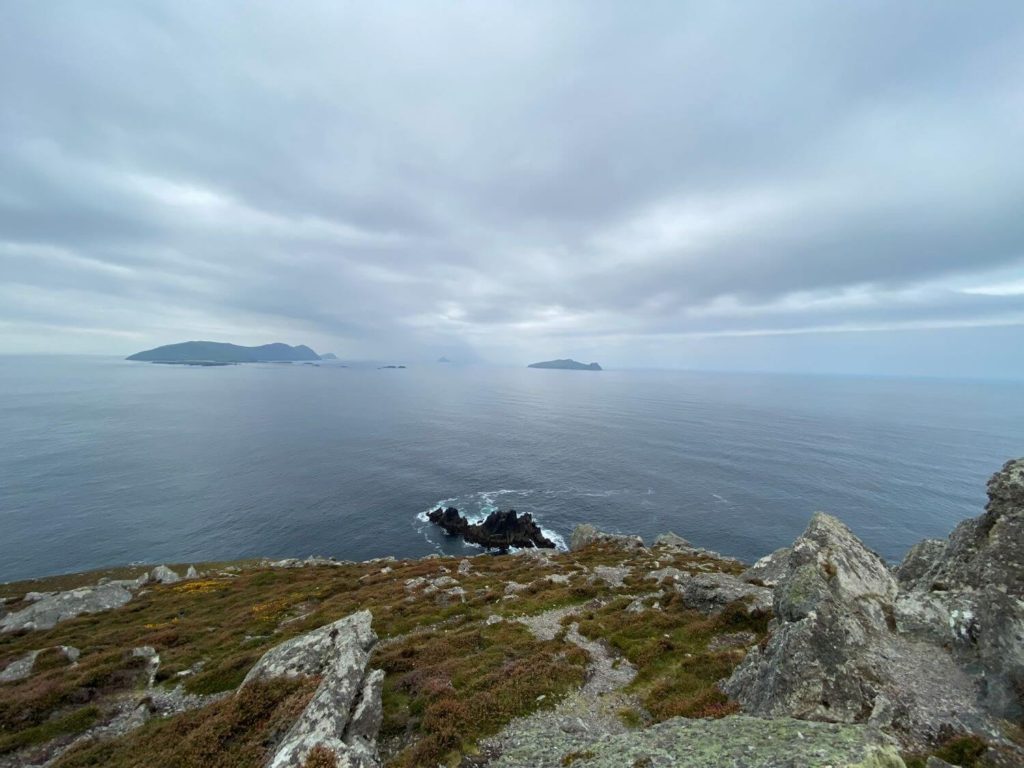

To read more about the Slea Head Drive including some of the best stops to make along the way, check out my guide!
Where to Stay in Dingle
O’Neill’s Bed and Breakfast is a perfect option for your stay in Dingle. It’s right on the main road into town but just far enough away from the crowds to be quiet at night. They offer an excellent breakfast with one of the best traditional Irish breakfasts I had in the country.
Days 7 and 8 in Kinsale
My detailed two-day itinerary for Kinsale and County Cork!
- Day One
- Killarney National Park
- Explore Kinsale
- Day Two
- James Fort
- Charles Fort
- The Queenstown Story (Cobh)
- Jameson Midleton Distillery (Cobh)
Before arriving in Kinsale, Killarney National Park can be a worthwhile stop for at least a couple hours. The park itself is large, but you can get to the northeast section of it without getting too far off track.
One spot worth seeing in particular is Muckross Abbey, a ruined abbey with an eerie yew tree growing in its central courtyard.

Day One in Kinsale
If you stopped in Killarney National Park on your way here, you should arrive in Kinsale around mid-afternoon.
Kinsale is a fairly small town, and, as such, it’s easy to see most of the main parts of town in just a couple hours. This part of the itinerary is a little slower than the rest, giving you time to recharge your batteries for the last stretch in Kilkenny and Dublin.
Drop your bags off at your accommodation, and then go walk around town for the rest of the afternoon. There are plenty of cute stores and pubs to keep you busy till it’s time to turn in for the night.

Day Two in Kinsale
Today is mostly for getting out of Kinsale and into the greater County Cork area. Before heading out, Charles Fort and James Fort can be a couple interesting attractions to see. These are former star forts used in the 17th century to protect Kinsale Harbor. Charles Fort is more intact and contains a museum whereas James Fort is just a brief walk around the exterior grounds.
When you’re done in Kinsale, County Cork has a few places of interest to visit. You can head to Ireland’s second biggest city, Cork, to sightsee there, or you can do what we did, which was a drive to the smaller town of Cobh for lunch and a visit to The Queenstown Story. This museum contains objects that describe how Cobh was used as a major port of Irish emigration. It also has exhibits on the Titanic and Lusitania, both of which share part of their history with Cobh.
The other stop you should check out is the Jameson Midleton Distillery. Midleton wasn’t much to see, but the tour at the distillery was a lot of fun. It takes you through the distillery while detailing Jameson’s history and the whiskey-making process. It also includes various tasting options depending on your interests.
After the Jameson tour, head back to Kinsale for dinner and some trad music at a pub.


As a whiskey fan, the Jameson Distillery was one of my favorite things in Ireland. Read more about it here!
Where to Stay in Kinsale
Rosemarie’s Place on the hill overlooking Kinsale is a good spot that’s just a short walk into the main section of town. This Airbnb gives you your own one-bedroom apartment for a couple days with a small kitchenette, large bathroom and living area. It also has a nice patio if you’d like to sit outside in the morning with a cup of coffee.

Day 9 in Kilkenny
My detailed itinerary for Kilkenny!
- Outside Kilkenny
- Rock of Cashel
- Jerpoint Abbey
- Inside Kilkenny
- St Canice’s Cathedral and Round Tower
- Medieval Mile Museum
- Kilkenny Castle
- Explore Kilkenny
The last leg of the trip takes you away from the coast and into its medieval past. Half the day will be spent driving around the countryside to two different important historical sites before sightseeing around Kilkenny’s famed Medieval Mile.
Driving to Kilkenny
Your first stop is about a 90-minute drive from Kinsale at the Rock of Cashel. The Rock of Cashel is an imposing ruin that sits atop a hill with panoramic views of the surrounding countryside. In addition to its impressive construction, the site is also historically important as it is believed to be where St Patrick converted Ireland’s King of Munster to Christianity in the 5th century. It then became one of Ireland’s major centers of Christian power in the 12th century.
After the Rock of Cashel, it’s on to another medieval Christian ruin, Jerpoint Abbey. While not as physically impressive as the Rock of Cashel, Jerpoint Abbey has a more intimate appeal with some of the most incredible examples of medieval carvings you’ll see in Ireland. With its meticulous carvings and provocative atmosphere, you won’t regret taking the time to visit these ruins.


In Kilkenny
Kilkenny began life in the 6th century as a monastic settlement and became a walled city with a Norman castle in the 12th century. Since then, Kilkenny grew and developed to become the city we see today with its buildings huddled together amid a web of medieval lanes giving the city its historic charm. It has several tourist attractions to see, or you could just walk around exploring the city and experiencing its extensive pub scene.
The first thing I recommend doing in Kilkenny is heading to St Canice’s Cathedral on the north end of High Street, the city’s main stretch of road. St Canice’s cathedral is interesting, but the real attraction is its 9th century round tower, one of only two in Ireland you can climb. Climbing isn’t too difficult. However, if you’re afraid of heights or tight spaces, you may want to reconsider. Your reward for the climb is a fabulous view of Kilkenny to get you oriented to the city.
After the cathedral, the Medieval Mile Museum is the other must-see attraction in Kilkenny. This very well-assembled museum contains many objects from the region’s medieval past to help put the city and surrounding area into perspective. It also comes with an excellent audio guide to flesh out the history of everything you’re seeing.
If you’re up for one last tourist sight today, Kilkenny Castle is worth a consideration. The self-guided tour of the castle takes about an hour, and it gives you a window into how Kilkenny’s ruling elite lived during their time in power. You can also just wander around the adjacent park for free to take in views of the castle’s exterior if a fifth tour feels like too much at this point in the day.

Where to Stay in Kilkenny
For a relatively inexpensive stay in a spot that’s close to everything while still feeling secluded, Butler Court is a perfect option. The rooms are set off from the main road by a gated entrance and are arranged in a quaint little courtyard to give it a relaxing ambiance in the middle of the busy city.
The rooms themselves are somewhat no frills, but they do come with a good continental breakfast that includes several options to start your day.
Days 10 to 12 in Dublin
My detailed three-day itinerary for Dublin!
- Day One
- Wicklow National Park
- Powerscourt Gardens
- The Little Museum of Dublin
- Guinness Storehouse
- Day Two
- EPIC The Irish Emigration Museum
- The Book of Kells and the Old Library (Trinity College)
- National Gallery of Ireland
- Day Three
- National Museum of Ireland – Archeology
- Christ Church Cathedral
- St Patrick’s Cathedral
Finally – or perhaps, regrettably – you’ve reached the final stage of your trip. This last stop includes a brief visit in the Wicklow Mountains before spending your last three days in the capital, Dublin.
You could skip the Wicklow Mountains part of this first day if you’re eager to spend a full day in Dublin. I wouldn’t recommend it, though. Dublin was fun, but it’s very much a large, urban city and lacks the charm of Ireland’s countryside. Take this chance to get one last glimpse of Ireland’s natural beauty before heading into the capital!
Wicklow Mountains
The Wicklow Mountains are home to both Wicklow Mountain National Park, which itself contains the Glendalough monastic ruins, and Powerscourt Estate and Gardens.
Wicklow National Park
The Glendalough Monastic City sits near the two Glendalough lakes and is made up of a large number of Christian ruins. Among the sites you can see are an impressive round tower, the original gateway to the settlement, a cathedral, a smaller church, a large Irish high cross, various other buildings and lichen-covered tombstones. You’re free to walk around and explore the ruins at your leisure.
While visiting this section of the park, take the time to do the short, easy hike to the Lower and Upper Glendalough Lakes. If you’re short on time, you can drive to the more scenic upper lake.


Powerscourt Estate and Gardens
From the Glendalough ruins, your next stop is Powerscourt Estate and Gardens, a large manor house with world-renowned gardens. While not particularly close to the main estate, the 400-foot tall Powerscourt Waterfall is part of the property and another attraction to consider visiting while here.
At the estate proper, you can visit the mansion’s various stores or cafe, but the main reason for visiting are the esteemed gardens. There are several different formal sections of gardens and various small hollows spread throughout its 47 acres, so there is certain to be something that appeals to every visitor.


Day One in Dublin
How long you spend in the Wicklow Mountains will dictate what you can do upon arriving in Dublin. With time, you can try to fit in the Little Museum of Dublin for a perfect primer to the culture and history of Dublin. If you don’t have time for this museum today, don’t forget to check it out on one of the other two days!
The one must-do today is the Guinness Storehouse. This is the home of Ireland’s most iconic export: Guinness stout. It’s not a traditional brewery tour, but rather it’s a museum that takes you through the history of the Guinness brand along with a section detailing information about the beer itself.
The museum is interesting, especially the section detailing Guinness’ many memorable ad campaigns, yet the best part of a visit here is the rooftop Sky Bar. Enjoy your included Guinness while taking in the views of Dublin’s skyline with the Wicklow Mountains on the horizon. It’s a perfect way to cap off your first day in Dublin.

Here’s my walkthrough for what to expect and how to visit the Guinness Storehouse!
Day Two in Dublin
This second day in Dublin is the busiest day of this whole itinerary with three different museums on the docket. It has you visiting EPIC The Irish Emigration Museum, the Book of Kells exhibit in Trinity College’s Old Library and the National Gallery of Ireland.
If you want to skip any of these museums, I suggest not seeing the National Gallery of Ireland. It has some nice examples of Irish art, but there aren’t any particular highlights like in other European art galleries.
The other two attractions you won’t want to miss. EPIC The Irish Emrigation Museum is a wholly interactive museum with exhibits highlighting the prevalence and importance of Irish culture throughout the world. It’s annually rated as one of the top museums in all of Europe, and you’ll quickly see why during your visit.
The Book of Kells exhibit at Trinity College contains a museum describing how the historic book was made, and a visit to the Long Room. The best part of the whole experience is the Long Room of the Old Library. It’s a dark wood section of the library with rows of bookcases filled with finely bound old books and busts of important philosophers. It’s like walking through a Harry Potter film.
Unfortunately, the main star of the whole exhibit, the Book of Kells, is somewhat underwhelming. Because it’s so historically important, it’s kept in a dark room for preservation and only a few people can view it at once. It’s still exciting to see, but don’t expect any kind of in-depth viewing.


Day Three in Dublin
Your last full day in Ireland is relatively low key. Today is the day to visit Dublin’s two main cathedrals, St Patrick’s and Christ Church. Both warrant around a 20-30-minute visit and are conveniently located within a short walk from one another.
In my opinion, each is kind of underrated and were surprisingly empty when we visited. Christ Church has an interesting medieval interior and is actually thought to be the oldest building in Ireland. St Patrick’s has more of a big cathedral feel with its pretty stained-glass windows and assortment of tombs of important individuals, including Jonathon Swift’s, the author of Gulliver’s Travels.
The National Museum of Ireland -Archeology is the last museum on your trip, which is appropriate as it contains objects that flesh out the stories of Ireland’s past that you’ve seen over the past 12 days. There are several main exhibits with items ranging from metalworks to early Christian artifacts and even mummified bog people.


Where to Stay in Dublin
We stayed at Hyatt Centric in The Liberties neighborhood of Dublin. It’s a great location that is easily walkable to many of Dublin’s museums, city parks and pubs.
Other than that, this hotel was the least memorable of any accommodation on this itinerary. It’s a nice hotel with a good location, but there’s not much more to say about it than that. It’s also on the pricier side, so take that into consideration when picking where to stay.
Day 13 – Departure from Dublin
Your epic Ireland trip has sadly come to an end.
Depending on your departure flight, you can stop for one last traditional Irish breakfast before heading to the airport.
The Route for My Ireland Itinerary
For ease of reference, here is the route we took during our trip. If you plan on adding or removing anything, take a look at this map to see how it might affect your drive.
Click Show Map to reveal the route. You can enlarge the map by clicking the window in the bottom right corner.
Changes to Consider for My Ireland Itinerary
I only have two changes that I would make to my itinerary.
The first is the timing of Dublin. After seeing the beautiful dramatic countryside and beautiful small towns, Dublin felt like a bit of a letdown. If possible, you may want to do Dublin at the beginning of your trip.
Second, rather than head back to Doolin after your day trip to Inis Mór, you should stay on the island. We were supposed to do that, but the family-owned hotel we were staying with had to cancel because of a death in their family. By that point, everything else was booked due to the filming of a movie on Inis Mór.
Doolin was my favorite little town in Ireland, and yet, I was still disappointed we weren’t able to stay on Inis Mór. There was more I would have liked to do there, and it would have been nice to see the island early in the morning without tourists.
With More Time in Ireland
Here are some things I would have liked to do with more time in Ireland. These are in no particular order. All of these suggestions are reasonable to visit based on the route described above. For that reason, I am not including things much farther north from Galway.
- See more of the Burren National Park
- Do some hiking in Wicklow National Park
- The Ring of Kerry
- Explore County Mayo
- The Gap of Dunloe
- Newgrange and the Hill of Tara
With Less Time in Ireland
Here are some suggestions if you don’t have the full 13 days this itinerary covers. These are ranked in order of priority.
- Spend less time in Dublin.
- Have one less day in Galway, but still make sure to visit Connemara National Park.
- Spend only one night in Kinsale or else skip it altogether.
- In a pinch, Dingle could be done with only one night.
Things You’ll Need for Ireland
You’ll want to make sure you have these things for your trip to Ireland.
Rent a Car with GPS
Renting a car is an absolute must. The itinerary described above simply does not work without one.
Ireland doesn’t have the extensive train network like many other European countries. You could do a bus, but even then, you may need to take multiple buses between stops and you’re stuck with whatever the bus schedule is.
Further, you may want to consider either renting a GPS or else getting a car with one equipped. You can’t always guarantee a signal on your phone or a full battery. While we were lucky in both those regards, I think it’s better to be safe than stuck on a remote country road in the middle of nowhere.
Hiking Gear
Ireland is known for its beautiful natural scenery, and to see much of it, you’ll have to do some hiking. With that said, there are a few things to make sure you have to be safe.
Sturdy hiking shoes are a must. You don’t need any fancy boots, but some good trail shoes with treads will come in handy to help on uneven ground. You’ll be glad you have them when you’re trekking hundreds of feet high along the Cliffs of Moher.
Sticking with the Cliffs of Moher, hiking pants can be helpful. I brought two pairs along, but on the day we did the Doolin Cliff Walk, it was warm, so I decided shorts would be enough. Then I walked through stinging nettle and immediately regretted that decision. Moral of the story, don’t count on hiking trails being perfectly trimmed and maintained.
Additionally, bring along a sturdy water bottle, a first aid kit, suntan lotion and a lightweight backpack to hold all that plus any extra clothes you may or may not need.
Versatile Clothes
Ireland’s climate is notorious for being wet with grey skies. That could not have been any further from the truth when we visited in September. Still, you need to prepare for all eventualities: rain, wind, cool, warm, and more warm (Ireland isn’t known for extreme temperature).
At the same time, if you are backpacking, you need to be mindful of space. Long-sleeved shirts, lightweight under shirts (preferably long-sleeved), a windbreaker, a light jacket and a hoodie worked well for me. I could adjust with layers as needed depending on the situation, and when not being worn, those items fit easily into my backpack without weighing me down.
Thank you for reading this post. Paul Passing Through is a labor of love to which I’ve dedicated a lot of free time. If you’d like to show your support for my blog, you can Buy Me a Coffee to help fund the future of Paul Passing Through. I appreciate any contributions!
Resources to Book Your Trip to Ireland
Whether you’re looking for tours, hotels or flights, here are some tools to help get you started planning your trip to Ireland!
Look for activities and tours offered through GetYourGuide or Viator!
Search Flights
Still can’t find what you’re looking for? Check out my travel essentials pages for more of my recommendations.
Pin This Post!


